





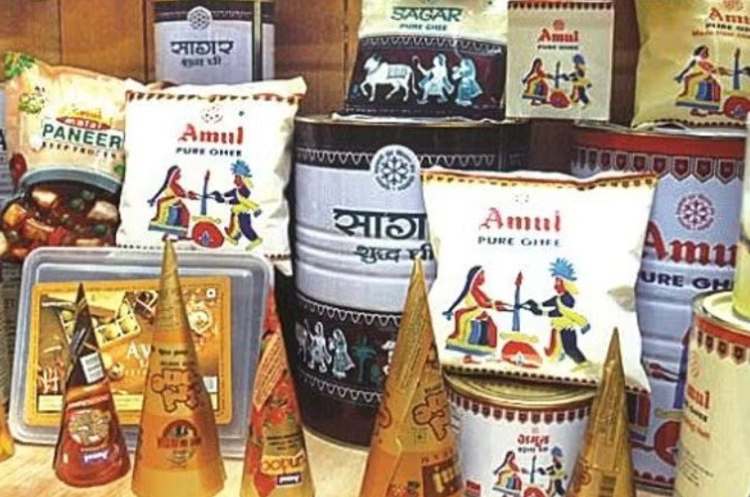
Dairy major Amul has crossed a milestone rare for any Indian FMCG company. It is the first to surpass Rs 1 trillion in turnover. The latest figure represents 11% growth over FY25, driven by domestic expansion and a wider international push. Amul has introduced fresh milk in Europe and the US, and reported high double-digit growth in the second half of FY26.
What makes the number more striking is who created it. Not a promoter family. Not a multinational boardroom. But millions of dairy farmers linked through the Gujarat Cooperative Milk Marketing Federation (GCMMF). In an economy where scale usually sits inside conventional corporate structures, Amul is an outlier.
READ | India must unlock potential of cooperatives through education
Amul cooperative model
The obvious question is whether Amul is a one-off Gujarati success or a model that can be reproduced across India. The answer is yes, but with caveats. Replication has faltered elsewhere because cooperatives need patience, institutional discipline and protection from politics.
Amul’s success is a story of systems. The Anand model was built on three principles: farmer ownership, professional management and relentless aggregation. Milk is not an easy commodity. It perishes quickly and resists standardisation. Amul turned that volatility into an advantage through decentralised procurement tied to a centralised brand. Farmers retained ownership. The federation delivered scale. Consumers got consistency.
What should also be remembered is that Amul did not scale in an institutional vacuum. The Anand pattern was strengthened by a larger policy architecture built through NDDB and Operation Flood. Launched in 1970, Operation Flood created the National Milk Grid, linked producers with consumers across hundreds of towns and cities, and used the Anand model to expand dairy cooperatives across states. Amul’s achievement was therefore not only a triumph of local discipline. It was also the product of a national framework that built procurement, processing and marketing capacity around the cooperative form.
In FY26, Amul widened its reach. It pushed deeper into settlements with populations above 5,000, where daily demand for packaged milk, butter and curd can be sustained. The second-half surge came from value-added products such as cheese, buttermilk and probiotics. The cooperative has learnt to serve aspirational consumption. Protein is no longer only an urban preoccupation.
READ | Lessons from Amul’s success for India’s cooperative sector
Amul global expansion
Amul’s overseas push also matters. India is a vast market, but the launch of fresh milk in Europe and the United States signals confidence in a supply chain built over decades. Its expansion into Africa and Southeast Asia is not just about market share. It reflects an attempt to export a template: organise producers, aggregate supply, build brand trust.
But procurement alone does not explain Amul’s scale. It is also one of India’s strongest consumer brands. Recent reporting on FY26 attributes growth not just to milk volumes, but to a product portfolio of more than 1,200 packs, a vast distribution network and a steady move into value-added categories. That matters for replication. Organising producers is only half the task. A cooperative that cannot build brand recall, shelf presence and pricing power in retail markets will not become an Amul simply by collecting more milk.
That brings the argument back to replication. India has tried to reproduce the Anand pattern in other states. Results have been uneven. Karnataka’s Nandini and Bihar’s Sudha have built credible ecosystems. Others have weakened under political interference or managerial drift. The difference has been governance.
In India, cooperatives often collapse under their own contradictions. They are democratic in theory, but rarely autonomous in practice. Elections become patronage contests. Pricing decisions are bent by short-term populism. Professional managers are sidelined or never hired. Many institutions resemble Amul from a distance. Very few function like it.
Cooperative governance in India
Amul avoided that fate because its leadership, from Verghese Kurien onwards, insisted on separating ownership from management. Farmers elected representatives. Professionals ran operations. Just as important, it built trust. For a farmer to pour milk into a collection centre every morning, payment must be certain and timely. Amul established that credibility over decades. Most others have not.
Yet this may be the right moment to think about replication again. India’s farm economy is at an inflection point. Smallholders are being squeezed by fragmented markets and volatile prices. The corporate route, through contract farming and large-scale procurement, can deliver efficiency but often weakens farmer autonomy. The cooperative route offers a middle path: scale without dispossession.
Dairy is especially suited to this structure. It is a daily cash-flow business, unlike seasonal crops. It depends on millions of small producers, not a few large ones. That is one reason dairy cooperatives have proved more viable than many other producer institutions. FAO’s work on smallholder dairy notes the sector’s relatively low liquidity risk and regular cash generation for producers. That logic does not travel equally well to every crop. Horticulture, fisheries and millets face different problems of storage, quality variation, price volatility and market access. The wider lesson from Amul is valid. But dairy remains a structurally easier test case than most other farm sectors.
READ | Cooperatives and stock markets: Can the twain meet?
Building agricultural cooperatives
State governments are central to this effort, but they often fail to separate support from control. Subsidies are extended, but autonomy is curtailed. Infrastructure is built, but governance is compromised. The result is a proliferation of entities that look cooperative without acquiring the core discipline of one.
Amul’s strength lies in combining hyper-local procurement with national distribution. That requires cold chains, logistics and digital systems. These are capital-intensive capabilities. Not every state has the fiscal capacity or administrative depth to build them from scratch. The Union government has to act as an enabler by setting standards, facilitating credit and ensuring interoperability.
There is also a case for coexistence between cooperative and corporate structures. Corporates can bring technology, efficiency and capital. Cooperatives can ensure that value accrues to producers. The issue is not one versus the other, but who controls the chain and who captures the gains.
Amul did not become a trillion-rupee enterprise through a grand design unveiled at one moment. It got there by doing the same thing, every day, for years. Replication elsewhere will begin the same way. Not with announcements, but with institution-building.