





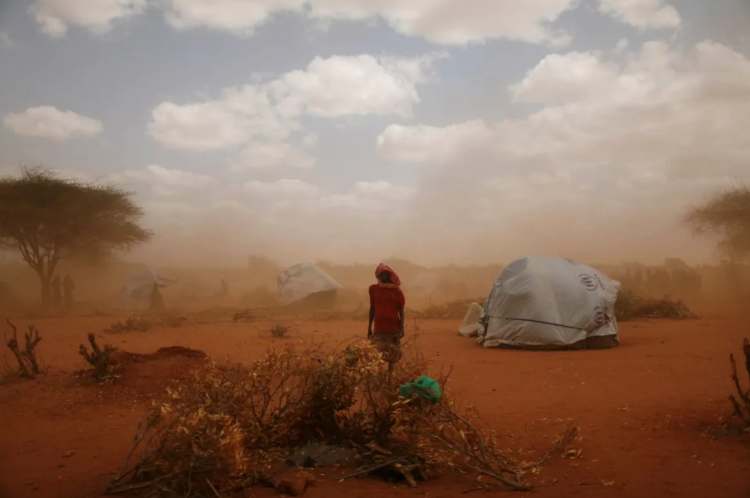
The “climate refugee” is not a future construct in India. It is already visible. From the eroding islands of the Sundarbans to the drought-prone districts of Vidarbha, ecological stress is forcing large-scale climate migration. In 2025, weather-related disasters caused over 4,400 deaths and affected millions of hectares of farmland. The resulting migration to cities is not aspirational. It is survival-driven.
In Delhi, Mumbai and Kolkata, climate migration produces a second shock. Migrants lose land and livelihoods, then enter urban systems that are not designed to absorb them. Health risks multiply quickly.
READ I Budget 2026: Tier II cities push lacks climate resilience
Policy blind spot: No recognition, no protection
India does not formally recognise climate refugees. Those displaced by floods, cyclones or droughts are treated as economic migrants. This creates a structural blind spot.
Institutions such as the National Disaster Management Authority and programmes under the Ministry of Environment, Forest and Climate Change address immediate disaster response. They do not address prolonged displacement or its health effects.
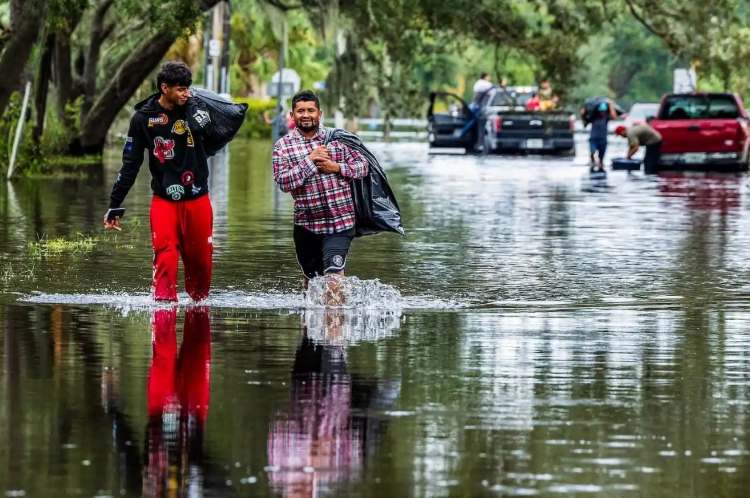
The Internal Displacement Monitoring Centre consistently ranks India among the worst affected by disaster-related internal displacement. Yet data remains fragmented. Without formal classification, climate migrants fall outside welfare systems, urban planning frameworks and labour protections.
Access failures are predictable. Schemes such as Ayushman Bharat often depend on fixed residence documentation. Migrant households struggle to access healthcare and social protection in destination cities.
READ I How game theory can help design strategies for climate crisis, diplomacy
Health risks begin before arrival
The deterioration starts during climate migration. Families move under distress, with limited savings and no institutional support. Malnutrition and physical exhaustion are common before they reach cities.
In urban areas, most settle in informal settlements. These are densely packed, heat-intensive environments with poor water and sanitation. Heat exposure is higher due to metal-roofed structures.
The health consequences follow. Water-borne and respiratory diseases rise sharply in such settlements. Migrants also face immunological stress when moving across ecological zones. Exposure to unfamiliar strains of dengue, malaria or typhoid increases vulnerability.
READ I How climate change is reshaping Arctic geopolitics
The silent burden of mental health
Physical illness is only part of the story. Loss of home, land and community produces lasting psychological stress. The concept of solastalgia captures this condition: distress caused by environmental loss.
In cities, this stress compounds. Migrants lack legal recognition, stable income and access to welfare. Exclusion from schemes due to documentation gaps reinforces insecurity. Healthcare remains out-of-pocket for many, deepening financial vulnerability.
Mental health burdens remain largely unaddressed within current public health systems.
A mobility-centred policy response
Policy addressing climate migration has to shift from static welfare design to mobility-aware systems.
First, India needs a formal classification of climate-induced internal displacement. This is a prerequisite for targeted policy design and data systems.
Second, health systems must become portable. Digital health records linked to initiatives such as the Ayushman Bharat Digital Mission can ensure continuity of care across states.
Third, urban planning must recognise climate migrants as a permanent feature, not a temporary influx. Affordable housing, heat-resilient infrastructure and decentralised primary care through the National Urban Health Mission are essential.
Fourth, social protection must travel with the worker. Interstate coordination is required to ensure access to food security schemes and employment programmes irrespective of domicile.
Finally, mitigation at source remains critical. Investment in drought-resilient agriculture, coastal protection and climate-resilient livelihoods can reduce forced migration pressures.
These proposals depend on fiscal and institutional capacity that is currently weak. Urban local bodies operate with limited revenue autonomy and cannot absorb large migrant populations without predictable funding support. Portability of welfare requires alignment across state systems, which remains uneven despite precedents such as One Nation, One Ration Card.
Without clear centre–state financing arrangements, interoperable data systems, and strengthened city-level administrative capacity, mobility-centred reforms will remain partial. The constraint is not policy design alone, but the state’s ability to execute across jurisdictions.
Climate migration a structural risk
Failure to act will deepen cycles of displacement, illness and inequality. The scale of climate migration implies macroeconomic consequences. Labour productivity, urban infrastructure and public health systems will all be affected.
Climate migration is already reshaping India’s economic geography. Treating it as an exception delays necessary reform. Recognition and integration will determine whether this transition becomes destabilising or manageable.
Dr Isha Sharma is Assistant Professor (Economics), School of Social Sciences, and Fellow, Centre for Studies in Population and Development (CSPD), Christ University, Delhi-NCR Campus.