





India has entered into 2026 with an unusually brisk burst of trade and industrial policy announcements. Across ministries, measures have been rolled out to support exports, promote domestic manufacturing, manage sensitive imports, and protect revenues. The pace is deliberate. It reflects an assessment that global conditions—from weak demand to rising protectionism—will not be benign, and that policy cannot afford drift.
The messaging is clear- the government wants to signal momentum early, reassure domestic producers, and show that trade policy will be actively managed rather than passively endured. But taken together, the measures also reveal a deeper tension: confidence in India’s growth narrative sits uneasily with persistent reliance on subsidies, safeguards, and administrative controls.
READ | India-New Zealand FTA matters beyond trade volumes
Export finance relief targets domestic frictions
The most constructive interventions have come from the Directorate General of Foreign Trade (DGFT). Recent trade notices address long-standing complaints from exporters that domestic procedures, not foreign tariffs, are their biggest obstacle. Guidelines on collateral support for export credit, interest subvention for pre- and post-shipment finance, and market access assistance under the Export Promotion Mission aim to ease liquidity constraints and lower transaction costs.
There is also a push to standardise formats and permissions for export-oriented units. These may sound incremental, but for small and mid-sized exporters, delays in paperwork and credit can be decisive. India’s merchandise exports have stagnated around $450 billion over the past two years despite generous incentive schemes, suggesting that friction at home often matters more than incentives on paper.
Trade policy: Shipbuilding a strategic weak spot
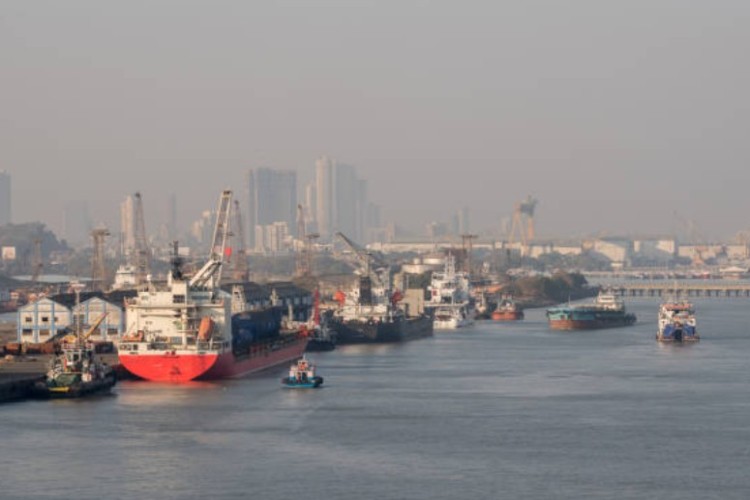
Shipping and logistics remain a structural weakness in India’s trade ecosystem. The Ministry of Ports, Shipping and Waterways has responded by notifying operational guidelines for the Shipbuilding Financial Assistance Scheme and the Shipbuilding Development Scheme. The objective is straightforward: reduce dependence on foreign yards for commercial vessels and specialised ships.
India accounts for less than one per cent of global shipbuilding, while China, South Korea, and Japan dominate the sector. Dependence on foreign-built ships raises costs, exposes supply chains, and creates vulnerabilities in a sector with clear geopolitical implications. Strengthening domestic shipbuilding is therefore less about protection and more about scale, financing, and long-term capability in a capital-intensive industry.
READ | WTO reforms test the future of rules-based global trade
Revenue pressures shape a defensive trade stance
The Ministry of Finance has taken a more cautious approach. Higher taxes on tobacco products are an unambiguous revenue measure. At the same time, safeguard duties on certain steel products and anti-dumping duties on multiple items reflect a defensive posture towards import surges.
There are also quieter steps. Provisions of trade agreements with Australia and the European Free Trade Association are being operationalised. The transition period for implementing the Sea Cargo Manifest and Transshipment Regulations, 2018 has been extended again, acknowledging readiness gaps. Customs processes continue to be aligned with international norms, albeit incrementally. Reform here appears constrained by revenue needs and pressure from domestic producers.
Services exports and FTAs tell a different story
One striking omission in the current trade push is services, where India is genuinely competitive without protection. Services exports now exceed $340 billion annually and finance a large share of the merchandise trade deficit. IT, business services, engineering, and global capability centres have expanded on scale, productivity, and talent, not subsidies. Yet recent trade announcements are largely silent on data localisation rules, digital trade provisions, and visa mobility—issues that directly affect services growth.
Free trade agreements face a similar credibility gap. While deals with Australia and EFTA are being operationalised, utilisation rates of India’s FTAs remain low, often below 30 per cent, because of complex rules of origin and compliance costs. Tariff concessions matter little if firms cannot use them. Without simplifying FTA design and prioritising services market access, trade agreements risk becoming diplomatic trophies rather than export engines.
READ | Mexico’s tariff hike exposes India’s trade vulnerability
Trade controls persist despite growth claims
The Ministry of Commerce and Industry has allowed limited exports of organic sugar, restricted imports of low-ash metallurgical coke of specific grades, and extended the minimum export price on natural honey. The logic is familiar: exports are permitted when domestic supply is comfortable; imports are curbed when they threaten local industry.
This micro-management of trade flows is not new. What is notable is its persistence at a time when official claims suggest India has overtaken Japan to become the world’s fourth-largest economy and remains the fastest-growing major economy. If competitiveness were deep and broad-based, such fine-tuning would be less necessary.
Competitiveness cannot be subsidised forever
Taken together, the early-year announcements point to clear intent. The government wants to support exports, improve market access through trade agreements, promote self-reliance in shipping, shield vulnerable sectors, and shore up revenues strained by recent GST rate cuts. These steps help sustain the growth narrative in the short run.
They also expose an uncomfortable reality. Heavy reliance on export subsidies, interest subvention, safeguards, and controls signals weak underlying competitiveness. Firms that are genuinely competitive on cost, quality, and scale do not need sustained fiscal support or trade defences. Aggressive pricing by Chinese producers has intensified pressure in global markets, but external competition merely exposes domestic weaknesses that have existed for decades.
For exporters and importers alike, the central expectation in 2026 is not more schemes, but deeper deregulation. International experience is unambiguous: sustained export growth comes less from incentives and more from reducing friction—at ports, in paperwork, and in policy. Simpler procedures, predictable compliance, faster clearances, and lower logistics and energy costs matter far more than marginal subsidies.
Deregulation is politically harder than protection. It creates losers alongside winners, while trade controls enjoy vocal domestic support. Navigating a hostile global environment while rolling back domestic controls will test policy resolve. Without that shift, early optimism risks dissolving into another cycle of short-term fixes.