





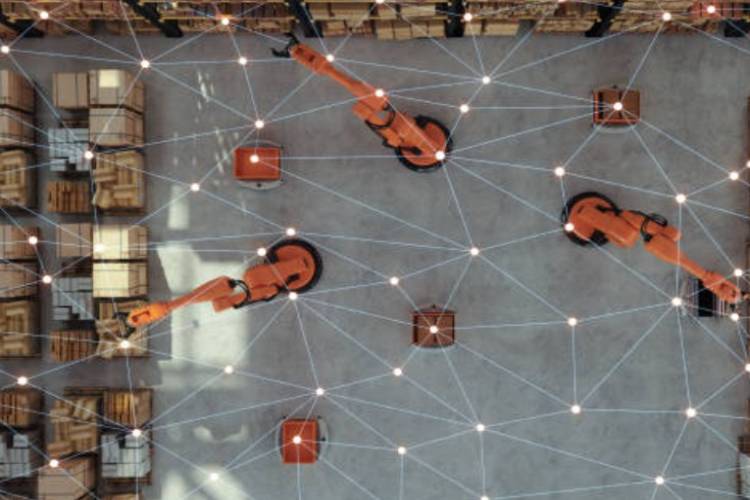
The terms of economic competition are being rewritten with unusual speed. Scale, cost and factor advantages remain relevant, yet they no longer suffice to explain why some economies shape global outcomes while others participate at the margins. The decisive variable now lies in the quality of systems, the depth of supply chains, the coherence of institutions, and the density of networks that bind production, innovation, and markets into a reliable whole. In such an environment, influence accrues less to isolated capabilities and more to the ability to orchestrate complexity with consistency.
India enters this phase with a foundation that is stronger than often acknowledged. Over the past decade, it has demonstrated an ability to mobilise capital, attract global firms, and scale production across multiple sectors. Its digital public infrastructure has redefined inclusion and efficiency at population scale, offering a model that is studied globally. Its services sector remains deeply embedded in international networks, while manufacturing has begun to acquire both scale and strategic direction. These are early markers of a more consequential economic presence that is still taking shape.
READ | Global trade fragmentation: Why supply chains now follow geopolitics
Yet the transition from presence to influence requires a further step, one that moves beyond sectoral strength towards systemic coherence. The distinction carries strategic weight. Sectoral success delivers output and employment. Systems confer resilience, bargaining power, and the ability to shape standards and flows across borders.
The reconfiguration of global supply chains has brought this shift into sharper focus. Firms and governments alike are recalibrating assumptions around efficiency and risk. Reliability, redundancy, and alignment now sit alongside cost in determining where production is located and how it is organised. This has created a strategic opening for economies that can offer not only competitive production, but also predictable and integrated ecosystems.
India’s progress reflects both momentum and an inflection point. It is increasingly visible within global value chains, particularly in electronics, pharmaceuticals, and specialised manufacturing. At the same time, value capture remains uneven, with upstream capabilities and intermediate ecosystems still in the process of deepening. Import dependence in critical components, especially in electronics and capital goods, continues to shape cost structures and resilience. The implication is not one of inadequacy, but of transition. India is moving from participation towards consolidation, and from consolidation towards leadership, even as other economies pursue similar ambitions with speed and focus.
READ | Critical minerals mission to power clean-tech supply chain
Integrating supply chains into strategic advantage
India’s industrial policy has been purposeful in identifying priority sectors and catalysing investment. The expansion of electronics manufacturing, the strengthening of pharmaceutical capacity, and the emerging focus on semiconductors and advanced materials signal a willingness to engage with the frontiers of industrial development. These initiatives have begun to alter the composition of exports and to anchor global firms within the domestic economy.
The next stage lies in integration. Modern supply chains operate as intricate systems in which design, components, assembly, logistics, and aftermarket services are closely interlinked. Competitiveness is determined not only by the efficiency of final production, but by the reliability of each upstream and downstream node. This calls for a deliberate deepening of domestic ecosystems, particularly in components, tooling, and specialised inputs, alongside sustained engagement with global partners.
India’s scale offers demand certainty, its policy direction has become more consistent, and its private sector has demonstrated both adaptability and ambition. At the same time, competing manufacturing hubs such as Vietnam and Mexico have moved rapidly in embedding themselves within global production networks, often benefiting from tighter integration with existing trade architectures. For India, the path forward lies in combining its scale with depth, ensuring that supply chain participation evolves into supply chain influence, with greater value capture across the production cycle.
Strengthening institutional coherence and execution
If supply chains provide the visible structure of economic systems, institutions provide their durability. India has made notable progress in this regard, particularly in infrastructure creation, digital governance, and financial inclusion. The expansion of logistics corridors, improvements in port capacity, and the integration of digital platforms have begun to reduce friction and enhance efficiency across large parts of the economy.
The task ahead is one of alignment and predictability. Economic systems function most effectively when policy signals are consistent across domains and over time. Trade policy, industrial incentives, regulatory frameworks, and state level execution must reinforce one another with greater coherence. There has been meaningful movement in this direction, reflected in efforts to streamline compliance, rationalise taxation, and improve the ease of doing business.
At the same time, structural constraints remain visible. Logistics costs, while declining, continue to exceed those of several competing economies. Regulatory processes, though improving, can still introduce uncertainty in execution. Judicial timelines and contract enforcement continue to influence investment decisions, particularly in capital intensive sectors. Addressing these issues does not require reinvention, but sustained coordination and institutional discipline.
India’s federal structure offers both complexity and opportunity. As states deepen their administrative capacity and align more closely with national priorities, the system gains flexibility and competitive dynamism. This distributed coherence, if sustained, can become a distinctive strength, enabling India to respond to global opportunities with both scale and agility.
Building networks that extend influence
Economic systems are embedded within wider networks of trade, technology, finance, and talent. India’s engagement with these networks has expanded significantly, from strategic partnerships to a more active role in global forums. Its diaspora continues to serve as a bridge across markets, while its technology capabilities position it as a credible partner in emerging domains.
The next phase involves shaping these networks with greater intent. This includes deepening trade linkages, contributing to standards setting, investing in research and development, and fostering closer collaboration between industry, academia, and government. The objective extends beyond integration into existing systems towards influencing their evolution in ways that align with national priorities.
India’s experience with digital public infrastructure offers a compelling illustration of how domestic capability can translate into global relevance. By combining scale with openness and innovation, it has demonstrated an ability to build systems that are both efficient and exportable. Extending this approach to manufacturing, logistics, and advanced technology ecosystems will be central to strengthening India’s position within global networks.
READ | India’s big bet on supply chain realignment
The path to Viksit Bharat
India’s trajectory reflects a country that is steadily assembling the components of systemic strength. The progress is neither uniform nor complete, yet it is directionally clear. The interplay between supply chains, institutions, and networks is becoming more deliberate, more aligned, and more capable of sustaining long term growth.
The opportunity ahead is substantial, but it is not open ended. Global supply chains are being reconfigured in real time, technological capabilities are concentrating, and competing economies are advancing with comparable urgency. Partial integration will yield partial outcomes. Systems reward coherence, and they penalise fragmentation.
India possesses the scale, the talent, and an increasingly consistent policy orientation to respond to this moment with confidence. The task now is to deepen integration across sectors, sustain institutional alignment, and continue the patient work of execution. If these elements converge with discipline, India will not merely participate in the next phase of globalisation. It will help shape its direction and define its standards.
In that outcome lies the difference between episodic success and enduring economic influence.
READ | India taps Zambia copper to shield EV, defence supply chains

Srinath Sridharan is a strategic counsel with 25 years experience with leading corporates across diverse sectors including automobiles, e-commerce, advertising and financial services. He understands and ideates on intersection of finance, digital, contextual-finance, consumer, mobility, Urban transformation, and ESG. Actively engaged across growth policy conversations and public policy issues.