





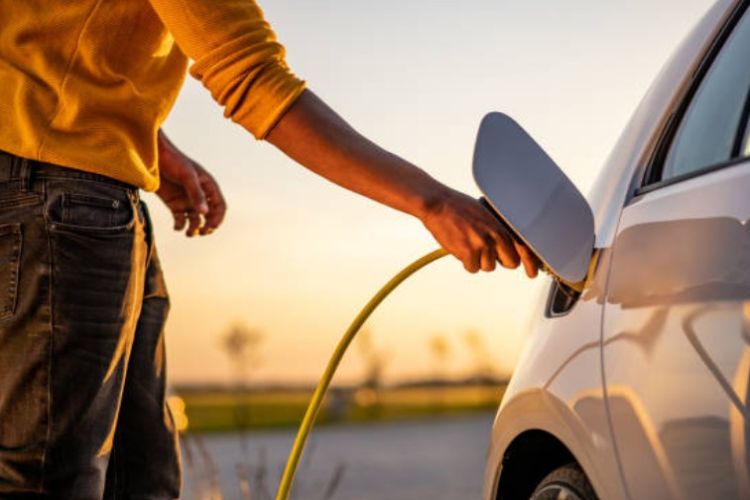
Electric vehicles adoption in India: India’s Electric Passenger Vehicles market has expanded rapidly over the past five years. Registrations rose from about 3,200 units in 2020 to roughly 170,000 in 2025. Yet adoption remains geographically concentrated. Southern states have consistently accounted for around one-third of national EV registrations. India’s EV transition, in effect, is being driven from the South.
Vahan data shows that even in 2020, when electric cars were still experimental purchases, Karnataka, Kerala and Tamil Nadu together contributed nearly 38% of registrations. As volumes multiplied, their combined share settled into a stable 31–33% band. The market widened nationally, but the South scaled in parallel, preserving its relative weight while growing in absolute terms.
READ | India’s electric vehicles push gains global momentum
The idea that early leadership in EV adoption is transient does not hold. Since 2020, Karnataka, Kerala and Tamil Nadu have remained among the top EV markets, typically alongside Maharashtra. In 2024 and 2025, Maharashtra, Karnataka and Kerala together accounted for about 40% of electric passenger vehicle registrations. Adoption drivers, clearly, are not evenly distributed.
Urban Form and Travel Patterns Lower Adoption Friction
Industry assessments point to demand-side fundamentals that make electric mobility easier to adopt in the southern belt. Dense urban clusters, shorter average trip lengths and well-defined intercity corridors reduce practical barriers. Routes such as Bengaluru–Chennai, Bengaluru–Hyderabad and Kerala’s coastal highways allow predictable travel with manageable charging needs.
Charging anxiety, a persistent concern elsewhere, is less binding here. Kerala’s urbanisation, stretched almost continuously along highways rather than concentrated in a few isolated cities, lowers both logistical and psychological barriers to daily EV use.
EV Adoption Sustained Beyond Subsidies
According to dealer data, electric passenger vehicles accounted for about 4% of total passenger vehicle sales in 2025, up from 2.4% a year earlier. This increase has occurred even as direct purchase subsidies have become less decisive. Southern states, contributing roughly 30–35% of registrations, appear driven more by consumer readiness and ecosystem maturity than by incentives. State-level benefit differences of Rs 10,000–30,000 are now marginal as vehicle prices decline and buyers focus on charging access, resale value and total cost of ownership.
READ | Electric vehicles face consumer resistance in India
Higher vehicle ownership, deeper urbanisation and a large salaried population with predictable commuting patterns also matter. Detached housing and apartment complexes with designated parking make overnight home charging more feasible than in denser, informal urban settings. These advantages have compounded over time.
Karnataka’s trajectory has been reinforced by EV-heavy cab fleets and a concentration of technology professionals in Bengaluru. Early adopters were willing to experiment with electric cars for both personal and commercial use, creating visible proof points. What began as niche behaviour gradually normalised across the wider market.
Manufacturing Presence and After-Sales Confidence
Southern India also hosts a dense automotive ecosystem, where manufacturing plants, supplier networks and technical talent reinforce one another. For hesitant buyers, concerns often extend beyond charging to service availability and after-sales support. Proximity to manufacturers allows quicker response to customer needs, reducing perceived risk alongside the physical build-out of charging infrastructure.
Beyond urban form and consumer readiness, differences in state capacity have quietly shaped EV adoption. In Karnataka, Kerala and Tamil Nadu, electricity distribution companies, transport departments and urban local bodies have coordinated more effectively on charger approvals, tariff clarity and right-of-way permissions. State utilities such as BESCOM and KSEB moved earlier on public charging norms, while municipal agencies processed clearances with fewer delays.
This administrative predictability reduced friction for both private buyers and fleet operators, reinforcing early gains. Elsewhere, slower inter-departmental coordination and uncertainty around grid upgrades have acted as a drag, even where incentives exist. The southern advantage, therefore, reflects not just market conditions but the ability of state institutions to execute policy consistently.
READ | Electric vehicles: SMEC seeks to fuel a manufacturing revolution
From Regional Concentration to National Scale
The southern experience is less about monopolising the future and more about demonstrating what EV adoption looks like once it moves from policy aspiration to everyday mobility. As charging infrastructure spreads, model availability improves in the Rs 10–25 lakh segment and cost parity with internal combustion vehicles approaches, adoption elsewhere is likely to track overall passenger vehicle demand more closely. Northern and western markets are already rising in absolute volumes.
The larger challenge lies beyond the north–south divide. National EV penetration stands at 7.49%, according to recent research. Progress now depends less on regional comparison and more on resolving common constraints: reliable charging, grid readiness, affordable financing and broader model choice for middle-income buyers. If these are addressed, India’s EV transition can move from pockets of success to a genuinely national shift.