





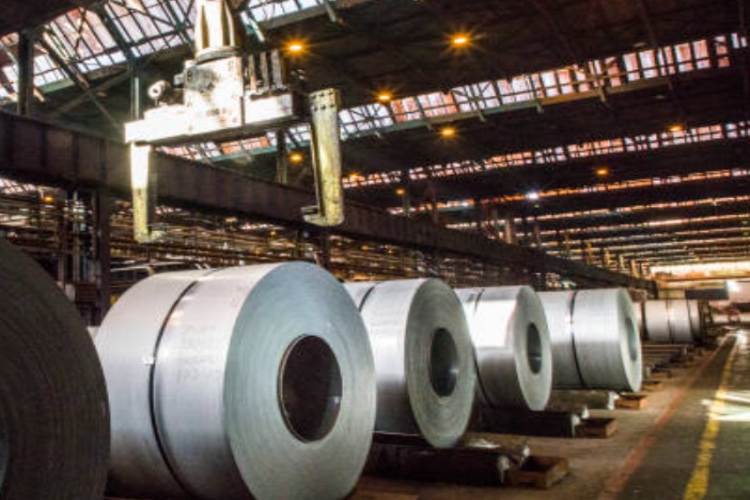
CCI steel cartel probe: After a long phase of regulatory restraint, competition authorities across major economies are once again asserting themselves. From the US and the European Union to East Asia, regulators have reopened old questions about concentrated market power, price coordination, and the limits of self-regulation by large corporations. India, too, has reached an inflection point in its battle against cartelisation—one that will test whether its competition framework can discipline market power rather than merely describe it.
That test is now centred on steel. India’s competition regulator CCI has initiated one of its most consequential investigations yet, probing allegations of price collusion among leading steel producers. According to the Director General’s investigation report, 28 steel companies and 56 senior executives allegedly coordinated prices and market behaviour at different points between 2015 and 2023. The Commission has sought financial records and responses from the firms to determine penalties. If upheld, the findings would establish sustained cartelisation in a sector central to India’s infrastructure and manufacturing ambitions.
READ | CCI in action: India’s M&A regime gets a regulatory shakeup
Steel cartel case and why it matters
The investigation began in 2021 after builders complained of coordinated price increases and supply restrictions. As the inquiry widened, more than 30 companies and industry bodies came under scrutiny. The scale of the probe is unprecedented for the sector—and so are the implications.
Steel is not a peripheral industry; it feeds directly into housing, roads, railways, capital goods, and public works. When prices are artificially inflated through coordination rather than market conditions, the costs ripple through the economy. Infrastructure budgets stretch less far. Housing becomes more expensive. Manufacturing competitiveness weakens. This is why the alleged conduct, if proven, would rank among the most damaging competition violations India has faced.
The prominence of the firms involved only sharpens the stakes. If allegations against major producers are sustained, the case will signal whether India’s competition law can meaningfully constrain dominant market players. The verdict will be read not just by steelmakers, but by concentrated industries across the economy.
Cost cycles, parallel pricing, and burden of proof
Any serious assessment of cartelisation in steel sector must also acknowledge the backdrop against which prices moved during the period under investigation. Between 2015 and 2023, global steel markets were shaped by volatile iron ore prices, pandemic-era supply disruptions, sharp swings in energy costs, and changes in Chinese capacity and export behaviour. These common shocks often produce parallel pricing even in competitive markets.
This is where the evidentiary threshold becomes critical. Competition law does not penalise firms for responding similarly to shared cost pressures. It intervenes only when conduct—communication, coordinated timing, supply management, or signalling—goes beyond what market conditions would reasonably explain. The credibility of the CCI’s case will therefore rest not on price movements alone, but on whether it can demonstrate behaviour that cannot be justified by cost cycles or global trends. Courts will scrutinise this distinction closely.
READ | Competition Act: CCI proposes swift antitrust resolution for tech giants
Law with teeth, unevenly applied
India’s Competition Act is now more than 20 years old. It was enacted during a period when dismantling the licence-permit raj gave way to confidence in markets as engines of growth and consumer welfare. The law is not weak. It prohibits cartels, abuse of dominance, and anti-competitive combinations, and allows penalties of up to 10% of turnover.
Enforcement, however, has struggled to keep pace with the scale and legal sophistication of India’s largest corporations. Investigations are lengthy. Final orders are often delayed. Appeals can stretch on for years. The result is a system where violations are punished sporadically and deterrence remains uncertain.
The steel probe shows both progress and limitation. On the positive side, the investigation appears methodical, drawing on pricing patterns, market conduct, and documentary evidence across several years. That it has moved this far against some of India’s most influential industrial groups suggests growing institutional confidence within the CCI. But delays in reaching a final order risk blunting the impact. Justice that arrives years later invites repetition, not reform.
When policy signals blur market behaviour
Competition enforcement in India operates in markets that are rarely policy-neutral. Steel has long been subject to frequent government intervention—through export duties, safeguard measures, minimum export prices, and procurement preferences. During periods of price volatility, informal signalling from the state has also been used to temper price increases in the name of inflation control or infrastructure costs.
These interventions complicate enforcement. Firms responding to policy cues may later argue that their conduct reflected regulatory expectations rather than collusive intent. Regulators, in turn, must show that coordination occurred independently of, and not because of, state action. This makes clarity of policy and consistency of enforcement essential. A competition regime cannot be effective if market behaviour is alternately guided by regulation and penalised as collusion.
READ | Break up Google? What the antitrust remedy means for AI
Concentration and the cost to the economy
Steel is not an outlier. Several Indian industries—cement, fertilisers, and parts of chemicals—are capital-intensive and highly concentrated. In such markets, coordination is easier, entry barriers are high, and price signals can be distorted without explicit agreements.
The economic consequences are not abstract. Cartelised pricing raises the cost of infrastructure projects and public procurement, undermining fiscal efficiency. It also erodes trust in markets at a time when the government is relying heavily on private investment to drive growth.
Policymakers are increasingly acknowledging this risk. Union road transport and highways minister Nitin Gadkari has publicly described cartelisation in steel and cement as a serious obstacle to infrastructure development. Such admissions are rare—and telling. They reflect an understanding that unchecked private market power can frustrate public investment goals.
Enforcement gaps: Insulation, speed, remedies
If India wants its competition regime to work as intended, reform must focus on three areas.
First, institutional insulation. Competition enforcement inevitably pits regulators against powerful business interests, some with close ties to the state. Political and commercial pressure—direct or indirect—can weaken resolve. A regulator that lacks autonomy will struggle to confront entrenched power.
Second, speed. Competition cases are complex, but prolonged proceedings allow firms to treat penalties as a cost of doing business. Faster investigations and time-bound adjudication would sharpen deterrence. This requires deeper internal capacity—more economists, data analysts, and forensic specialists who can handle complex market evidence.
Third, remedies. Penalties alone rarely alter behaviour in concentrated, capital-intensive sectors. Structural and behavioural remedies—clear limits on information sharing through trade bodies, monitoring mechanisms for pricing conduct, and stronger leniency incentives to break cartels from within—are essential complements to fines. The CCI’s recent move to hold individual executives liable points in the right direction. Personal accountability has proven globally to be a stronger deterrent than corporate penalties alone.
The steel investigation is a stress test for India’s competition framework. Its outcome will determine not only whether cartelisation can be punished, but whether it can be prevented in sectors where concentration is structural and coordination tempting.
India’s ambition to become a developed economy rests not only on growth rates, but on the quality of that growth. Markets deliver efficiency and innovation only when competition is real. Anti-trust laws exist to preserve that condition. Whether India can enforce them without delay, ambiguity, or selective restraint will shape the character of its capitalism in the years ahead.