





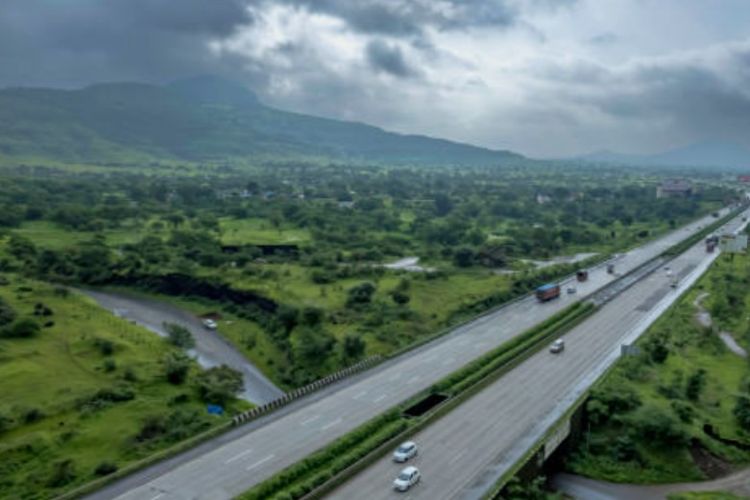
State capex slowdown: Indian states are facing a peculiar problem- they are not cash-deprived, but are still unable to deploy it when it comes to capital spending. According to the latest numbers from the Comptroller and Auditor General, by February of FY26, 22 states had managed to utilise just 55.27% of their combined capital outlay of Rs 10.22 trillion. In other words, nearly half the year’s investment promise was not fulfilled with just one month to go before the deadline.
Capital expenditure is the part of government spending that builds assets such as roads, railways, irrigation systems and power infrastructure — things that last beyond a financial year and raise the economy’s productive capacity. If revenue expenditure is about keeping the lights on, capex is about rewiring the house. Growth will be derailed if capex falters.
READ | Capital expenditure efficiency matters more than capex volume
While capex spending is off track, revenue expenditure is not in the same condition. States have already spent 75.5% of their revenue budgets, which include salaries, subsidies and interest payments. These are politically sticky and electorally rewarding. Capex, by contrast, requires clearances, land acquisition, coordination across departments and sustained execution. It is governance in its most demanding form. When pressure mounts, capex is usually the first casualty.
Within states, the disparity is large. Haryana has already utilised over 94% of its capex budget, Himachal Pradesh over 90% and Bihar close to 85%. At the other end, West Bengal and Meghalaya have spent barely a third of their allocations. Large states like Uttar Pradesh and Maharashtra are under 50%. Capex, then, is not just about budget allocation. It is also about administrative capability and political prioritisation.
Why capex matters
Public capex in India has a multiplier effect that is widely estimated at between 2.5 and 3.5. Every rupee spent on infrastructure can generate much larger economic output over time. Construction activity creates jobs, better infrastructure lowers logistics costs, private investment is crowded in and productivity rises.
The shortfall is therefore worrying. If states have underutilised roughly Rs 4.5 trillion of their capex budgets by February, even partial slippage into the next fiscal year implies a significant drag on growth. Using a conservative multiplier of 2.5, this could translate into a potential output loss of over Rs 10 trillion over time. Capex delays are not just accounting slippages. They are foregone growth.
At the central level, capital spending has risen sharply in recent years. Union government capex has more than doubled from around Rs 4 trillion in FY20 to over Rs 11 trillion in FY26, as budgeted. This helped India’s post-pandemic recovery. But states account for nearly two-thirds of total public capex. If they hesitate, the national investment story weakens.
READ | Fiscal federalism: Why long-term capex loans matter now
Why states underspend
Usually, the last quarter gets the wheels running and most states scramble to achieve their targets in this period. Capex spending is often back-loaded, with a disproportionate share executed in the final months of the fiscal year. This is partly due to delays in approvals and tendering processes.
Second, there are financing constraints even when headline borrowings appear comfortable. States have already raised nearly Rs 8.25 trillion, about 70% of their borrowing targets. But borrowing is not the same as spending. Finance departments often become cautious about releasing funds for capital projects, especially when revenue expenditures are non-negotiable.
There is also a larger fiscal design issue. State capex is no longer shaped only by state finances and administrative capacity. It is also influenced by the Centre’s Special Assistance to States for Capital Investment scheme, which offers 50-year interest-free loans and reform-linked incentives for capital spending. The Economic Survey 2025-26 notes that this scheme helped states maintain capex at around 2.4% of GDP in FY25, while the Union government has cumulatively released more than Rs 4.25 lakh crore under it since 2020-21. That means state capex weakness cannot be read only as a failure of intent. It also reflects how central incentives, conditional support and state-level project readiness interact.
Third, there is the issue of capacity. Designing, tendering and executing infrastructure projects requires technical expertise that many state departments lack. Weak detailed project reports, delays in approvals, cost overruns and contractual disputes often begin well before money is released.
Revenue expenditure, by contrast, delivers immediate and visible benefits. Farm loan waivers, free electricity and cash transfers are politically rewarding. Capex often yields benefits beyond the electoral cycle.
READ | Fall in manufacturing gestation time raise hopes of capex revival
Shoring up capex
According to CRISIL, there is an expectation that higher central support and a fresh push in FY27 will edge up capex. For a developing nation like India, the importance of building crucial infrastructure cannot be overstated. But ideal and feasible are two different things.
Analysts do have an idea of how capex can be shored up. States need rolling, multi-year investment plans with clearly identified projects, timelines and financing strategies. The idea of a National Infrastructure Pipeline at the Centre must find state-level counterparts.
Second, the incentive structure needs sharpening. The government has already experimented with conditional grants for capex, offering states additional borrowing space tied to reforms and investment targets. This approach can go further. A portion of central transfers could be explicitly linked to timely and efficient capex execution, measured not just by spending but by project completion milestones.
Dedicated project preparation facilities with engineers, financial analysts and legal experts can help states design bankable, executable projects. Multilateral institutions and development finance agencies can play a catalytic role here.
However, the most important cog in this machinery is the private sector. Public-private partnerships have had a chequered history in India, but the lesson is not to abandon them. It is to refine them.
When capex starts to be seen not as expenditure but as investment, it may also begin to attract more serious administrative attention. If states start thinking like investors, the conversation changes from how much did we spend to what did we build, and what will it yield.