





Delhi EV policy 2026: Delhi’s EV policy is entering a more consequential phase. The draft EV Policy 2026 marks a shift from incentive-led adoption to mandate-driven transition, with proposed bans on new petrol two wheelers from 2028 and restrictions on internal combustion vehicles in commercial fleets from 2026. The direction is unambiguous: transport electrification is no longer optional. A mandate, however, is only as effective as the systems that support it.
The policy assumes that incentives, tax waivers, and registration bans will accelerate the shift to electric mobility. The premise is familiar. Lower running costs and regulatory certainty can shape behaviour. But as enforcement approaches, three constraints become decisive: charging infrastructure, financing burdens on gig workers, and regulatory fragmentation across the National Capital Region.
READ | What Honda’s electric vehicles retreat means for the future of mobility
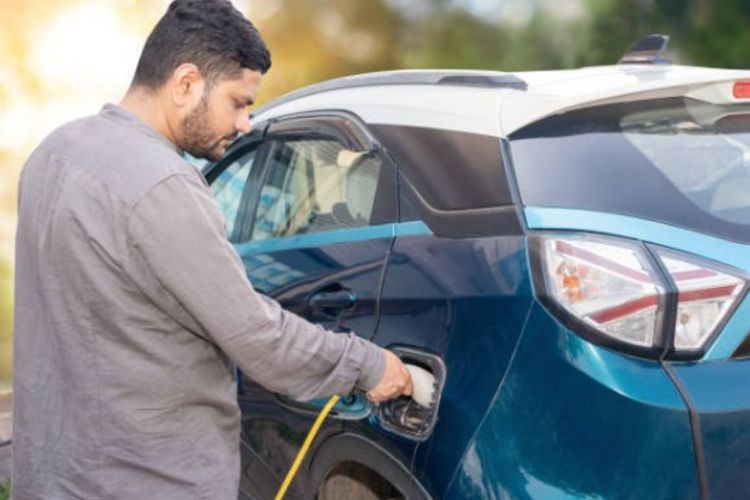
Charging infrastructure a usability constraint
The binding constraint is not capacity but usability. The policy treats home charging as the baseline. In Delhi’s dense housing patterns, that assumption only partly holds. Large sections of residents lack dedicated parking or adequate transformer capacity for simultaneous charging. For them, public charging is not supplementary. It is foundational.
Public infrastructure remains thin relative to the adoption curve. As of April 2024, Delhi had around 1,886 public charging stations for nearly 2.9 lakh registered EVs, a ratio of roughly one charger per 153 vehicles. High-adoption markets operate closer to one per 15–25. The gap is material because purchase decisions hinge on convenience rather than subsidies once affordability thresholds are crossed. Consumers value speed and reliability. Evidence shows willingness to pay a premium to reduce charging time by minutes.
The policy designates Delhi Transco Limited as the nodal agency and mandates dealer-level charging with a single-window clearance system. That addresses process friction, not system capacity. Two-wheelers account for about 67% of Delhi’s vehicle stock. Scaling infrastructure for this segment will depend on grid upgrades, land availability, and DISCOM coordination. Incremental charger additions will not suffice.
Distributed models offer a more viable path. Battery swapping, shared charging hubs, and two-wheeler-centric infrastructure reduce dependence on fixed home charging. Public investment in charging networks also delivers higher adoption per rupee than direct purchase subsidies. The policy signals this direction but does not yet resolve the execution constraints.
READ | Southern states drive India’s electric vehicle adoption
Financing burden shifts to gig-economy workers
The second constraint is distributional. Aggregator regulations prohibit ride-hailing and delivery platforms from adding new petrol or diesel two-wheelers from January 2026. The compliance burden, however, falls on individual workers.
India’s gig economy runs on independent contractors who own and finance their vehicles. Electric two-wheelers remain harder to finance. Interest rates are typically 1–4% higher than for internal combustion vehicles. Loan tenures are shorter. Loan-to-value ratios are lower. A delivery worker financing an electric scooter priced near ₹1.2 lakh faces higher monthly outflows even before factoring in battery replacement risk. Battery packs account for over 40% of upfront cost.
Range constraints compound the problem. Budget electric two-wheelers below ₹1.1 lakh fall short of the 80–120 kilometre daily requirement typical for delivery operations. Lifetime running cost advantages exist, but workers operating on daily cash flows prioritise upfront cost, EMI burden, and downtime.
The transition therefore requires a shift away from ownership-heavy models. Leasing, battery-as-a-service, and fleet-based access structures convert capital expenditure into operating expenditure. Risk must move from individuals to institutions. First-loss default guarantees and inclusion of EV lending under priority-sector norms can lower financing costs and improve credit access. Without this shift, mandates risk imposing costs on the least resilient segment of the mobility economy.
NCR fragmentation weakens enforcement
The third constraint lies beyond Delhi’s administrative boundary. Registration bans operate within a city, but vehicle markets do not. Delhi sits within an integrated NCR economy. Haryana and Uttar Pradesh have no parallel restrictions on internal combustion registrations.
This creates leakage. Consumers and fleet operators can register vehicles in neighbouring states and operate them in Delhi. The outcome is regulatory arbitrage. Delhi-based dealers are penalised. Border-state registrations gain. Environmental outcomes weaken.
Effective airshed management requires NCR-wide coordination. Electrification targets, registration norms, and phase-out timelines must align across jurisdictions. City-level mandates cannot deliver system-level outcomes in a porous regional economy.
READ | India’s electric vehicles push gains global momentum
Delhi EV policy 2026: Mandates without systems
These constraints point to a common problem. Mandates raise the cost of non-compliance before alternatives become frictionless. Charging density remains inadequate. Financing structures remain misaligned with user realities. Regional coordination remains absent.
Delhi has set the direction. Execution will determine outcomes. Electric mobility is no longer an automotive transition. It is an urban systems problem involving power distribution, land use, financial architecture, and inter-state coordination. The test will not be the vehicles banned, but the systems built to make the transition workable at scale.
Anuj Pattanayak is a policy professional working on mobility, transport and planning at Chase Advisors.