





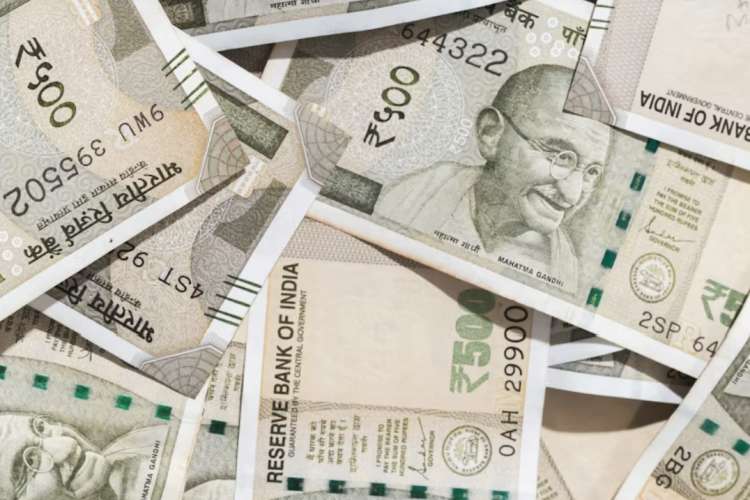
The ongoing geopolitical headwinds are putting a downward pressure on the Indian currency which has hit a fresh low of 96.532 against dollar on Tuesday. It is a challenging period for policymakers and concerns are high among economists and market participants about the near-term trajectory of rupee and its impact on India’s stability.
As the currency crossed the psychological mark of 95 against USD in mid-May, concerns are if the rupee will fall to 100-per-dollar soon. After touching 96.2 against the USD, the rupee eventually settled at a record closing low of 95.97 per dollar, compared with the previous close of 95.77. Technically, 94.80-95.10 is expected to act as an important support zone for USD/INR, while 96.00-96.50 remains a strong resistance area in the near term.
READ | Rupee depreciation: Why RBI cannot reverse the fall
The local currency has already depreciated by 6.35% over the calendar year, with a 1.21% decline occurring since April. Now, the rupee is facing pressure against a strong US dollar and the discussion has naturally turned to whether it will approach the psychologically significant level of 100 per dollar. While most market experts believe a breach of this threshold is unlikely in the immediate future, they acknowledge that the speed of the recent decline has highlighted vulnerabilities in the external sector.
What is causing downward pressure on the rupee?
A combination of global geopolitical tensions and shifting capital flows is the primary driver of rupee’s fall. Brent crude oil prices have been elevated with trading around $109 per barrel due to ongoing uncertainties in the Middle East, particularly involving Iran. India’s oil vulnerabilities are well established with the majority of its demand being met via imports. Higher oil prices mean an increased demand for dollars by domestic oil marketing companies.
Only stoppage of war and reopening of the Strait of Hormuz can bring about a lower demand on the $/rupee pair, else 100 seems to be on the card if RBI does not announce any schemes to increase dollar inflow into the country, according to some analysts.
Along with this, the US Dollar Index has strengthened to 99.30 due to high interest rates in the United States and a general global preference for safe-haven assets. India’s currency is not alone in facing pressure and emerging market currencies broadly have been impacted.
What is worth noting is that rupee’s trajectory and its depreciation has been worse than what was initially projected by several institutional analysts. Barclays had previously forecast the rupee at 95 per dollar for June and 96.8 by the end of the year. However, while foreign equity outflows and substantial importer dollar demand were taken into account while making these projections, the escalation of geopolitical tensions since late February simply accelerated these existing trends. Now, market sentiment is in a more bearish direction.
READ | RBI curbs test the rupee internationalisation push
The slip of rupee is influencing the behavior of key market participants. Exporters are hesitant to hedge their future dollar revenues and are instead choosing to wait for weaker rupee levels to optimise their returns. Because exporters are holding back on selling their future dollars, there is less dollar cash readily available in the market. As a result, traders are mostly split into two groups. Ones are betting that the dollar will keep rising against the rupee and then there are those sitting on the fence waiting to see if the Reserve Bank of India will step in or if the market turns around. Right now, nobody is betting on rupee strengthening.
Meanwhile, the merchandise trade deficit has widened to $28.38 billion in April as import growth outpaced export performance. A widening trade gap will expand the current account deficit. While India has traditionally relied on steady capital inflows to balance this deficit, there is headwinds from that front as well. FPI outflows are a pressing problem which is being driven by global risk aversion and higher yields abroad.
Will rupee fall even more?
The trajectory of the global oil prices will further determine the course of the local currency. If Brent crude remains within the $90 to $125 per barrel range, the rupee could gradually weaken to the 100 per dollar mark over the next six months at the earliest to a year. However, if oil prices rise and stay above $125 per barrel, that level could be reached much sooner, even by the end of September. In the shorter term, if current conditions persist, the currency is expected to move toward the 97 to 97.50 range by the end of June.
READ | RBI’s rupee defence is about volatility, not control
However, the RBI is also watchful of the depreciation of the rupee and has been active in the foreign exchange market. The central bank has been intervening through state-run banks to manage volatility and prevent speculative disruptions. India maintains a considerable level of foreign exchange reserves but continuous intervention is needed to ensure these buffers can last even during prolonged periods of global uncertainty.
Meanwhile, the government also imposed customs duties on precious metals including import curbs on silver by putting the metal under a licensed regime for inbound shipments. The effective duty on gold and silver (including 3% IGST) is over 18% now to curb unnecessary purchases and stop the outflow of forex by curbing non-essential imports.
Beyond RBI’s response, policymakers will also be required to consider broader structural responses. Analysts have pointed to the currency challenges of 2013 as a historical reference point when the government and the central bank introduced specific measures to attract foreign capital. This included concessional swap windows and targeted schemes for non-resident Indian deposits. If capital outflows and trade imbalances also put pressure in the second half of the year, policy interventions may be needed again to stabilise inflows and arrest the currency’s fall.