





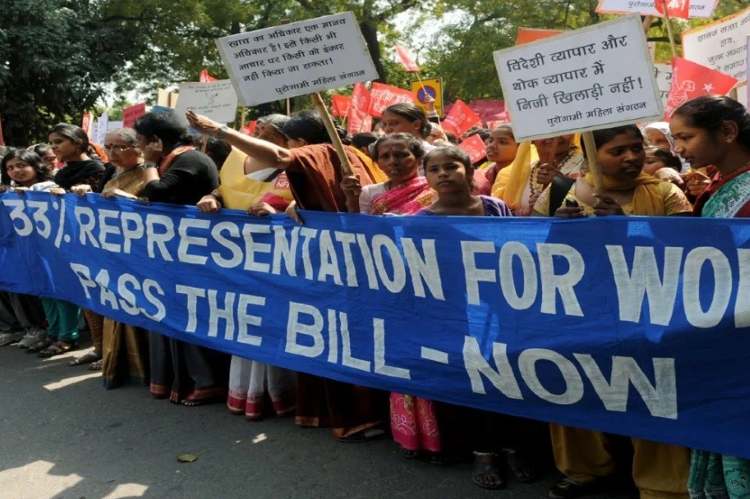
Women’s reservation hits a political wall: Women’s empowerment is multidimensional, and political participation is central to it. The share of women in legislatures remains one of the clearest measures of democratic inclusion. Representation shapes policy priorities and resource allocation. Its absence distorts both.
Recognising the importance of democratic decentralisation, Article 40 directed the state to organise village panchayats as units of self-government. The 73rd Constitutional Amendment created the three-tier Panchayati Raj system and mandated reservation for Scheduled Castes and Scheduled Tribes in proportion to their population, along with one-third reservation for women. The 74th Amendment extended a similar framework to urban local bodies.
Many states went beyond that floor on women’s reservation. Twenty-one states now provide 50% reservation for women in panchayats and urban local bodies. There are about 14.5 lakh elected women representatives in panchayats, accounting for roughly 46% of all elected members. At the third tier, India’s scale of representation is without parallel.
READ I Women in law still face barriers to the Bench
Women’s reservation reform stalled
No such affirmative action for women’s reservation exists in the Lok Sabha or State Assemblies. The Constitution (106th Amendment) Act, 2023 provided for one-third reservation for women but tied its implementation to a future Census and delimitation.
The April 2026 special session of Parliament was intended to remove that delay. The government introduced the Constitution (131st Amendment) Bill, 2026 along with the Delimitation Bill and related legislation to enable immediate operationalisation of the quota using the latest available Census.
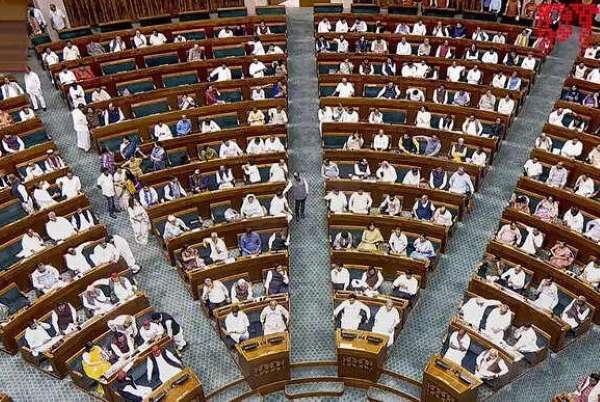
The constitutional amendment required a two-thirds majority in the Lok Sabha. It secured 298 votes in favour and 230 against, falling short of the threshold. The linked delimitation and seat-expansion proposals were not pursued after the defeat.
The legislative outcome reveals the core political constraint. There is broad support for women’s reservation. The disagreement is over its linkage with delimitation and the redrawing of political representation across states. Opposition parties supported the quota but opposed its sequencing and institutional packaging. Southern states argued that delimitation based on current population would reduce their relative share in Parliament. The result is a familiar stalemate. The law exists. Implementation remains contingent.
READ I Women’s reservation cannot wait for delimitation
The law has important design limits
Even if implemented, the 2023 women’s reservation framework has design constraints.
Reserved constituencies will rotate after each delimitation cycle. This weakens incentives for long-term constituency investment and continuity. The reservation is also time-bound for 15 years, with Parliament retaining the option to extend it.
A more significant omission is institutional. The law does not apply to the Rajya Sabha or State Legislative Councils. This limits the reform’s reach across higher legislatures.
READ I Women empowerment incomplete without safety, work and agency
Representation remains structurally low
The 18th Lok Sabha has 74 women MPs, about 14% of total strength. The Rajya Sabha is modestly higher but still far from parity.
The distribution is uneven. Kerala, Mizoram, Nagaland and Sikkim have no women MPs. West Bengal leads in absolute numbers, followed by Uttar Pradesh and Maharashtra.
Party data show little variation. Major national parties field similar proportions of women candidates. The constraint lies in nomination patterns. Women constituted less than 10% of candidates in the 2024 general election, and many constituencies saw no female candidate at all.
State Assemblies remain further behind. Women account for about 9% of MLAs nationwide. Even the best-performing states remain far from parity.
Why the pipeline has failed
India’s experience at the grassroots level shows that quotas change outcomes. But that success has not translated upward.
The issue is not only voter bias. It is institutional control. Candidate selection, campaign finance, and party hierarchies remain tightly managed. Women leaders emerging from panchayats do not move into state and national politics in proportionate numbers.
This explains the divergence. At the local level, constitutional compulsion produced outcomes. At higher levels, party discretion has preserved the status quo.
The unresolved question
The April 2026 parliamentary episode clarifies the political economy of reform. Women’s reservation is no longer contested in principle. It is contested in design and sequencing.
Linking the quota to delimitation has proved to be the central fault line. It has delayed implementation and turned a social reform into a federal and electoral contest.
The evidence from local bodies remains clear. Where quotas are mandated, representation changes quickly. Where they depend on party choice, progress stalls.
The law is in place. The barrier is no longer legislative absence. It is political agreement on how to implement it.
Dr Sweety Supriya is Assistant Professor (Electronics) at LS College, B.R.A. Bihar University, Muzaffarpur.