





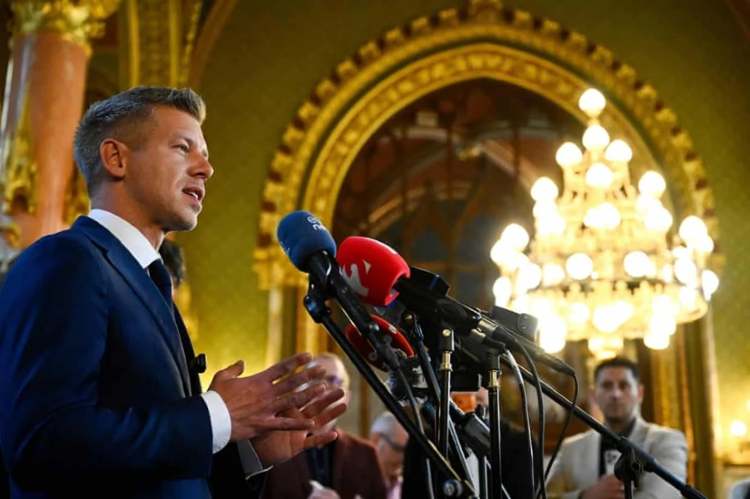
Peter Magyar’s emphatic victory ends Viktor Orbán’s 16-year hold over Hungary’s political system. It does not end Hungary’s structural dependence on Russian energy. That distinction matters. Electoral mandates can redirect foreign policy rhetoric quickly; energy systems, contracts, and infrastructure change slowly. Magyar inherits constraints that will temper both his approach to Moscow and expectations in Brussels.
Hungary’s exposure to Russian energy is not marginal; it is systemic. More than 80% of its gas and oil imports originate from Russia, with gas alone accounting for roughly three-quarters of consumption. Crude flows largely through the Druzhba pipeline, while gas is tied to long-term contracts with Gazprom and infrastructure such as TurkStream. Nuclear dependency deepens the linkage: the Paks plant supplies 40–50% of Hungary’s electricity and is being expanded by Russia’s Rosatom.
READ I Trump’s Iran threats will run into hard limits
This is not a portfolio that can be unwound by political will alone. Contracts signed in 2021 extend for 15 years. Infrastructure is geographically locked. Substitution—via LNG, pipelines such as Adria, or renewable expansion—requires capital, time, and regulatory alignment. Magyar has acknowledged as much, setting a 2035 horizon for ending Russian energy dependence. Even that appears optimistic.
Russia, for its part, has little incentive to disrupt this equilibrium. Moscow has already signalled continuity, framing Hungary as a “pragmatic” partner. Cheap, discounted energy—made possible by sanctions distortions—remains a powerful lever. For a government confronting weak growth and fiscal stress, energy pricing is not an abstract geopolitical choice but a domestic political constraint.
READ I What Iran’s resilience reveals about decentralisation
Political distance, economic continuity
Magyar’s campaign positioned Hungary as a “free, European” state, distancing itself from Orbán’s dual alignment with Washington’s Trump faction and Moscow. That framing reflects voter sentiment. Anti-Russian rhetoric featured prominently in campaign rallies, and polling suggests Tisza voters view Russia as an adversary.
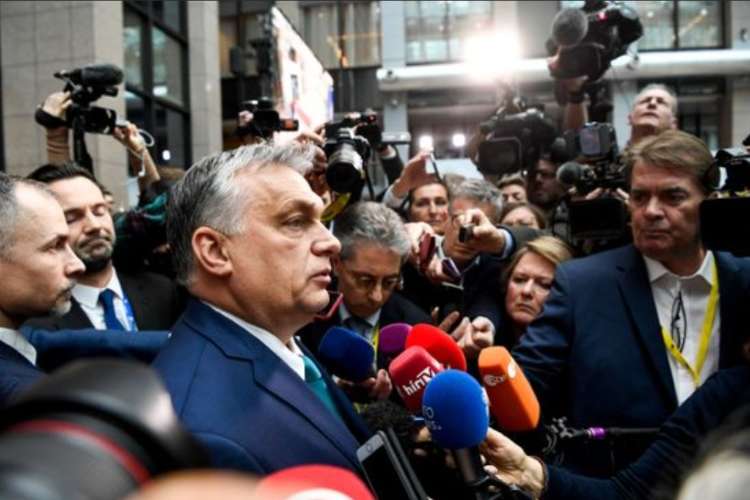
Yet this political distance will not translate into a clean economic break. Magyar has already indicated that ending dependence does not mean ending purchases. The distinction is deliberate. Hungary is likely to retain Russian energy supply while incrementally diversifying, using competition to negotiate better terms rather than severing ties.
This hybrid posture is consistent with how smaller European economies have managed energy transitions under constraint. It also reflects a broader reality: decoupling is costlier than diversification. Hungary’s refining capacity, controlled by MOL, can process non-Russian crude, but alternatives are more expensive and logistically complex. Any abrupt shift would transmit directly into inflation and industrial competitiveness.
READ I Europe’s Russia strategy risks repeating history’s wars
Russian energy and the limits of EU ties
Magyar’s victory has been welcomed across European capitals. Ursula von der Leyen and leaders in Berlin and Paris have framed it as a restoration of Hungary’s European trajectory. There is an expectation that Budapest will stop obstructing EU policy on Ukraine and sanctions, unlocking frozen funds tied to rule-of-law concerns.
Some of this will materialise. Hungary is unlikely to continue its role as a veto player within the European Council. Institutional reforms—joining the European Public Prosecutor’s Office, restoring judicial independence—are within Magyar’s control and could unlock funding.
But closer EU alignment has limits. The Union’s own energy strategy imposes deadlines that Hungary may struggle to meet. Brussels has set a 2027 target for phasing out Russian energy imports. Hungary’s 2035 timeline already signals divergence. Negotiations over exemptions, transition financing, and infrastructure support will be contentious.
Moreover, EU cohesion on Russia is itself uneven. Several member states continue to rely on residual Russian energy flows or third-country intermediaries. Hungary’s position is more acute, not unique. This reduces Brussels’ leverage and complicates any attempt to force rapid compliance.
Ukraine policy: Change in tone, not fundamentals
Orbán’s Hungary was a consistent spoiler on Ukraine—blocking sanctions, delaying aid, and opposing accession talks. Magyar is unlikely to replicate this posture. The political cost would be prohibitive, both domestically and within the EU.
However, Hungary’s stance will remain cautious. Magyar has opposed arms transfers to Ukraine and resisted fast-track EU accession. Energy dependence reinforces this caution. Any escalation with Moscow carries economic risks that Budapest is not positioned to absorb.
The likely outcome is a shift in tone rather than substance: fewer vetoes, more procedural alignment, but continued hedging on core issues. This aligns Hungary more closely with the EU mainstream without fully converging on its most hawkish positions.
Russia adapts faster than Europe expects
The Kremlin’s response to Magyar’s victory has been notably pragmatic. There is no indication of punitive signalling or attempts to destabilise the transition. Moscow has dealt with leadership changes across Europe by prioritising continuity in energy and trade relationships.
Orbán was useful to Russia as a political ally within the EU. But he was not indispensable. Hungary’s structural dependence ensures that Russia retains influence irrespective of who governs in Budapest. The Kremlin’s strategy is likely to shift from political patronage to transactional engagement—maintaining supply, leveraging pricing, and preserving long-term contracts.
This adaptability reduces the geopolitical significance of Orbán’s defeat from Moscow’s perspective. It complicates the EU’s expectation that Hungary’s political realignment will translate into a strategic setback for Russia.
Structural constraints over electoral mandates
Magyar’s victory marks a decisive break with Hungary’s recent political trajectory. It does not alter the country’s energy geography or contractual obligations. These factors will define Hungary’s external alignment more than campaign rhetoric or electoral enthusiasm.
The new government can recalibrate institutions, repair relations with Brussels, and moderate Hungary’s role within the European Union. It cannot quickly rewire its energy system. That constraint ensures that Russia remains a relevant—if no longer preferred—partner.
Expect continuity beneath the change. Hungary will edge closer to the EU without fully detaching from Russia. The space between those positions will define Magyar’s foreign policy—and test the EU’s capacity to accommodate strategic ambiguity.