





The government has renewed scrutiny of domestic value addition in its PLI schemes. For a decade, industrial policy has aimed to reduce import dependence and deepen manufacturing capability. Yet after several years of production-linked incentive, the picture is less flattering than the output and export numbers suggest.
A high-level panel chaired by the Cabinet Secretary has asked ministries to review violations of domestic value addition norms across sectors and submit a consolidated report to the Department for Promotion of Industry and Internal Trade. The message is clear: India may be assembling more, but it is still not making enough of what it assembles.
READ I RBI rate pause signals hard trade-offs for Indian economy
Why domestic value addition matters
Domestic value addition measures how much of a product’s value is created within the country through local components, design, labour, intellectual property and ancillary services. In the Indian context, it marks the gap between headline manufacturing growth and genuine industrial capability.
Under PLI, incentives were meant to reward not just higher output but production that embeds the domestic economy more deeply into global supply chains. That is also why compliance now matters. If ministries are being asked to examine violations, the issue is no longer only whether targets were ambitious, but whether domestic value addition has been defined, reported and verified in a credible way across schemes.
India now has 14 PLI schemes across sectors such as electronics, pharmaceuticals, telecom equipment, textiles and advanced chemistry cells. They were designed to attract investment, cut import dependence and boost exports. Some early results have been encouraging. India has become a significant mobile phone assembly base, smartphones emerged as India’s top exported commodity in calendar 2025, and the overall PLI programme has approved 836 applications across 14 sectors.
But domestic value addition remains the weak link. Without it, India cannot claim technological depth, industrial resilience or strategic autonomy.
READ I Small savings rates put government in a policy bind
Why PLI has raised output, not enough depth
The difficulty begins with the structure of global manufacturing. Production is organised through highly specialised, dispersed value chains, with critical inputs concentrated in a few countries.
Take advanced chemistry cells. Key minerals such as lithium, cobalt and nickel are either unavailable or insufficiently processed in India. In such conditions, ambitious domestic value addition targets can quickly become aspirational. India can assemble battery packs, but if upstream materials are imported, the share of value created at home remains limited.
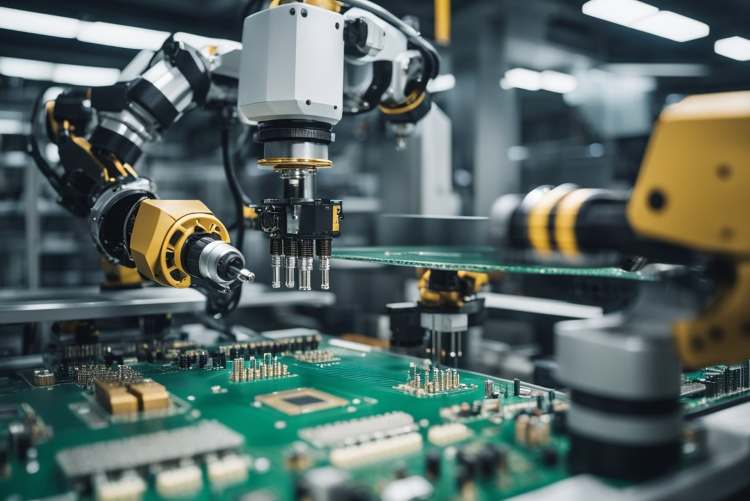
The same problem is visible in smartphones, the PLI scheme’s showcase sector. India has made visible gains but the value pyramid remains skewed. Final assembly is labour-intensive and relatively easy to relocate. High-value components such as semiconductors, display panels and camera modules still come from abroad. The government itself says domestic value addition in electronics manufacturing is currently about 18% to 20%.
Raising domestic value addition in smartphones will require more than incremental investment. It needs a shift into component manufacturing. That, in turn, demands scale, supplier ecosystems, technology capability and time. Complex component lines are not plug-and-play operations. They take years of integration and learning.
It also requires policy beyond PLI. The rise in mobile manufacturing has been shaped not only by incentives for final output but also by the Phased Manufacturing Programme, which was designed to promote domestic value addition in phones and sub-assemblies. That underlines the larger point: PLI alone cannot produce industrial depth unless it is backed by a component ecosystem.
READ I West Asia crisis exposes India’s export fragility
Intellectual property gap in manufacturing
Public debate on manufacturing often ignores intellectual property, though a large share of value in modern products comes not from assembly but from design, patents and proprietary technology. India remains thin on this front.
When products are designed elsewhere and merely assembled in India, the domestic economy captures only a sliver of total value. That is why high production volumes can coexist with low domestic value addition. Without stronger domestic design and IP capability, India will remain stuck at the shallow end of manufacturing.
Sectoral outcomes are not identical
The weakness in domestic value addition is real, but it is not uniform across sectors. Official data suggest a mixed picture. Electronics still has low domestic value capture despite rapid scale-up, but other schemes report much higher localisation. A PIB note on PLI performance said domestic value addition in pharmaceuticals had reached 83.7% as of March 2025.
That does not dilute the criticism of PLI. It sharpens it. The government should distinguish between sectors where weak domestic value addition is a temporary result of upstream import dependence, sectors where localisation is progressing, and sectors where the scheme risks becoming little more than a subsidy for assembly. A single headline number will hide too much.
PLI review must lead to a policy reset
The government’s insistence on domestic value addition compliance is both timely and justified. Without local value creation, much of the benefit from manufacturing expansion leaks out of the domestic economy. Assembly jobs are often low-skilled and easily relocated. PLI was supposed to change that by nudging firms towards localisation. So far, the results have been uneven.
In sectors where upstream inputs are globally concentrated, initial domestic value addition thresholds may need to be modest, with a clear and time-bound path for raising them. At the same time, policy must support component manufacturing, cluster infrastructure and technology transfer if higher value addition is to become feasible.
Policy also needs to look beyond output. The real question is not only how much firms produce in India, but what they learn to make, design and improve here. Research spending, design teams and worker training matter more in the long run than simple assembly volumes.
The current review is an opportunity. By identifying where domestic value addition targets are being missed, and why, the government can move from headline manufacturing gains to a more serious industrial strategy. A product labelled Made in India should signify more than the location of assembly. It should reflect value created, technology absorbed and capability built at home.