





US-Iran deal a truce with costs: The US-Iran memorandum is a pause in a war, not yet a peace. Its immediate value is plain. Washington and Tehran have signed a framework that is expected to reopen the Strait of Hormuz, end the US naval blockade of Iranian ports and begin 60 days of negotiations on the nuclear file and sanctions relief. A formal signing is due on June 19, with traffic through Hormuz already expected to rise, though officials have warned that normal flows will take time. The text shared for this article also records the same broad structure: reopening Hormuz, lifting the blockade, freezing new US sanctions, and pushing the hardest nuclear questions into a second phase.
The US-Iran deal is a diplomatic gain for President Donald Trump. It is also an admission of limits. The United States used force, imposed a blockade, absorbed the economic consequences of a disrupted Gulf, and then returned to negotiation with the Iranian regime still in place. Iran’s nuclear infrastructure may have been damaged. Its commanders may have been hit. Its economy may have suffered. Yet Tehran has shown that it can impose costs on energy markets, complicate US military options, and divide Washington from Israel at a critical point.
READ I Credible threats shape US-Iran nuclear talks
US power in West Asia meets Hormuz reality
The Strait of Hormuz has converted Iran’s weakness into leverage. EIA data before the war showed that about 20 million barrels per day of oil moved through the strait in 2024, roughly one-fifth of global petroleum liquids consumption. That figure is the reason a middle power under sanctions can force a superpower to bargain. Iran cannot match American firepower. It does not need to. It has geography, mines, missiles, drones, and the ability to make insurers, shipowners and energy traders nervous.
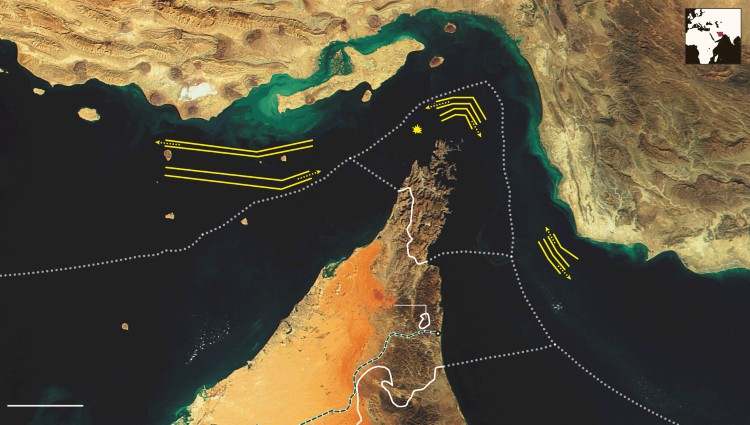
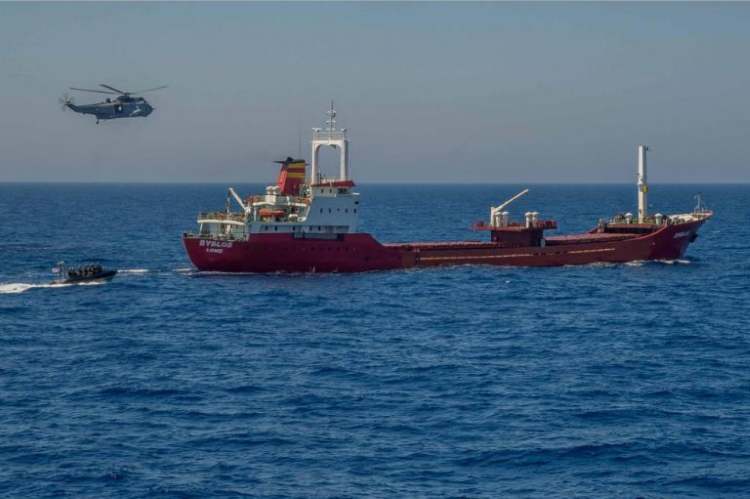
The first test of the agreement is therefore not the ceremony. It is whether ships move. Trump has said vessels are already carrying oil out of Hormuz. Tanker operators are more cautious. Full transit could take weeks or even a month, and that shipowners would wait for evidence that the agreement is material on the water, not only in communiques. That distinction matters. US power in West Asia rests partly on the belief that Washington can secure the sea lanes. If the reopening is slow, conditional, or priced by Iran through new “services”, the region will draw its own conclusion.
Markets have already priced in relief. Brent has fallen, European shares have risen, and Citi has cut its Brent forecasts after assigning a 60% probability to normalisation of trade flows through Hormuz by mid-to-late July. But markets are not allies. They reward de-escalation and punish uncertainty. If Hormuz opens unevenly, the risk premium will survive the press conference.
READ I Green competitiveness will decide India’s export future
US-Iran deal and the limits of coercion
The American argument will be that force brought Iran to the table. There is some truth in that. Iran has paid a price. Its air defences, military infrastructure and political leadership have been hit. The blockade squeezed its ports. Sanctions and war together increased pressure on a state already weakened by long isolation.
Yet coercion must be judged by the political result it produces. The regime has survived. It has not accepted a final nuclear settlement. The proposed framework defers uranium stockpiles, enrichment levels, nuclear infrastructure, sanctions relief and security guarantees to later talks. The Atlantic Council’s first assessments describe the memorandum as an interim peace arrangement, with a large gap between its aspirations and any final deal.
This weakens the claim that Washington has restored deterrence. Deterrence is not measured by bombs dropped. It is measured by future conduct. If Tehran concludes that pressure on Hormuz produced sanctions relief and direct talks, it will preserve that option. If Israel concludes that Washington will stop a campaign once oil prices, inflation and allied pressure rise, it will hedge against American restraint. If Gulf capitals conclude that de-escalation with Iran is safer than reliance on another US campaign, they will act accordingly.
READ I UK-India trade pact needs a knowledge engine
Israel, Gulf states and US’ narrowing room
The agreement also exposes a familiar problem for the United States in West Asia. Its partners do not want the same outcome. Israel wants Iran’s nuclear capacity eliminated and Hezbollah weakened. Gulf Arab states want open sea lanes, lower energy volatility, and protection from retaliation. Europe wants oil prices down and inflation contained. Washington wants an end to a war that had become politically and economically costly.
Those objectives overlapped at the start of the campaign. They diverged when the campaign failed to produce a decisive political outcome. Israel’s scepticism is already visible. Reuters has reported renewed Israeli strikes and Israeli insistence that any final agreement must eliminate the nuclear threat entirely. But the US decision to include Lebanon-related de-escalation and restrain further escalation gives Tehran a diplomatic opening. It also tells Israel that American support has a ceiling when a regional war threatens the global economy.
For the Gulf, the lesson is different. Saudi Arabia, the UAE, Qatar, Bahrain, Oman and others have watched a US-Iran confrontation place their economic model at risk. Their instinct will be to preserve access to Washington while investing in working channels with Tehran. That does not mean a strategic shift away from the US. It means less appetite for policies that assume Iran can be cornered without consequence.
The nuclear file returns, weaker than before
The hardest question has only been postponed. Trump wants Iran’s enriched uranium surrendered or destroyed under supervision. Iran wants sanctions relief, frozen assets, and guarantees that Washington will not again withdraw from an agreement. The draft terms included the release of billions of dollars in frozen assets and waivers on oil exports in return for reopening Hormuz. Iranian media have disputed timelines and details, while US officials have projected more confidence than Tehran has publicly shared.
This asymmetry is important. Washington wants to present the memorandum as a controlled sequence: ceasefire, Hormuz, negotiations, nuclear settlement. Tehran will try to make it a staggered exchange: sanctions relief first, nuclear concessions later, with Hormuz as continuing insurance. The 60-day window is therefore not a bridge to certainty. It is a bargaining arena in which each side will claim compliance while testing the other’s tolerance for delay.
The comparison with the 2015 nuclear deal will be politically irresistible in Washington. It is also premature. The Joint Comprehensive Plan of Action had a defined nuclear architecture, however contested. This memorandum has a ceasefire, a maritime opening, and an agenda. Unless the next phase produces intrusive verification, enforceable limits on enrichment, and clarity on sanctions snapback, it will be thinner than the deal Trump abandoned in 2018.
American power after the US-Iran agreement
The agreement does not show American decline in any simple sense. The US remains the only external power able to bomb Iran, blockade its ports, move markets with a presidential statement, and convene regional leaders around a settlement. Russia and China cannot do that. Europe cannot. No Gulf state can.
But the form of American power has changed. Washington can still punish. It cannot easily compel Iran to accept maximal terms. It can still reassure allies. It cannot fully align Israel, Gulf monarchies and European economies behind one Iran policy. It can still keep forces in the region. It cannot prevent adversaries from learning how to threaten bases, ships, ports and energy flows.
The Iran war has undermined old assumptions about the sanctuary of US forward bases and surface ships in the region. That is the strategic residue of this conflict. The United States has not been expelled from West Asia. It has been reminded that dominance in the region now carries higher operating costs.
For India and other Asian importers, the immediate issue is energy. Asia receives much of the oil and LNG that passes through Hormuz. A reopened strait will ease prices, freight, insurance and inflation pressure. But the deeper implication is geopolitical. If Hormuz can be closed, reopened, and then used as a negotiating instrument, energy security cannot rest on American naval power alone. Strategic reserves, diversified contracts, alternative routes, and a larger diplomatic presence in the Gulf are no longer optional cushions.
The US-Iran deal may hold. Both sides have reasons to avoid another round of war before the next American electoral test and before Iran absorbs the economic gains of de-escalation. But a pause achieved after Hormuz was weaponised is not the same as restored order. It is a settlement built around mutual exhaustion, economic pressure and unfinished nuclear questions.
That may be the most accurate measure of US power in West Asia today. It can still shape events. It can no longer assume that force will settle them.