





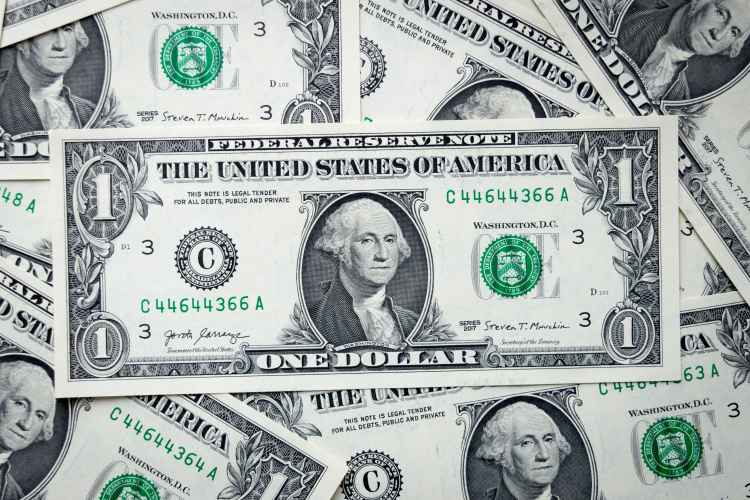
Washington spent the last week trying to make long-term US debt cheaper. Treasury Secretary Scott Bessent has expanded buybacks of longer-dated government bonds as yields climbed. Yet the benchmark 10-year Treasury yield is still around 4.68%. The dollar index was hovering around 99.18. The more consequential signal came from the bond market: investors were being asked to absorb a growing stock of US debt while the government showed greater discomfort with the price they demanded.
The case for dollar decline is attritional, not apocalyptic. The currency accounted for 57.13% of global foreign-exchange reserves in the first quarter of 2026. It was part of 89.2% of all foreign-exchange trades in April 2025. No other currency comes close.
READ | Trump’s generic drug tariffs threaten India’s pharma trade
Reserve-currency status, however, depends on more than economic size. It requires a deep market for safe assets and confidence in the institutions behind them. Foreign governments must also believe that the rules governing trade, money and access to the financial system will remain broadly predictable. Donald Trump’s policies are putting pressure on those advantages.
Tariffs turn dollar dependence into a policy risk
Trump treats access to the American market as leverage. Tariffs have been used against rivals and allies, sometimes under legal authorities later curtailed by the courts. The Congressional Budget Office estimates that the effective US tariff rate was 10% at the end of July 2026, against about 2% in 2024. Washington continues to consider new sectoral duties after the Supreme Court struck down its earlier use of emergency powers for sweeping tariffs.
Tariffs raise costs and invite retaliation. Their monetary effect takes longer. Governments and companies that cannot predict the terms on which they will trade with the United States have reason to reduce the number of transactions for which the dollar is indispensable.
They do not need a new world currency to do this. Bilateral settlement and alternative payment systems can reduce dollar use at the margin. The Atlantic Council’s Dollar Dominance Monitor finds that the dollar remains secure in the near term, while continued US policy instability could encourage gradual diversification of foreign assets.
Dollar decline: The Treasury market is carrying a heavier load
Reserve managers hold dollars largely because the United States supplies something no rival can match at scale: a vast market in liquid government securities. That advantage is now carrying a growing fiscal burden.
The federal deficit would be to the tune of $1.9 trillion in fiscal 2026, which is about 5.8% of GDP. Debt held by the public is projected at 101% of GDP this year and 120% by 2036. Net federal interest costs are expected to exceed $1 trillion in 2026. These figures do not imply a debt crisis. They increase the quantity of Treasuries investors must absorb while inflation and fiscal policy make them more sensitive to risk.
READ | Trump’s foreign policy: India should read the pattern correctly
That is why Treasury’s expanded buybacks of long-dated debt have drawn unusual attention. The programme is meant to improve market functioning and relieve pressure at the long end. When the government intervenes as yields rise, however, investors must judge whether debt management is drifting into an attempt to influence borrowing costs. For a reserve asset, boredom is an advantage.
Fed independence enters the exchange-rate calculation
The Federal Reserve is another foundation of dollar credibility. Trump has repeatedly pressed for monetary policy more congenial to his programme. His administration has also continued efforts to remove Governor Lisa Cook, testing the legal protection enjoyed by Fed officials.
Foreign central banks buying Treasuries are making a long-duration bet on the machinery that preserves the dollar’s purchasing power. Political direction of monetary policy would raise the risk premium investors demand, especially when deficits are large and inflation remains above target.
There is a useful precedent. In the 1970s, the end of Bretton Woods, high inflation and political pressure on the Fed prompted predictions that the dollar’s international role was finished. It survived after American institutions recovered credibility. Dollar dominance was sustained by institutional repair, not by monetary inevitability.
READ | Trump tariffs and the new grammar of global trade
Sanctions create their own hedge
Financial sanctions work because global finance relies heavily on dollars and American banks. The same power gives targeted countries an incentive to build routes around the system.
A July 2026 NBER paper by Gregor Matvos and Brent Neiman found that sanctions imposed during 2021-25 reduced targeted banks’ access to major-currency correspondent networks. Some sanctioned systems shifted toward the renminbi and more fragile chains of intermediaries. Outside heavily sanctioned countries, the movement away from the dollar remained limited. That distinction matters: de-dollarisation is most visible where access to dollars has become a geopolitical vulnerability.
The Trump administration appears to recognise the problem. Treasury has removed obsolete sanctions entries and says penalties should be targeted and tied to identifiable effects. At the same time, Washington has widened its campaign against Iran and threatened secondary sanctions on third countries. Every successful use of the dollar as a coercive instrument gives exposed governments another reason to insure against it.
No successor, but more substitutes
A rapid dollar displacement still looks implausible. China retains capital controls and manages the renminbi. Europe cannot offer a single sovereign bond market comparable with America’s. Foreign demand for US assets remains substantial: Treasury data show net foreign inflows of $133.5 billion in June 2026 and $207.1 billion of net purchases of long-term US securities.
Technology could reinforce the dollar. The GENIUS Act gives regulated dollar stablecoins a clearer legal framework, extending dollar payments beyond conventional banking. The administration itself presents stablecoins as a means of supporting dollar use and Treasury demand.
Diversification is nevertheless visible. Central banks added 863 tonnes of gold in 2025. In the World Gold Council’s 2026 survey, 74% of reserve managers expected the dollar’s share of global reserves to be lower in five years. The IMF’s latest data show the dollar share rose in the first quarter, partly because of exchange-rate valuation effects. Reserve transitions are rarely linear.
The more plausible future is a dollar-centred system with a larger fringe. Gold takes a bigger place in reserves, while some trade shifts into local currencies and new payment channels reduce reliance on Washington.
Trump wants the privileges of dollar primacy while using market access and the financial system as instruments of power. The United States can do so because the dollar is dominant. Repeated use makes dependence on the dollar more costly for everyone else. A reserve currency can lose ground for years before another currency is strong enough to replace it.