





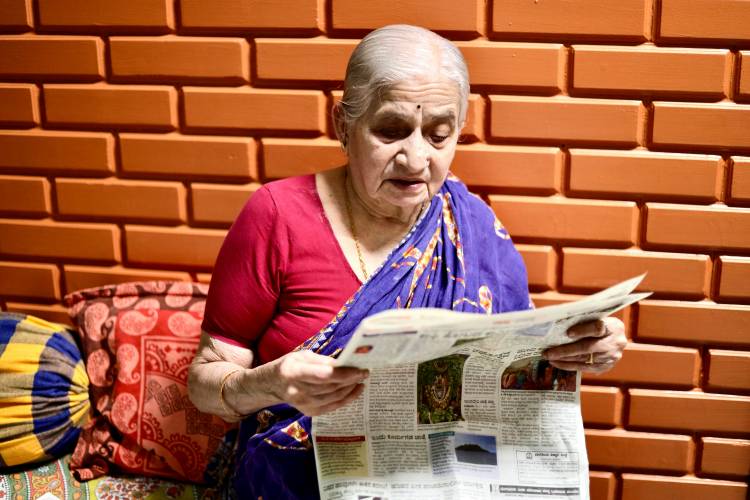
Kerala Senior Citizens Bill: Kerala is ageing faster than most of India, and the consequences are visible in its households. In many villages, older people live alone while their children work in the Gulf or farther afield. Remittances may pay the bills, but they cannot substitute for regular care when illness or frailty sets in. Home-nursing agencies have multiplied, yet the regulation of these services, the training of caregivers and the protection of older people from neglect and financial abuse remain inadequate. The law, meanwhile, continues to rely heavily on a 2007 central Act whose principal remedy is to require children to maintain their parents.
The Kerala Senior Citizens (Care and Protection of Rights) Bill, 2026, seeks to move beyond this limited framework. Its emphasis on rights, alongside care, is welcome. The provisions described in the Bill cover dignity, personal autonomy, access to health and care services, digital inclusion and the rights of caregivers. But the legislation risks promising more than its enforcement machinery can deliver. The question before the Assembly is whether Kerala will give older people rights they can claim against the State, or leave them with declarations of intent and few effective remedies.
READ | Kerala must prepare for an ageing population
The Kerala Assembly has an opportunity to correct these weaknesses before the Bill becomes law. The question is whether the legislation will establish enforceable entitlements or leave older people dependent on the goodwill and capacity of the institutions responsible for their care.
Kerala has already taken an institutional step by establishing a Department of Older Persons. The proposed legislation could give that administrative recognition a stronger legal foundation. It also opens a wider debate about the rights of older people, including their autonomy in decisions about treatment, access to services outside the digital system and protection against financial exploitation.
Why ageing requires a human rights framework
A human rights approach treats older people as rights-holders and the State as the principal duty-bearer responsible for protecting their rights. Indian constitutional law provides a basis for this approach, although it does not contain a separate fundamental right specifically addressing old age.
Article 41 is the Constitution’s express reference to old age. It directs the State, within the limits of its economic capacity and development, to make effective provision for public assistance in cases of unemployment, old age, sickness and disablement. As a Directive Principle of State Policy, it is not independently enforceable in court. Article 21, however, guarantees the right to life and personal liberty, and the Supreme Court has interpreted that guarantee to include the right to live with dignity.
In Dr Ashwani Kumar v. Union of India, decided on 13 December 2018, the Supreme Court addressed the rights of older people to pensions, shelter and geriatric care. It affirmed the constitutional significance of dignity, shelter and health and issued directions concerning the implementation of existing protections. The judgment provides an important foundation for treating the needs of older people as matters of public obligation rather than charity. Read the Supreme Court judgment.
Articles 14 and 15 provide a further constitutional basis for protection. Article 14 guarantees equality before the law, while Article 15 prohibits discrimination on specified grounds, including religion, race, caste, sex and place of birth. Age is not among those expressly listed. Article 14 may nevertheless provide grounds to challenge arbitrary State action, although the absence of an explicit prohibition on age discrimination leaves an important gap.
Articles 38 and 47 reinforce the State’s responsibility to promote social welfare and public health. The Constitution also distributes legislative authority in ways that allow Kerala to act. Social security and old-age pensions fall within the Concurrent List, while public health and relief of disabled and unemployable persons fall within the State List. The Eleventh Schedule assigns panchayats responsibilities in areas including social welfare and the welfare of weaker sections.
Kerala therefore has substantial scope to strengthen the legal protection of older people without waiting for a constitutional amendment. The Maintenance and Welfare of Parents and Senior Citizens Act, 2007, already provides for maintenance obligations and other protections, but its family-centred framework does not amount to a comprehensive system of enforceable rights to care, income support and participation.
The proposed Bill could bridge part of this gap. Its effectiveness will depend on whether its provisions create obligations that older people can enforce, rather than duties that government departments can satisfy through administrative measures of their own choosing.
READ | India’s elder-care policy is counting the wrong things
What the Bill gets right
The proposed legislation makes significant advances in recognising dignity, autonomy and access to care as rights. Its provisions, as described in the draft, deserve to be preserved and strengthened.
Dignity and protection from abuse. The Bill recognises an entitlement to a life of dignity and safety, irrespective of economic status. Its definition of abuse extends beyond physical violence to coercive control, financial misuse, denial of essential goods and services, cruelty and abandonment. This broader understanding is important because financial exploitation and neglect can deprive older people of their independence even when there are no visible signs of physical abuse.
Autonomy and decision-making. The proposed preference for supported decision-making recognises that age alone should not deprive a person of the right to make decisions. Substitute decision-making should be used only where the relevant legal conditions are met and less restrictive support is insufficient. The Bill also addresses decisions about care and living wills concerning end-of-life treatment. These provisions need to be read consistently with existing law, including the Mental Healthcare Act, 2017, and the legal framework governing advance medical directives.
Care and health services. Clause 4, as described in the draft, provides for access to home, day, respite, palliative and hospice care at affordable cost and in geographically accessible locations. Provisions for geriatric clinics, dementia care and assistive devices such as hearing aids, spectacles and mobility aids could improve access to services that are often difficult to obtain outside larger towns.
The central question is how these commitments will operate in practice. A right to affordable care requires standards for affordability, minimum service levels, eligibility rules and a way to challenge denial of treatment or support. Without these, a broad statutory promise may be difficult to enforce.
Equality and digital access. The Bill prohibits discrimination in access to care on several grounds, including caste, gender, religion and disability. It also recognises the need for accessible digital services and non-digital alternatives. This is particularly relevant when banking, public services and benefit delivery increasingly require digital access. An older person who cannot use a smartphone or authenticate a transaction should not lose access to an essential service for that reason.
The prohibition on discrimination should, however, explicitly include age. A law designed to protect older people should address age discrimination directly rather than leave the issue to be inferred from a general list of prohibited grounds.
Rights of care workers. The draft extends protections to caregivers through provisions concerning minimum wages, working conditions, harassment and social security. This is a valuable inclusion. Poorly paid workers with inadequate training and little job security may struggle to provide consistent care. Labour protections, appropriate training and oversight of care agencies are therefore important to the quality of services received by older people.
These provisions give the Bill a broader reach than a law concerned only with family maintenance or the management of care homes. They should form the foundation of the legislation, not be diluted in the process of strengthening its enforcement provisions.
Where the legislation falls short
The Bill’s principal weakness is the gap between recognising rights and providing remedies when those rights are denied. A right becomes meaningful when its holder knows where to complain, when a decision can be expected and what happens if the responsible authority fails to act.
The draft requires the State to take appropriate measures to secure the rights it identifies, but it does not appear to establish a sufficiently clear route for challenging their denial. An older person refused an entitlement to care should not have to rely on an official’s discretion or approach a constitutional court to obtain relief. The legislation should specify a complaints process, a time limit for decisions and an appeal to an independent authority.
Kerala’s State Elderly Commission, established under the Kerala State Elderly Commission Act, 2025, could play a central role. The government should consider giving it the powers, resources and independence needed to investigate complaints, hear appeals, examine systemic failures and report to the Assembly. Its effectiveness would depend on statutory authority and adequate staffing, rather than its designation as a watchdog alone.
The Bill also needs to clarify the State’s responsibility in relation to family care. The draft places an obligation on family members to provide adequate care and identifies the family as the primary model. Families will remain important providers of emotional and practical support, but they cannot always meet every need. In Kerala, where many adult children work overseas or in other states, a legal duty imposed on relatives may offer little practical protection to a parent living alone. The State must remain accountable for the availability of essential services, with family support complementing public provision.
The proposed inspection regime raises another concern. If government-run care homes are exempt from the standards imposed on private and charitable facilities, residents of public institutions could receive weaker protection. The rules should apply consistently across providers, with proportionate safeguards for differences in size and function. The legislation should also protect older people living in Kerala regardless of citizenship, subject to clearly defined legal provisions where necessary. Basic protection against abuse and neglect should not depend on a person’s ability to establish citizenship.
Representation is equally important. The draft provides for older people to participate in policymaking, but government-appointed representatives alone cannot ensure that their concerns shape decisions. Older people’s organisations should have a formal role in the relevant State and district bodies, with members selected through a transparent process. Consultation should extend to people living in rural areas, care homes and economically disadvantaged households, who may have limited access to official forums.
The financial provisions require closer scrutiny. The draft refers to progressive realisation of rights but reportedly places the Bill-specific annual provision at ₹25 lakh. That figure should be assessed against the actual cost of administering the law, regulating care facilities, investigating complaints and making the proposed services accessible. It should not be confused with Kerala’s wider spending on pensions and elderly welfare. The State’s 2026–27 Elderly Budget, for example, records much broader allocations for schemes and services. The Bill needs a transparent financial assessment showing which activities its own provision is expected to fund and how additional obligations will be financed.
The absence of an explicit income guarantee is another significant omission. Old-age pensions are recognised in the Concurrent List, giving both Parliament and state legislatures room to act within their respective powers. Kerala should consider whether the legislation can establish a clearer entitlement to income support, or set out a statutory framework for assessing pension adequacy and access. A care law cannot by itself eliminate poverty in old age, but the relationship between income security and the ability to obtain food, housing and treatment should be acknowledged.
READ | Disability rights law needs enforceable access
Kerala and the proposed UN convention
Kerala is considering this legislation while the United Nations begins work on a legally binding instrument devoted to the human rights of older persons. On 3 April 2025, the UN Human Rights Council adopted Resolution 58/13, establishing an open-ended intergovernmental working group to draft such an instrument. The group held its first session in Geneva from 13 to 17 July 2026. Its second session is scheduled for 26–30 October 2026. See the UN working group’s official information.
The convention is still under negotiation. Its eventual provisions cannot be treated as settled obligations, but the process gives governments an opportunity to examine gaps in existing law and consider how rights can be protected more consistently. Kerala can contribute practical experience by developing legislation that goes beyond a statement of principles.
Several features of the proposed Bill could inform that discussion. Its treatment of long-term and palliative care, supported decision-making, non-digital access to services and the rights of care workers addresses issues that a comprehensive framework for older people must confront. Its omissions are equally instructive. Age discrimination, income security, access to justice, independent monitoring and the scope of protection all need clearer treatment.
India, rather than an individual state, would decide whether to ratify a future convention. International obligations would then have to be implemented in accordance with India’s constitutional and legal framework. Article 253 empowers Parliament to legislate for implementing international agreements, including in areas otherwise falling within the State List. Kerala’s experience could help inform that process, although the State cannot bind the Union or determine the final terms of the treaty.
The Bill also needs to be assessed against existing international human rights standards. Article 25 of the Universal Declaration of Human Rights recognises the right to security in old age. Articles 9 and 12 of the International Covenant on Economic, Social and Cultural Rights address social security and the right to the highest attainable standard of health. The Convention on the Rights of Persons with Disabilities protects legal capacity and independent living for persons with disabilities, including older people who fall within its scope. These instruments provide relevant standards, even though they do not all establish an identical set of rights specifically for older persons.
Kerala Senior Citizens Bill: Five changes before the Bill becomes law
The Assembly can strengthen the proposed legislation without abandoning its existing framework.
First, it should establish an enforceable complaints mechanism. The law should identify the authority responsible for each entitlement, prescribe a reasonable period for decisions and provide an appeal against refusal or inaction. A 30-day decision period could be considered for ordinary complaints, with an expedited procedure for cases involving immediate risks to safety or health.
Second, the Kerala State Elderly Commission should be empowered to monitor implementation independently. Its functions could include investigating systemic failures, hearing appeals, inspecting institutions where appropriate and submitting periodic reports to the Assembly. Adequate staffing, a defined budget and safeguards against administrative interference are essential.
Third, the legislation should identify the State as the primary duty-bearer for ensuring access to essential care and protection. Families should be supported in their caregiving responsibilities, but the State must not be able to shift its own obligations onto relatives who may be unable or unavailable to provide care.
Fourth, the Bill should prohibit age discrimination explicitly, apply consistent safety and inspection standards to public and private care institutions, and protect every older person living in Kerala from abuse and neglect, subject to the applicable legal framework.
Fifth, older people should have meaningful representation in the bodies created under the law, and the government should provide a transparent, adequately funded implementation plan. The annual budget should identify the cost of care regulation, complaints handling, training, monitoring and any new entitlements, with provision for review as demand grows.
Kerala has an opportunity to move beyond a law that describes how older people should be treated towards one that gives them a practical means of defending their rights. The distinction will be decided by the provisions that govern remedies, public responsibility, representation and finance. As negotiations on a UN convention proceed, Kerala can offer a useful model, provided its legislation gives older people a way to hold the State to its promises.
Dr Joe Thomas is Global Public Health Chair at Sustainable Policy Solutions Foundation, a policy think tank based in New Delhi. He is also Professor of Public Health at Institute of Health and Management, Victoria, Australia. Dr Thomas was the founding Secretary General of the Global Commission on Ageing in developing countries. He is an author of reports from seven PPD member countries documenting the ageing situation, health and well-being, and policies to enable and support environments.
READ | Maternal mortality rate falls, but hospitals still fail women

Dr Joe Thomas is Global Public Health Chair at Sustainable Policy Solutions Foundation, a policy think tank based in New Delhi. He is also Professor of Public Health at Institute of Health and Management, Victoria, Australia. Dr Thomas was the founding Secretary General of the Global Commission on Ageing in developing countries. He is an author of reports from seven PPD member countries documenting the ageing situation, health and well-being, and policies to enable and support environments.