





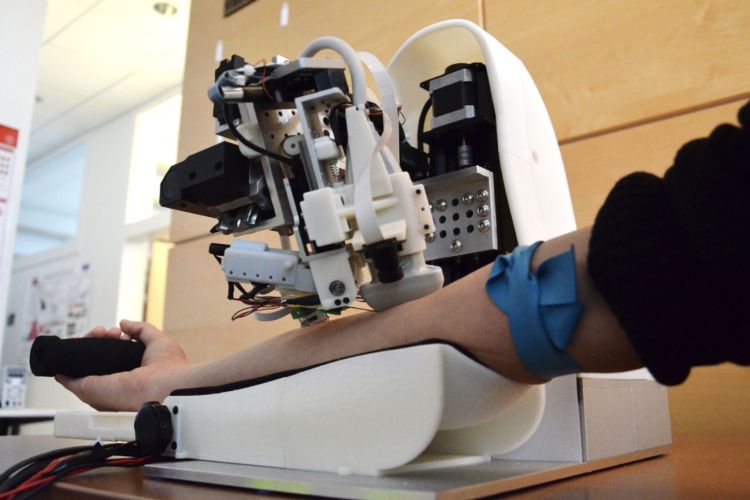
Robotic blood draw devices: Would you let a robot draw your blood? That question moved from experiment to clinical practice on August 19, when the US Food and Drug Administration (USFDA) authorised Aletta, the first standalone robotic device capable of drawing blood from a patient’s arm without hands-on operator intervention.
Developed by Dutch medical technology company Vitestro, Aletta is authorised for adults in outpatient settings. A trained phlebotomist must supervise its operation, although one supervisor may oversee as many as three devices at the same time. The FDA sees this as one way of easing a shortage of trained phlebotomists.
READ | Breaking through infoglut: The anger-information overload cycle
The case for automation is easy to understand. A machine that can perform blood collection reliably could shorten queues, standardise technique and allow scarce staff to spend more time on difficult cases. The harder questions concern consent and clinical responsibility when the person holding the needle disappears.
What Aletta actually does
The patient places an arm in the machine and either the patient or supervisor starts the procedure. Aletta uses near-infrared imaging, ultrasound and Doppler ultrasound to find a vein and distinguish it from an artery. If it cannot identify a suitable vein, it does not proceed.
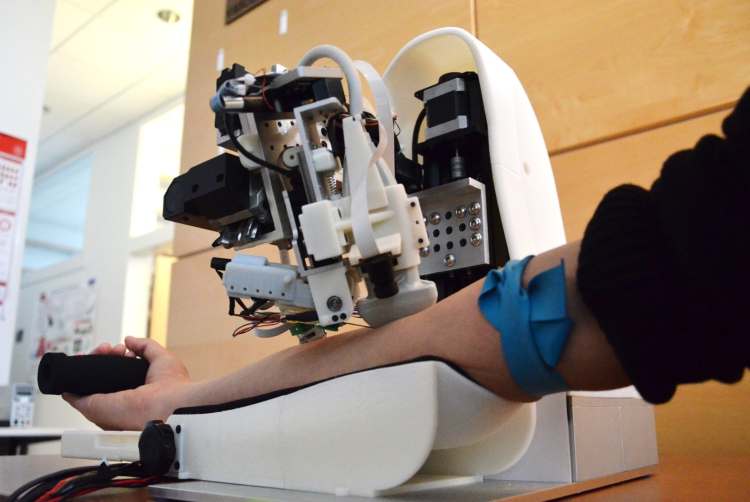
Once it finds one, the machine applies the tourniquet, prepares the skin, inserts the needle, changes collection tubes, withdraws and disposes of the needle and applies a bandage. The supervising phlebotomist checks the collection tubes and remains available if something goes wrong.
Several safeguards are built into the system. Excessive patient movement can cause the needle to detach automatically and stop the draw. Other sensors can pause the procedure and alert the supervisor. These protections matter because automation changes how an error occurs; it does not remove the possibility of one.
Encouraging evidence, with qualifications
The clinical evidence behind robotic phlebotomy is substantial enough to merit attention. A study published this year evaluated the device in outpatient departments in the Netherlands. Among 1,633 patients in whom the robot identified a suitable vein and attempted venipuncture, the first-stick success rate was 94.5 per cent. All reported adverse events were mild, with an overall adverse-event rate of 0.6 per cent.
Those figures need context. Of 1,743 patients screened, the device could not identify a suitable vein in 110, or 6 per cent. They were sent for manual phlebotomy. Once they are included, the overall successful collection rate was 88.5 per cent.
READ | India’s education trap begins with unequal access
The study was funded by Vitestro. Several authors were company employees or held equity, and the sponsor had a direct role in study design, patient selection, interpretation of results and preparation of the manuscript. That does not invalidate the findings, but independent studies and post-market evidence will matter as use expands.
The FDA also said the evidence covered patients with differing health conditions, difficult vein access and varying skin tones. That is important for a device whose performance depends heavily on imaging. Regulators and hospitals will still need to watch whether performance remains consistent across larger populations and different clinical environments.
Robotic blood draws change the consent question
For most patients, a blood draw is so routine that consent can seem almost implicit. An autonomous device changes the nature of the encounter. A patient who agrees to have blood taken may reasonably want to know whether the needle will be inserted by a person or a machine.
The ethical principle is familiar. The American Medical Association’s guidance on informed consent says patients should receive enough information about the nature of an intervention, its risks, benefits and alternatives to make a voluntary decision.
Hospitals using autonomous phlebotomy should therefore make the role of the machine explicit. Patients should know that Aletta performs the puncture, what the supervisor is doing, how a human can intervene and what happens if the machine aborts the procedure.
There is also a question of choice. A patient who is uncomfortable with robotic venipuncture should, where practicable, be able to request a conventional blood draw. That choice loses meaning if hospitals make the human option so inconvenient that patients are effectively pushed towards automation.
READ | Indian National Congress needs a generational reset
Responsibility cannot be automated
Autonomous medical equipment also changes the chain of accountability.
Suppose a patient suffers an injury after a mechanical malfunction. Or a specimen is compromised. Or an alert requiring intervention is missed while one phlebotomist is supervising several machines. Hospitals will need protocols defining the responsibilities of the manufacturer, the healthcare institution and the supervising professional.
The FDA’s authorisation requires human oversight. In practice, the quality of that oversight will depend on staffing ratios, training and how quickly supervisors can respond when several devices are operating simultaneously.
Automation can also alter the character of a routine clinical encounter. Some patients barely notice a blood draw. Others are frightened of needles, prone to fainting or difficult to reassure. An experienced phlebotomist does more than locate a vein. The job sometimes involves judging anxiety, responding to discomfort and knowing when to stop.
Robotic systems need not eliminate that human role. Used well, they could allow skilled staff to concentrate on patients who need more attention. Used primarily as a cost-cutting tool, they could leave fewer people available precisely when human judgment is required.
The same applies to employment. Aletta is being presented as a response to staff shortages, and the FDA has explicitly cited that potential benefit. Yet a system in which one employee supervises three machines will inevitably change staffing patterns. Healthcare providers should assess those changes in terms of workload and patient safety as well as headcount.
Aletta represents a genuine advance in medical automation. Its clinical performance appears promising, and the staffing problem it addresses is real. The next test will take place outside the laboratory, as hospitals decide how the technology is used and patients decide whether they trust it. Automation may perform the blood draw. Responsibility for the patient remains with people.
READ | Maternal mortality rate falls, but hospitals still fail women
Dr Joe Thomas is Global Public Health Chair at Sustainable Policy Solutions Foundation, a policy think tank based in New Delhi. He is also Professor of Public Health at Institute of Health and Management, Victoria, Australia. Dr Thomas was the founding Secretary General of the Global Commission on Ageing in developing countries. He is an author of reports from seven PPD member countries documenting the ageing situation, health and well-being, and policies to enable and support environments.