





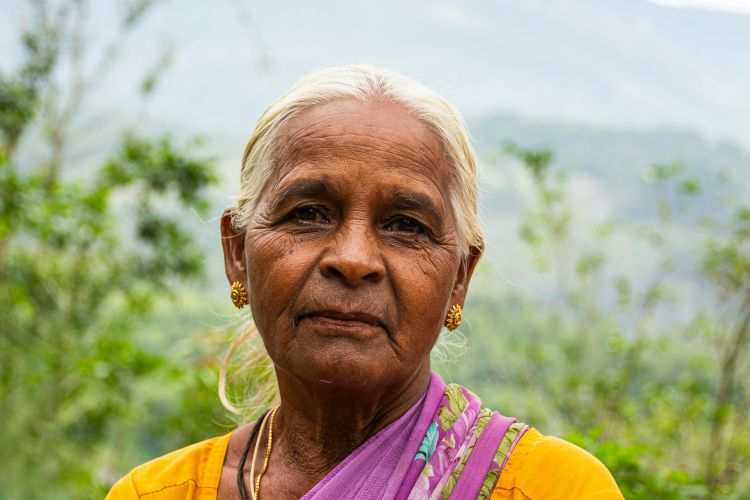
India’s elder-care policy: The Union Budget 2026-27 has proposed to train 1.5 lakh multi-skilled caregivers in the current financial year. The health ministry was allotted ₹1,06,530 crore, about 10% higher than last year’s outlay. Indians aged 70 and above are already covered under the Ayushman Bharat Pradhan Mantri Jan Arogya Yojana, irrespective of their income. These are welcome steps. They are also the sort of things governments find easy to announce and count. How many people were trained? How many cards were issued? How much money was allocated? Elder care becomes much messier once one leaves the Budget documents and enters an ordinary household.
An elderly person may have diabetes for 15 years, hypertension for 20, arthritis that restricts movement and depression that nobody has diagnosed. There may be no dramatic medical event. There may instead be a succession of prescriptions, tests, visits to doctors and periods when somebody in the family has to stay home.
READ | Kerala ageing population needs rights-based elder care
That is the world described by the Longitudinal Ageing Study in India, or LASI. Its first wave remains the most substantial national examination of ageing and health available to policymakers. It also suggests that much of the present debate is looking at elder care from the wrong end.
Old age rarely comes with one disease
LASI Wave 1 covered more than 72,000 people aged 45 and above in 2017-18. The survey did not depend entirely on whether respondents knew or remembered their medical conditions. It also included physical examinations and biomarkers.
The difference was important. Measured disease frequently exceeded reported diagnosis.
There is nothing mysterious about this. Millions of Indians have hypertension or diabetes without knowing it. They become visible to the medical system when they are tested, or when something worse happens. An administrative database built from people already receiving treatment will therefore understate the burden.
Ageing will make this weakness harder to ignore. India had an estimated 149 million people aged 60 and above in 2022. Their share of the population could exceed 20% by 2050.
A larger elderly population would be manageable if most people remained healthy until shortly before death. LASI suggests a different prospect. Many will live for years with more than one chronic condition.
Research using LASI data has found multimorbidity among more than 45% of poor urban Indians aged 45 and above in one sample. Other studies have found combinations of hypertension, diabetes, arthritis and depressive symptoms among older Indians. Disability rises as diseases accumulate.
READ | Kerala elderly welfare needs a state-built care system
Consider what this means for an insurance-led approach. A hospital policy is useful when someone needs an operation or inpatient treatment. Hypertension does not normally require admission to hospital. Neither does routine diabetes management. Arthritis may require years of medication and physiotherapy. None of these expenses disappears because somebody carries a ₹5 lakh hospitalisation card.
The elderly patient spends most of his time outside hospital. Policy should begin there too.
India’s elder-care policy: Depression is easily missed
LASI has exposed another weakness in the conventional approach to old-age medicine. Depression is fairly common among older Indians, yet it can remain hidden behind physical complaints.
A 2023 study based on LASI found depression among 9.5% of elderly women and 7.4% of elderly men. People reporting poor health and those with multiple illnesses were more likely to suffer from it. A later analysis of 64,695 people aged 45 and above found a similar association.
This does not establish that chronic illness causes depression. The evidence does say something useful about the patients doctors actually see. An elderly diabetic who repeatedly visits a clinic may have a mental-health problem too. Treating the blood sugar while missing the depression will produce poor care.
India has experimented with bringing basic mental-health services closer to primary care. The MANAS trial in Goa used lay counsellors alongside doctors and mental-health specialists. Recovery improved among patients with common mental disorders. The SMART Mental Health programme in Andhra Pradesh and Haryana also showed that community workers and primary-care doctors could help identify and manage patients who would otherwise have received little care.
The proposed caregiver programme could usefully borrow from this experience. A trained caregiver may be the first person to notice that an elderly patient has stopped eating properly, taking medicines or leaving the house. Recognition helps only if there is a doctor or service to which that patient can be referred. Otherwise the caregiver has identified a problem and handed it back to the family.
Governments often underestimate this last mile because it cannot be created by issuing a training curriculum.
READ | Care economy jobs can solve two labour failures
Insurance is useful, but households still pay
The decision to extend AB PM-JAY to everybody aged 70 and above deserves credit. Removing the income test simplifies eligibility and brings a large elderly population under publicly funded hospital insurance.
LASI cannot tell us how well this new arrangement is working. Its first-wave data were collected in 2017-18, before PM-JAY had reached its present form and years before universal eligibility for the 70-plus population.
The older data remain useful for another reason. They show how large medical bills can be even in a system with public schemes.
One LASI-based study estimated average out-of-pocket spending for hospitalisation at about ₹8,276 in public hospitals and nearly ₹49,700 in private hospitals. Publicly financed insurance in that dataset did not produce a statistically significant fall in out-of-pocket expenditure or catastrophic health spending.
Nobody should use those numbers to pronounce judgment on the expanded PM-JAY of 2026. They do puncture the comfortable assumption that an insurance card settles the household’s financial problem.
A large share of old-age spending is routine and repetitive. Medicines have to be bought again. Tests have to be repeated. A physiotherapist may be needed. Somebody may have to accompany the patient to a clinic. Families often pay for home help because public systems rarely provide it.
Hospital insurance handles the expensive episode that fits its rules. Chronic illness sends bills in smaller instalments, sometimes for decades.
Ayushman Arogya Mandirs are supposed to provide stronger primary care. Their role in elder care may ultimately prove more important than politicians realise. A diabetic patient needs a nearby facility that can monitor the disease and adjust treatment. A caregiver needs somewhere to seek advice when an elderly person deteriorates. The hospital should enter the picture when hospital care is actually required.
At present, families still do much of the connecting.
A training target can flatter to deceive
The government has chosen 1.5 lakh caregivers as its target for the coming year. It is a clear number and therefore tempting as a measure of success.
Suppose all 1.5 lakh are trained. We would still need to know how many actually work as caregivers. Some will find other jobs. Some may leave because wages are poor. Some may have a certificate without access to patients or medical supervision.
The same problem arises with the patients. An elderly person identified with possible depression should eventually receive assessment and treatment. A diabetic whose condition is worsening should receive medical follow-up. Referrals should lead somewhere. Families should see some reduction in what they spend on routine care.
Those outcomes are harder to put into a Budget speech. They are much closer to the purpose of the programme.
LASI’s next wave should help establish whether conditions have improved since 2017-18. The delay in getting fresh national data is unfortunate because much has changed since the first survey. PM-JAY has expanded. The primary-care network has grown. The government is now entering caregiver training on a much larger scale.
A future LASI survey may therefore provide an awkward test of these programmes. If insurance coverage rises while out-of-pocket spending remains high, policymakers will have to ask where households are still paying. If more people are diagnosed but treatment does not improve, screening will have achieved less than advertised.
India will need many more caregivers as it ages. Training 1.5 lakh is a reasonable beginning. Yet an elderly Indian living with diabetes, arthritis, hypertension and depression will judge the health system by something more mundane. Can she get the medicine, doctor, referral or help she needs without forcing the family to improvise every time?
That is a tougher target than 1.5 lakh certificates.
Sompalli Pranav Surya and Jayavarma Addepalli are Master’s in Public Policy (MPP) graduates, and Twisha Mehta is a Research Scholar at the Indian Institute of Technology (IIT Tirupati).