




India’s electronics boom has produced cheaper devices, faster digital access and a larger consumer market. It has also produced a waste stream that the country cannot yet handle well.
CPCB data put India’s e-waste generation at 12.54 lakh tonnes in FY2023-24 and 13.98 lakh tonnes in FY2024-25. Formal recycling improved from 7.78 lakh tonnes to 11.59 lakh tonnes in the same period. The improvement is real. The volume remains large.
The pressure will grow. India buys more phones, appliances, servers, cables, batteries, and electronic components every year. Data centres are expanding. Replacement cycles are shorter. Tier-1 and Tier-2 cities now generate a larger share of discarded electronics. The waste chain has not kept pace.
READ | Critical minerals mission to power clean-tech supply chain
India e-waste and lost metals
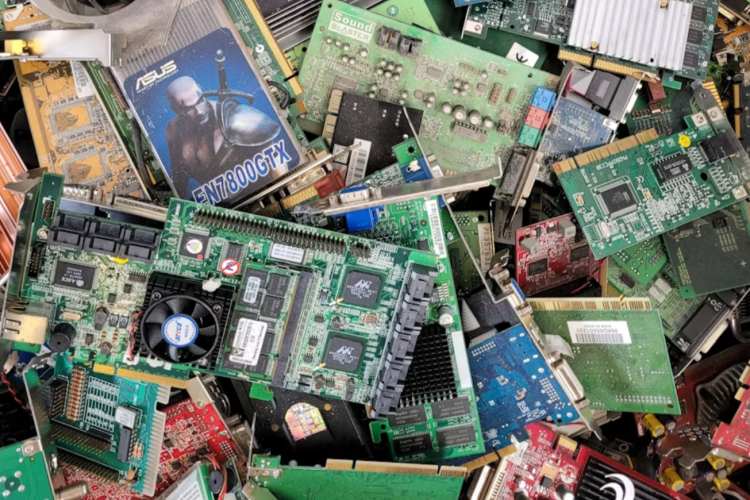
E-waste is a materials problem. Circuit boards, phones, batteries, cables and discarded appliances contain copper, aluminium, gold, palladium, lithium and other recoverable materials. India loses part of this value when waste moves through unsafe dismantling, open burning or crude chemical recovery.
The environmental cost is visible. The economic cost is less visible. India imports many of the materials it allows to leak through scrap channels. A formal recovery industry will not end import dependence. It can reduce waste, recover metals, create jobs and give producers a cleaner route to meet their obligations.
India already has the E-Waste Management Rules, 2022, and an extended producer responsibility system. The weakness lies in collection, traceability, enforcement and the gap between formal recyclers and informal aggregators. Large plants cannot run efficiently if waste keeps moving through unregistered markets.
READ | A circular economy can tackle India’s waste crisis
India-EU FTA and recycling investment
The India-EU Free Trade Agreement, concluded on January 27, 2026, gives this issue a trade setting. Most attention will stay on cars, machinery, pharmaceuticals, textiles, services and tariffs. That is understandable. But the agreement also gives India and Europe room to build industrial partnerships around recycling, material recovery and cleaner manufacturing.
For India, the useful question is narrow. Can the FTA help bring capital, technology and long-term offtake arrangements into e-waste recycling? If it cannot, circular economy language will remain diplomatic padding.
Sweden is a strong candidate for such a partnership. Its waste system links recycling, energy recovery, district heating and industrial recovery. Stockholm Exergi supplies heat through a large district heating network and recovers energy from waste, excess heat and biofuels. Stena Recycling works across Europe in recycling and industrial material recovery. These are businesses with operating experience, not conference examples.
Swedish firms read India as an industrial market
Swedish firms are already treating India as a long-term market. In February 2026, Bulten announced that it would take full ownership of its Indian operations and shift activities to Chennai, closer to electronics and advanced manufacturing clusters. The company linked the move to customer proximity, supply chains and China-plus-one decisions.
Qualisys opened a subsidiary in Delhi in September 2025 to serve India’s technology and research market. The move was part of its global expansion.
These companies are not e-waste recyclers. Their moves matter for another reason. They show how Swedish firms now see India: as a manufacturing and technology market where local presence matters. Recycling firms will make the same calculation only if India offers scale, predictable rules and viable contracts.
READ | India’s energy strategy: Why solar thermal deserves a second look
India-Nordic partnership needs plants
The 3rd India-Nordic Summit in Oslo on May 19, 2026 listed trade, investment, circular economy, climate action, energy security, pollution control, digital infrastructure, research and talent mobility among the areas for cooperation. That list is too wide to guide investment.
The circular economy part should be narrowed to projects. India should identify a few states where electronics, automobiles, renewable energy equipment and data centres already create waste streams. Tamil Nadu, Karnataka, Maharashtra, Gujarat, Telangana and Uttar Pradesh are obvious candidates.
A practical model is available. Swedish firms bring recycling technology, process control and metal recovery. Indian producers bring EPR obligations and offtake contracts. State governments provide land, power, municipal access and clearances. CPCB and state pollution control boards enforce tracking. Informal collectors and aggregators are licensed, trained and paid through formal channels.
Leaving the informal sector outside the system will defeat the project. It already controls much of the collection chain. The policy task is to make it safer, traceable and commercially linked to authorised recyclers.
E-waste recycling as industrial policy
India wants electronics manufacturing, electric mobility, solar capacity, data centres and advanced manufacturing. Each will generate waste. Each will also need materials exposed to global price shocks and supply risk.
E-waste recycling should sit inside manufacturing policy, not at the edge of municipal waste management. The India-EU FTA and India-Nordic partnership give India a route to bring in firms that know how to recover value from waste. Sweden offers one practical route.
India now has to turn summit language into facilities that recover metals, reduce unsafe dismantling, formalise collection and supply industry. That would make the India-Europe moment useful beyond tariffs.
READ | Plastics treaty fate exposes weakness of global resolve

Dr Badri Narayanan Gopalakrishnan is Fellow, NITI Aayog. Views expressed are personal.