





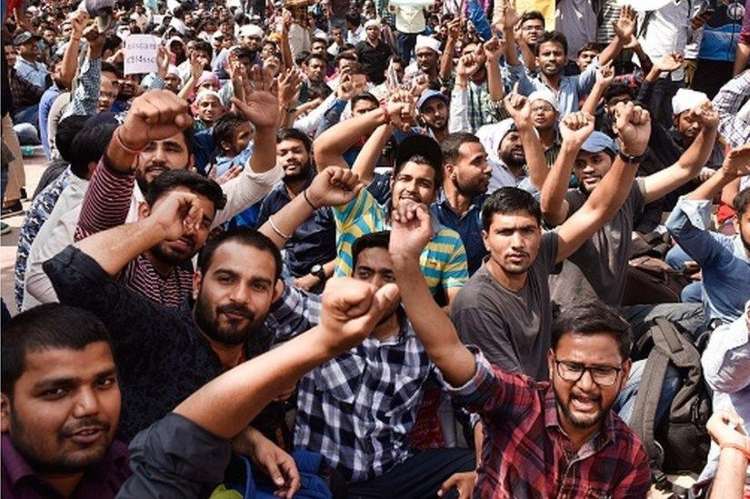
The recent blocking of the Cockroach Janata Party account revealed something deeper than the fate of a meme page or a digital political formation. The Cockroach Janata Party (CJP) is an anonymous, leaderless Indian political movement that emerged in 2026 as a response to education system failures and institutional accountability. The party gained prominence through decentralized digital coordination before its main social media account was blocked by authorities.
Public reaction shifted almost immediately toward identifying the movement’s “real” center: Who runs the page? Can the founder return? Was there always a leadership structure hidden behind the appearance of collective anonymity?
Yet these reactions themselves expose something important about the political condition we increasingly inhabit. If the cockroach metaphor carried any organizational meaning, it was precisely that there was no singular center. A cockroach survives because it is dispersed, adaptable, and difficult to fully destroy. But the moment the account disappeared, political attention instinctively reorganized itself around the search for a recognizable face.
READ I Elder abuse prevention must move beyond awareness
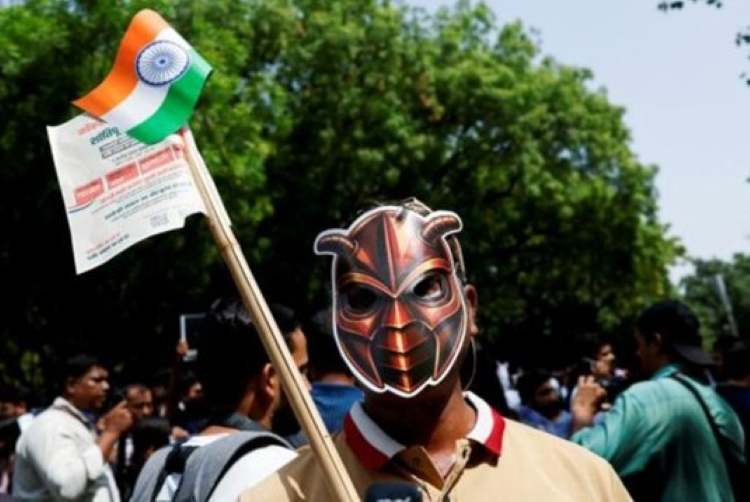
This points toward a contradiction that increasingly defines contemporary political life. Emotionally, societies appear drawn toward decentralization, fluid participation, and leaderless forms of collective expression. Younger generations especially often distrust rigid party structures, established institutions, and traditional authority.
The Cockroach Janata Party emerged initially through anonymous meme pages, ironic digital commentary, and decentralized online participation by students and young users frustrated with mainstream political discourse.
It then rapidly gained visibility across social media platforms.
Digital cultures built around memes, irony, swarms, and anonymity appear attractive precisely because they seem to offer participation without hierarchy. The Cockroach Janata Party resonated because it appeared to momentarily escape recognizable political forms.
But social media platforms are not neutral spaces of communication. Instead, they are systems structured around amplification, circulation, and symbolic concentration.
This is why movements that emerge through dispersed participation gradually drift toward identifiable figures because digital systems privilege personalities over structures. The trajectory of movements such as Occupy Wall Street or the Arab Spring demonstrates how quickly diffuse publics reorganize around visible spokespersons or symbolic centers once attention accumulates at scale.
READ I Kerala fiscal crisis demands hard Budget choices
Cockroach Janata Party and the age of visibility
In contemporary life, visibility itself has become a form of value. The contemporary individual is expected to remain searchable, expressive, emotionally available, and continuously present online. Under such conditions, anonymity begins to feel unstable not only technologically, but psychologically as well.
Thinkers such as Byung-Chul Han have argued that contemporary societies increasingly operate through compulsions toward transparency and self-exposure. Visibility no longer merely accompanies power; visibility itself becomes power. One does not simply communicate online. One performs visibility.
Social media intensifies this condition because participation increasingly depends upon projection. Algorithms reward recognizable personalities because attention circulates more easily through identifiable figures than through dispersed collectives.
Political energy begins attaching itself to influencers, founders, streamers, and visible representatives rather than to slower institutional processes. The 2019 Hong Kong protests maintained energy partly because anonymous coordination existed alongside symbolic figures like Joshua Wong; the Sudanese resistance relied on both faceless networks and eventually coalesced around recognizable leaders; and 2020 farmers’ protests in India that emerged as decentralized mobilization across states gradually accumulated visibility around union leaders and spokespersons like Rakesh Tikait.
The Cockroach Janata Party initially appeared politically significant because it seemed to resist this logic. Anybody could inhabit the meme. Anybody could become the cockroach. But the account ban exposed how fragile faceless politics has become inside contemporary visibility-driven systems. Almost immediately, public attention returned to the founder figure as the symbolic anchor capable of restoring continuity.
On June 6, thousands of students participated in a physical protest at Delhi’s Jantar Mantar. Here too, founder Abhijeet Dipke emerged as the central public face of the mobilization. Support from figures such as Sonam Wangchuk further amplified visibility.
Yet the transition from meme to movement also revealed how quickly attention converges around recognizable individuals rather than dispersed collectives.
READ I NFHS-6 exposes India’s unfinished health governance agenda
Political life without time
The issue here is the structural difficulty of sustaining decentralized politics inside systems organized around visibility.
This difficulty also reflects a deeper transformation in the structure of collective life itself. Modern developmental culture increasingly produces individualized subjects while weakening the slower institutions through which durable political attachments historically emerged.
Earlier forms of political engagement — workplace organizing, campus gatherings, ideological study circles, and neighborhood mobilizations — created continuity through patience, repetition, and long-term participation. The Indian labour movement of the 1970s, anti-caste organizing networks in Tamil Nadu, Jan Sangh cadre-building systems, or anti-colonial movements such as the Indian independence struggle all depended upon study circles, local presence, and trust accumulated across years through organizers embedded within communities over long periods.
But contemporary life increasingly fragments time itself. Under such conditions, sustaining collective worlds becomes extraordinarily difficult because collective life depends upon rhythms that acceleration continuously destabilizes.
Digital platforms are remarkably effective at generating moments of simultaneous attention. Millions can suddenly respond to the same event or circulate the same meme within hours. But these bursts of emotional convergence differ fundamentally from the slower work through which durable communities emerge. Stable political attachments require repeated interaction, organizational continuity, and the willingness to remain engaged after the emotional peak has passed.
The question then becomes: what makes a community possible today? If formations like the Cockroach Janata Party represent digitally connected publics of frustration, precarity, and exhaustion, one must also ask what binds them together beyond temporary outrage. Can irony sustain collective life? Can resentment become a durable social foundation?
Communities historically emerged not merely through opposition, but through shared memory, care, responsibility, meaning, and long-term participation. Anger may produce intensity, but intensity alone rarely sustains institutions. Without deeper emotional and organizational foundations, decentralized politics risks becoming episodic — highly visible for brief moments, yet structurally fragile once visibility weakens.
Why the face returns
This is where the distinction between individuation and individualization becomes important. Individuation refers to the development of meaningful selfhood through embedded social life. One becomes a person through relationships, institutions, collective memory, and forms of belonging. Individualization under contemporary capitalism increasingly means something else: fragmentation, competitive self-display, privatized survival, and continuous performance within visibility-driven systems.
Zygmunt Bauman described contemporary life as increasingly “liquid,” where stable attachments weaken and social forms become temporary and unstable. The digital attention economy intensifies this condition because individuals increasingly experience themselves as isolated units competing for recognition and circulation. Politics itself becomes reorganized around visibility metrics — followers, virality, impressions, engagement. Under such conditions, anonymity becomes difficult to sustain because legitimacy increasingly attaches itself to recognizability. The face returns because systems reward its return.
And yet, despite all this, decentralized politics may not be impossible. But meaningful decentralization likely requires much deeper social foundations than contemporary digital culture usually provides. Consider Iran, which I have discussed elsewhere. Whatever one’s political position on the Iranian state, the society’s capacity to maintain forms of collective resilience despite sanctions, internal contestation, and prolonged geopolitical pressure cannot be explained through spontaneous digital coordination alone. Such resilience depends upon layered infrastructures — historical memory, moral frameworks, institutional continuity, and long-term social attachments capable of surviving beyond cycles of visibility. Distributed resilience requires social depth.
This, perhaps, is the larger question that the Cockroach Janata Party moment unintentionally raises. Can contemporary societies still sustain forms of collective life capable of surviving beyond the disappearance of visibility?
Perhaps the real test of decentralized politics begins precisely when the visible center disappears. If political energy survives beyond the founder, beyond the account, beyond the recognizable face, then something genuinely significant may indeed be emerging.
Soumyajit Bhar is Senior Assistant Professor at the School of Liberal Studies, BML Munjal University, and a researcher in sustainability studies, ecological economics, and the socio-psychology of consumption in the Global South. Originally published under Creative Commons.