





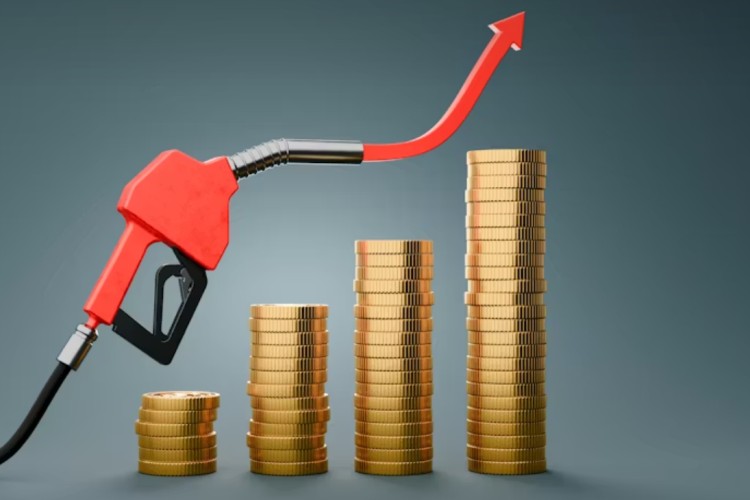
Targeted fuel subsidies: Global crude oil prices have again become a fiscal problem. Brent crude has moved above $100 a barrel after the West Asia conflict disrupted energy flows and complicated US-Iran diplomacy. The IMF has warned governments against blanket subsidies and price caps. Its advice is simple- let prices reflect international costs, but protect vulnerable households through temporary, targeted and time-bound support.
For India, the principle is easy to endorse and hard to execute. The country imports most of its crude oil. A sharp rise in prices widens the current account deficit, raises imported inflation and complicates the fiscal arithmetic. The government’s March cut in excise duties on petrol and diesel absorbed part of the shock. It did not remove the pressure. Oil marketing companies eventually raised pump prices by nearly Rs 4 a litre.
READ | Energy security: Can Samudra Manthan revive oil exploration?
India’s vulnerability is not only fiscal. It is also strategic. Crude diversification reduces dependence on any one supplier or route, but it does not eliminate exposure to freight costs, insurance premia, shipping delays and LPG supply disruptions. Strategic petroleum reserves provide only a limited buffer. A price shock can therefore become a supply-management problem before it becomes a Budget problem.
Crude oil shock narrows fiscal space
The fiscal room today is narrower than during earlier commodity shocks. Tax collections are under strain. Net direct tax collections for 2025-26 grew 5.12% to Rs 23.40 lakh crore, but missed the revised estimate of Rs 24.21 lakh crore. The original Budget estimate was even higher at Rs 25.20 lakh crore. The Budget for 2026-27 assumes a sharp recovery in direct tax growth, a difficult assumption when nominal growth and corporate earnings are under pressure.
Expenditure pressures are rising at the same time. Fertiliser subsidies are vulnerable to higher natural gas and input costs. A crude oil shock can also push up petroleum subsidy claims. Food, fertiliser, LPG and fuel tax relief have often been used to soften inflation. Each is defensible in isolation. Together, they can quickly crowd out capital expenditure, health, education and other productive spending.
Holding pump prices below market levels also creates a quasi-fiscal cost. The burden first appears on the balance sheets of state-run oil marketing companies, not always in the Budget. But it eventually returns to the exchequer through compensation claims, weaker dividends, higher borrowing or delayed investment. Price suppression is therefore fiscally tempting, but economically misleading.
This is the context in which the IMF’s advice matters. It argues that poorly designed subsidies are fiscally costly, difficult to withdraw, and can worsen inflationary pressures. General subsidies also blunt price signals. They encourage consumption when conservation is needed and delay investment in energy efficiency and renewables.
READ | India’s strategic oil reserves must match import risks
Targeted fuel subsidies difficult to implement
India is better placed than many developing economies to deliver targeted relief. The Jan Dhan-Aadhaar-mobile architecture has expanded the government’s ability to transfer money directly into bank accounts. Direct Benefit Transfer has reduced leakages in LPG, rural welfare and other schemes. In theory, India can cushion vulnerable households without suppressing fuel prices for the entire economy.
The operational difficulty is not technology. It is identification. Who is vulnerable during a fuel shock? The poorest households are obvious candidates. But fuel inflation does not stop there. Transport costs feed into food prices. Small businesses face higher input costs. Lower-middle-income households, often outside welfare lists, face a real squeeze. Migrant workers may not be captured accurately by local databases. Many households are excluded because of outdated socio-economic data, documentation gaps or changes in residence.
The absence of a recent Census makes the problem sharper. Welfare targeting depends on data that can quickly become stale. Inclusion errors waste money. Exclusion errors are politically and morally costly. A government that wants to move away from universal fuel relief must first know whom it is protecting.
Fuel price relief carries political logic
Universal measures survive because they are visible. A fuel tax cut is understood immediately. An LPG subsidy is easy to explain. Fertiliser support has a clear political constituency. Targeted transfers are more efficient, but less visible to the broader electorate.
This matters in a democracy where inflation is not only an economic variable. It is a political signal. Transport operators, farmers, manufacturers and small firms all feel the impact of expensive fuel. A purely technocratic response will not work. The IMF’s suggestion of liquidity support, temporary tax deferrals and sovereign-guaranteed loans for viable small businesses recognises this wider transmission channel.
READ | Gold imports, oil prices expose limits of austerity calls
The government therefore faces a trade-off. Broad subsidies protect many households quickly, but at a high fiscal cost. Targeted transfers protect fiscal space, but may miss households that are under genuine stress. The answer cannot be a full retreat from relief. It must be a better mix.
India needs a subsidy exit strategy
India should not freeze fuel prices for long periods. That would recreate under-recoveries, weaken oil marketing companies and hide the true cost of imported energy. Nor should it rely only on market pass-through when household budgets are under pressure.
A more credible approach would combine limited, temporary fuel tax relief with direct transfers to identified vulnerable households. Existing welfare platforms can be used for quick top-ups. States can help identify transport workers, small vendors and informal households facing acute stress. Support for small firms should take the form of temporary liquidity, not permanent price suppression.
The harder task is to build exit rules. Subsidies should carry clear sunset clauses. Tax cuts should be reviewed against crude price thresholds. Cash transfers should be temporary and linked to measurable price shocks. Without such rules, emergency relief becomes entitlement, and entitlement becomes fiscal rigidity.
The crude oil shock is a test of India’s welfare state. The old model relied on administered prices and broad subsidies. The emerging model depends on data, transfers and political discipline. India has built much of the digital plumbing. It now needs the fiscal restraint and administrative accuracy to use it well.