





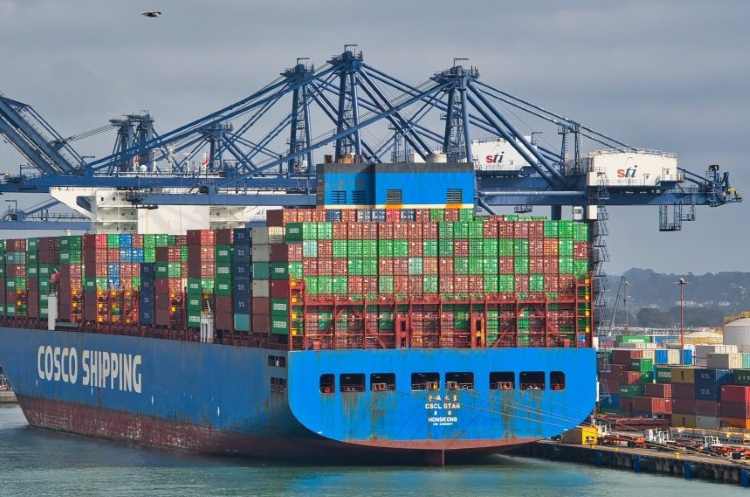
Despite hostile global conditions, India’s exports have held up in the first month of the US-Iran conflict. Goods exports in FY26 rose 0.9% to $441.8 billion. This comes amid tariffs, geopolitical disruption, and weak demand. The marginal growth matters less than the fact that exports did not contract.
March numbers need context. Shipments touched a one-year high of $39 billion but were still 7.5% lower than a year earlier. Compared to February, exports rose 6.3%. The base one chooses alters the narrative.
READ | Below-normal monsoon may unsettle India’s rural recovery
India’s exports in services anchor stability
The cushion comes from services. While merchandise trade remained volatile, services exports grew 7.9% to $418.3 billion. Even with a 1.2% dip in March to $35.2 billion, services lifted total exports by 4.22% to $860.09 billion.
Within services, the strength is concentrated. IT services, global capability centres, and business process management continue to anchor growth. These segments are less exposed to port disruptions or tariff barriers. By contrast, travel, transport, and tourism-linked services remain directly exposed to geopolitical instability. The stability is therefore uneven, not systemic.
India’s comparative advantage in digitally delivered services has insulated aggregate export earnings. But this insulation rests on a narrow segment of high-value services rather than a diversified services base.
Import compression narrows deficit
Imports, especially energy, shaped the trade balance. March imports fell 6.5% sequentially and year-on-year to below $60 billion. Petroleum imports dropped 36%, reflecting disruptions in West Asian transit routes.
The goods trade deficit narrowed to $20.7 billion. This offers short-term relief to the current account. Over the full year, however, imports rose 7.5% to $775 billion, driven by dependence on energy and capital goods.
READ | What Iran’s resilience reveals about decentralisation, collective action
This compression is not policy-driven. It reflects disruption-led demand suppression and logistical constraints. Once supply chains normalise, the import bill is likely to revert.
Trade agreements and expected gains
The government attributes part of the export performance to recent trade agreements. Nine deals have expanded market access. A free trade agreement with Oman is expected to be signed on April 27 and implemented from October. The India–UK agreement is likely to take effect from May.
These agreements may support market diversification at the margin. But their near-term impact on aggregate export numbers is limited. Export performance continues to be shaped more by global demand conditions than by incremental tariff preferences.
Export base remains narrow
The underlying weakness is visible in product-level data. Twenty-four of the top 30 export items contracted in March. Sixteen ended the year in decline.
Growth is concentrated in a few segments such as electronics, pharmaceuticals, and select engineering goods. This concentration matters. It implies that resilience is being driven by a narrow set of sectors rather than a broad-based recovery across manufacturing.
The absence of breadth limits the durability of export growth. A shock to one or two leading sectors can quickly reverse aggregate gains.
West Asia disruption raises costs
The US-Iran conflict has disrupted trade flows sharply. West Asia remains central to India’s trade. Exports to the region fell 58% in March. Imports declined 51.6%. Disruptions in the Strait of Hormuz have constrained movement.
The impact extends beyond volumes. Freight rates have risen as vessels reroute. War-risk insurance premia have increased. Shipping timelines have lengthened. These factors raise transaction costs and compress export margins.
Even where orders remain intact, profitability is under pressure. This layer of stress does not show up immediately in headline export numbers but affects sustainability.
April data is likely to reflect continued disruption. Commerce Secretary Rajesh Agarwal has indicated that logistical challenges will persist.
Exchange rate and demand constraints
Currency dynamics have remained contained. The Reserve Bank of India has intervened intermittently to manage volatility in the rupee. This has prevented sharp depreciation.
A weaker currency could have provided a price advantage to goods exports. The absence of such adjustment limits competitiveness gains in a weak demand environment.
External demand conditions remain soft. Growth in key markets, including parts of Europe, has slowed. Demand from China remains uneven. Export performance is therefore constrained by both muted demand and limited price competitiveness.
READ | Extreme heat stress draining India’s gig workforce
Temporary resilience, structural gaps
Economists caution against reading the March data as a trend. ICRA’s Aditi Nayar expects the current account deficit to widen to 0.9% of GDP in FY26 from 0.6% in FY25.
Gold imports are an additional pressure point. Periods of global uncertainty typically drive higher gold demand in India. This offsets gains from services exports and complicates the external balance. Oil remains the primary risk. Every $10 increase in crude prices could widen the deficit by 30–40 basis points. A sustained rise could push the deficit to 1.7% of GDP.
The near term will test this resilience. Disrupted trade routes, elevated logistics costs, and uncertain demand will weigh on exports. Import compression will not hold once energy flows stabilise.
The broader issue is structural. India’s export base remains narrow. Dependence on imported energy persists. Services strength is concentrated in a few segments. For now, the data holds. But the resilience is conditional. When the temporary cushions fade, the underlying constraints will reassert themselves.