






Japan has offered other economies an expensive lesson in the price of policy ambiguity during the current yen crash. The yen has fallen to levels last seen in the mid-1980s, touching around 162.8 to the dollar even after Tokyo spent a record ¥11.7 trillion in April and May to defend it. The Bank of Japan has raised its short-term rate to 1 per cent, but that has not been enough to offset the pull of higher US yields and a dollar strengthened by expectations of further Federal Reserve tightening.
Japan is not short of reserves. It is not Argentina. It is the world’s best known creditor economy, with deep capital markets and a central bank that still commands attention. That is precisely why the yen crash matters. If Tokyo cannot durably defend a currency level when interest-rate differentials, fiscal signals and market positioning run against it, smaller economies should draw the obvious conclusion: reserves can interrupt a move; they cannot write a new price for money.
READ I Rupee outlook hinges on monsoon, oil and RBI support
Yen crash and the rate gap
The proximate cause of the yen crash is plain. Investors can borrow in yen and buy higher-yielding dollar assets. The trade is old; the scale is new because Japan’s exit from ultra-loose monetary policy has been slow while US rates have stayed high. Reuters reported that the dollar hit 162.84 yen on July 1 as US Treasury yields rose and traders lifted the probability of another Fed rate increase.
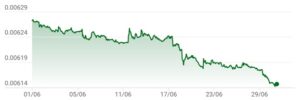
The Bank of Japan’s June increase to 1 per cent was meaningful by Japanese standards. It was also inadequate by market standards. Reuters reported that the move took borrowing costs to their highest level since 1995, yet the yen stayed near 160 because investors saw no rush to tighten further. The currency market has accepted Japan’s normalisation as genuine, but not as forceful.
That distinction matters. A central bank need not chase the exchange rate. But when inflation is partly imported, wages are adjusting, and firms pass on costs faster than before, a falling currency enters the domestic policy calculation. Tokyo cannot ask the market to believe simultaneously in a stronger yen, slow rate increases and a growth plan that leans on easy financing.
READ I RBI’s rupee defence buys time, not confidence
Japan currency intervention bought time
Currency intervention has a use. It can punish crowded trades, slow a disorderly fall and remind dealers that a finance ministry has a balance sheet. Japan’s latest operation did all three. It did not alter the underlying trade. The yen’s return to levels that triggered intervention shows the difference between market impact and policy success.
Tokyo appears to know this. Analysts now see the authorities shifting away from fixed red lines towards speed and disorder as triggers. Reuters reported that some market participants view the 163-165 zone as the next area to watch, while Japan may prefer ambiguity after verbal warnings lost force. That is sensible. A publicly defended level becomes an invitation. Traders sell into the warning and buy back when the ministry appears.
The IMF’s advice on foreign exchange intervention remains relevant beyond emerging markets. Intervention may help in disorderly markets that threaten financial stability, but it should not be used to suppress ordinary volatility or target a chosen exchange-rate level. The bar must be high because reserves are finite and credibility is not easily replenished.
Coordination changes the arithmetic, but only partly. Japanese officials have signalled that the United States was supportive of the April-May intervention, and markets still watch for a stronger joint signal. Washington’s own exchange-rate report accepts intervention to address excessive volatility or disorderly moves, while pressing for transparent practices. That is a narrow permission, not a blank cheque.
READ I Rupee under siege: Can India prevent a slide towards 100 per dollar?
Fiscal credibility behind the yen crash
The yen is also reacting to fiscal politics. Prime Minister Sanae Takaichi’s government has proposed a long-term investment plan of more than ¥370 trillion through fiscal 2040, with public and private money expected to finance strategic industries. Reuters reported that the plan aims to more than double real growth to above 1 per cent and lift nominal GDP, but funding details remain thin.

Markets do not dislike investment. They dislike a policy mix that leaves the central bank carrying the burden. Japan can justify its spending on semiconductors, AI, energy security and ageing-related productivity. It cannot make fiscal expansion, low rates and a defended yen sit comfortably together when the dollar is strong.
The BIS Annual Economic Report 2026 puts the wider risk sharply: high public debt, fragile sovereign bond liquidity and the growing role of leveraged non-bank investors can make fiscal space shrink before conventional debt metrics flash red. It also warns that fiscal-risk repricing can trigger exchange-rate depreciation and disturb inflation expectations. Japan has more room than most countries. It does not have immunity.
Lessons for India and other economies
The first lesson for India, Indonesia, Brazil, South Korea and Thailand is to avoid turning an exchange rate into a matter of national honour. A currency is a price, not a flag. Once a government names a level, it invites markets to test the state’s pain threshold.
The second lesson from the yen crash is that foreign exchange reserves are insurance, not a substitute for policy alignment. The Reserve Bank of India has generally used intervention to smooth volatility rather than defend a public line. That approach is sounder than theatrical defence. But the rupee will remain easier to manage when inflation credibility is preserved, fiscal consolidation is believable, and corporates are not allowed to accumulate unhedged dollar liabilities in good times.
The third lesson concerns communication. Japan’s officials have alternated between warnings, intervention and claims of success. That can work once. Repetition dulls the threat. A finance ministry that speaks too often risks becoming part of the market noise.
The fourth lesson from the yen crash is political. Subsidies to cushion households from imported inflation may be unavoidable for short periods. Used repeatedly, they move the problem from the exchange rate to the budget. A weak currency raises fuel, food and fertiliser costs. Covering those costs through fiscal transfers while keeping rates low asks the bond market to absorb the contradiction.
Emerging economies with weaker policy frameworks face a harsher version of the same problem. The IMF’s October 2025 World Economic Outlook found that foreign exchange intervention can reduce inflation and output losses in countries with weak frameworks, but also that it is no substitute for better frameworks; in countries with strong frameworks, the gains from intervention are marginal. That is the cleanest lesson from Japan’s discomfort.
The yen crash is not a forecast of Asian currency turmoil. It is a warning against overestimating official control. Japan still has reserves, industrial strength and a formidable external balance sheet. Yet the market has found the soft point: the gap between what Tokyo wants from the yen and what its monetary-fiscal mix can deliver. Other governments should not wait for their own currencies to find the same gap.