





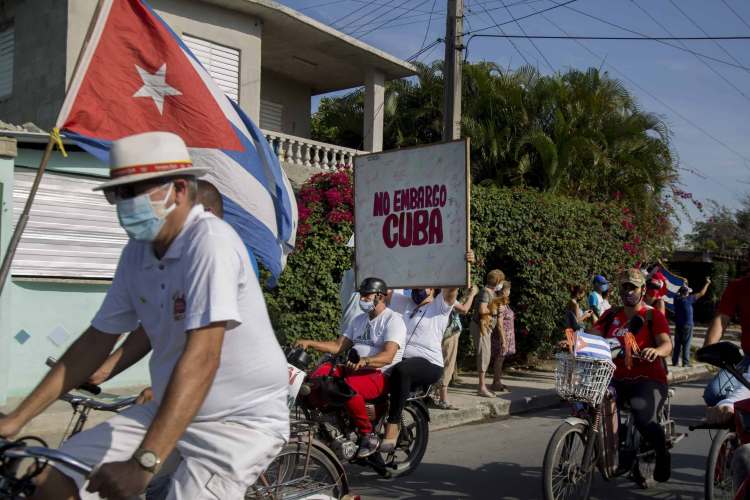
US-Cuba tensions 2026: Cuba again finds itself at the centre of an increasingly dangerous confrontation with the United States. In an interview on The Axios Show, President Donald Trump openly suggested that a military operation against Cuba could unfold in a manner similar to Washington’s swift intervention in Venezuela earlier this year. Describing Cuba as “a hopscotch” from the United States and contrasting it with distant and militarily stronger Iran, Trump indicated that Havana remains firmly within his administration’s sights as part of an effort to project American power across the Western Hemisphere. His remarks come amid growing speculation that the White House is reviving an aggressive interpretation of the Monroe Doctrine, one that treats the Caribbean and Latin America as a strategic sphere for direct American intervention.
The timing is particularly significant. Facing its most severe economic crisis in decades, Cuba has announced a series of sweeping economic reforms aimed at revitalising production, attracting investment, expanding the role of private enterprise, and addressing chronic shortages that have strained everyday life on the island. Havana hopes that economic restructuring can stabilise the country and create new opportunities for growth. Nonetheless, a critical question is whether these reforms be enough to alter Washington’s calculations? Or will they merely unfold under the shadow of an increasingly interventionist US policy that views Cuba as an unresolved geopolitical challenge?
READ I US-Iran deal shows limits of American power in West Asia
US-Cuba tensions enter a harsher phase
The United States recently imposed a sweeping new round of sanctions on Cuba, targeting President Miguel Díaz-Canel, members of his family, and relatives of former president Raúl Castro. The measures also extend to Cuba’s Ministry of the Revolutionary Armed Forces and several state-linked organisations. Secretary of State Marco Rubio outlined the move as an effort to dismantle networks allegedly supporting Cuba’s revolutionary activities abroad, while warning foreign banks and companies against any dealings with sanctioned entities. Coming after earlier visa restrictions and a broader tightening of the decades-old embargo, the sanctions have intensified Cuba’s already severe fuel shortages, energy crisis, and economic difficulties. President Donald Trump has repeatedly said that Cuba may become his administration’s next major target of coercive pressure, following Venezuela.
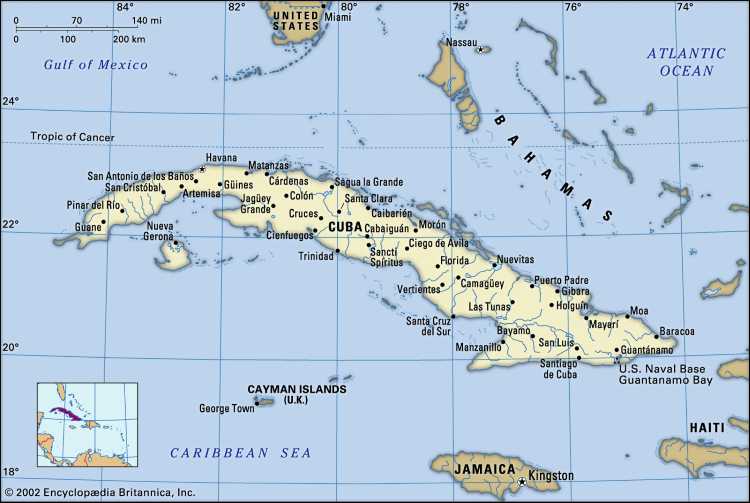
However, this storm gathering over Havana is the latest expression of a much older imperial project that has defined Washington’s relationship with Latin America for more than a century. From the Monroe Doctrine through the Cold War, the United States repeatedly treated the region as its strategic backyard, intervening whenever governments challenged American political or geopolitical interests. Cuba has long stood at the centre of this confrontation. The 1959 revolution was a direct rejection of decades of American domination over Cuban land, resources, and sovereignty — a break that successive administrations have never ceased trying to reverse.
READ I Credible threats shape US-Iran nuclear talks
The long shadow of empire
The roots of the current crisis have more than a century-old history. Cuba occupies a unique place in the geopolitical imagination of the United States. Long before the Cold War, American policymakers viewed the island as strategically indispensable. Following the Spanish-American War of 1898, Cuba formally gained independence, but that independence came with significant limitations. Through the Platt Amendment of 1901, Washington reserved the right to intervene in Cuban affairs and established a framework that effectively placed the island under American influence.
Throughout the first half of the twentieth century, American corporations dominated large sectors of the Cuban economy. Sugar plantations, utilities, banking, telecommunications, and tourism increasingly came under US control. Havana became a playground for American business interests, while many ordinary Cubans remained trapped in poverty and inequality. Successive Cuban governments often depended heavily on American political and economic support.
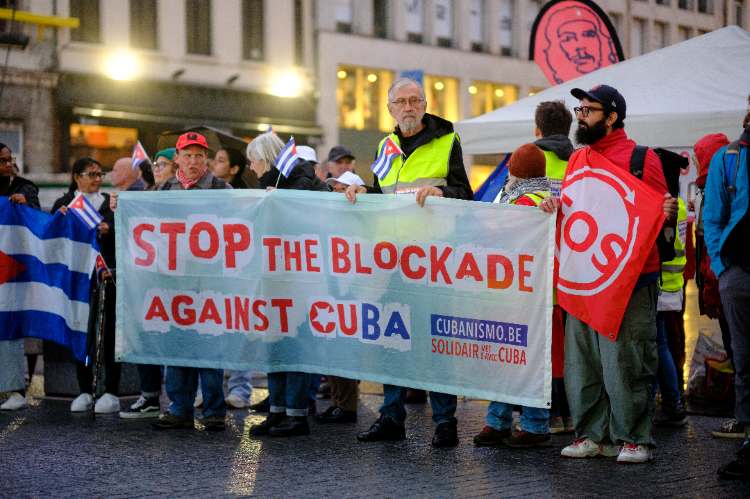
This relationship reached its peak under the dictatorship of Fulgencio Batista. Supported by Washington as a reliable anti-communist ally, Batista presided over a system marked by corruption, repression, and growing social inequality. The Cuban Revolution of 1959 fundamentally altered this arrangement. Fidel Castro’s victory represented a clear rejection of decades of foreign domination.
Washington responded immediately. What followed was one of the longest and most sustained campaigns of political, economic, and covert pressure in modern history. The failed Bay of Pigs invasion in 1961 involved around 1,400 CIA-trained Cuban exiles attempting to overthrow Castro’s government. The following year, Operation Northwoods proposed extraordinary plans involving fabricated incidents that could justify military action against Cuba. Although never implemented, the proposal revealed the extent to which interventionist thinking had become embedded within sections of the American security establishment.
Over subsequent decades, Cuba became a central theatre of the Cold War. Numerous assassination attempts were reportedly directed against Fidel Castro. Acts of sabotage, economic warfare, and diplomatic isolation became regular features of US policy. Research cited by Cuban sources estimates that thousands of Cubans were killed or injured in anti-Castro operations after 1959. Whether every claim can be verified independently or not, there is little dispute that Cuba became the target of an extraordinary campaign of pressure unmatched elsewhere in the Western Hemisphere.
Even after the Cold War ended, Washington’s hostility toward Cuba continued. However, the objectives changed while the underlying logic remained remarkably consistent – Cuba was still expected to conform to American strategic preferences. This attitude explains why the island remains at the centre of geopolitical confrontation more than six decades after the revolution.
READ I US superpower status will be diminished by any Iran exit
Sanctions, isolation, and the human cost
The most enduring instrument of American policy toward Cuba has been economic coercion. The embargo, first imposed in the early 1960s, has survived thirteen US presidents and remains one of the most comprehensive sanctions regimes in modern history. The economic impact has been immense. Cuban authorities estimate cumulative losses running into hundreds of billions of dollars. While exact figures are debated, few observers deny that sanctions have severely constrained Cuba’s development. Restrictions on trade, finance, technology transfers, shipping, and international banking have affected virtually every sector of the economy.
The Helms-Burton Act of 1996 represented a major escalation. Passed after the shooting down of aircraft belonging to the exile group Brothers to the Rescue, the legislation internationalised the embargo by threatening foreign companies doing business with Cuba. This discouraged investment and increased Havana’s economic isolation. The law effectively tied future normalisation to political changes inside Cuba, thereby transforming sanctions into an explicit instrument of regime pressure.
The consequences are increasingly evident today. Cuba faces one of the gravest economic crises since the collapse of the Soviet Union. Fuel shortages have become chronic. Electricity blackouts have disrupted daily life across the island. Healthcare institutions face shortages of medicines and equipment. Food insecurity has worsened. Public transportation systems frequently struggle due to fuel scarcity.
The situation deteriorated further after the political changes in Venezuela in 2026. For years, Venezuelan oil had provided a crucial lifeline to Cuba. The disruption of these supplies intensified energy shortages and contributed to repeated failures of the national electricity grid. Long power cuts, shortages of cooking gas, and water supply disruptions have become common realities for many Cubans. The social consequences are equally profound. Since 2021, Cuba has reportedly lost nearly one-fifth of its population through migration. Thousands of young professionals, skilled workers, and university graduates have left in search of opportunities abroad. This demographic exodus threatens the country’s long-term economic recovery and social stability.
However, the humanitarian consequences of sanctions often receive less attention than the political debates surrounding them. Economic pressure is frequently presented as a tool to promote democracy. In practice, however, sanctions often affect ordinary citizens far more than political elites. Shortages of medicines, deteriorating infrastructure, and declining living standards become part of everyday life.
The United Nations General Assembly has repeatedly voted overwhelmingly against the embargo. Nevertheless, Washington has maintained and, in recent years, expanded sanctions targeting Cuban military, intelligence, and financial institutions. The result is a cycle in which economic hardship fuels social frustration while simultaneously providing justification for further external pressure.
Trump’s Cuba policy and interventionism
Donald Trump’s latest statements represent a significant departure even from the traditionally hardline US position on Cuba. By openly suggesting that he may be the president who finally intervenes against Havana, Trump has revived memories of earlier years when regime change was a central instrument of American foreign policy. The immediate trigger for the current crisis was the indictment of former Cuban President Raúl Castro over the 1996 Brothers to the Rescue incident. Four individuals died when Cuban fighter aircraft shot down two planes associated with the Miami-based exile organisation. The tragedy, however, remained controversial.
What is often overlooked, however, is the larger context. Brothers to the Rescue, founded by José Basulto, initially conducted rescue operations for Cuban migrants. Over time, it became increasingly involved in political activities directed against the Cuban government. Its aircraft repeatedly entered Cuban airspace and dropped anti-government leaflets over Havana. Cuban authorities issued numerous warnings. Even some American officials reportedly anticipated that a deadly confrontation was possible. Three decades later, the revival of this case raises obvious political questions. Critics argue that the indictment serves a larger strategic purpose – creating a legal and moral framework for intensifying pressure on Cuba. The comparison with earlier US actions against Venezuelan leaders is difficult to ignore.
Simultaneously, military signals have become more evident. Surveillance aircrafts have reportedly increased operations around Cuba. The deployment of naval assets in the Caribbean has generated concern. Allegations regarding Cuban drone capabilities and security cooperation with Russia and Iran have been amplified in American political discourse.
US Secretary of State Marco Rubio’s appeal to the Cuban people seeks to turn the island’s economic crisis into a political opportunity for Washington. By pointing to shortages, blackouts, and declining living standards while offering American support, the United States attempts to change the narrative of Cuba’s future.
Many in Latin America, however, are likely to view such gestures against the backdrop of a long history of sanctions, interventions, and efforts to influence political outcomes in the region. Following the removal of Venezuela’s leadership and growing tensions with Iran, Cuba appears increasingly vulnerable to a strategy aimed at altering geopolitical alignments in the Western Hemisphere. Its strategic location, relations with Russia and China, and symbolic significance in Latin American politics continue to make it a focus of US attention.
Whether military intervention occurs is secondary to the reality that pressure is already being exerted through sanctions, diplomatic isolation, and political signalling. In these circumstances, Cuba’s sweeping economic reforms may constitute its strategic defence against external pressure by bolstering domestic strength and reducing the vulnerabilities that invite foreign interference.
READ I Has NATO outlived its purpose?

Dr KM Seethi is Director, Inter University Centre for Social Science Research and Extension (IUCSSRE), Mahatma Gandhi University (MGU), Kerala, India. Seethi also served as Senior Professor of International Relations, Dean of Social Sciences at MGU and ICSSR Senior Fellow.