





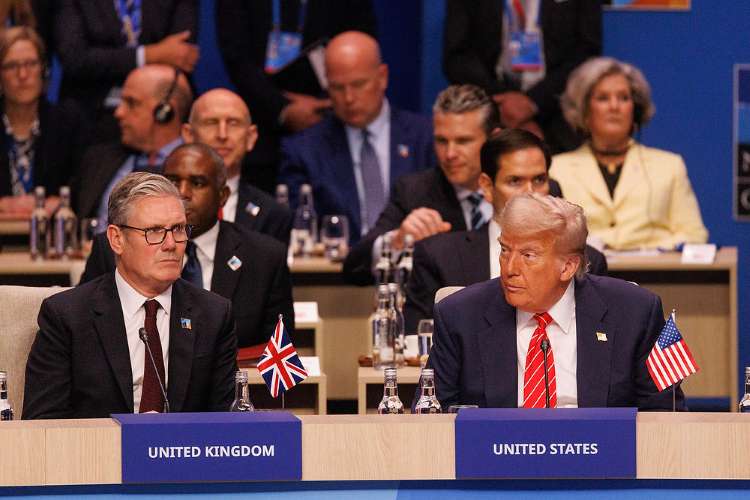
US allies de-risk as America turns coercive: The NATO summit in Ankara ended on July 8 with a formal pledge of €70 billion in military equipment, assistance and training for Ukraine in 2026. During the same meeting, President Donald Trump ordered preparations to cut trade with Spain, renewed his demand for American control of Greenland and, on his way home, again threatened to withdraw US troops from Europe. The declaration showed that NATO can still transact business. The conduct around it showed why allies are discounting American assurances.
Alliances rarely collapse on the day trust is lost. Officials continue to meet, bases remain open and communiqués retain their familiar vocabulary. The change first appears in private calculations. A promise from Washington is assigned a shorter life. A weapons order is examined for political conditions. A government asks whether an American security guarantee may later become leverage in a trade dispute.
Polls across the world have caught up with those calculations. A survey conducted in June by Pew Research Center found that only 35 per cent of Canadians regarded the United States as a reliable partner, down from 83 per cent in 2022. In Germany, the share who trusted Washington fell from 60 per cent in 2023 to 23 per cent this year. Across 36 countries, median confidence in Trump’s handling of world affairs was 23 per cent. Gallup found that approval of US leadership across NATO fell 14 percentage points in 2025 and stood level with approval of China’s leadership.
READ I NATO’s decline: Why the alliance has outlived its purpose
Why US allies distrust Washington
Washington’s complaint about defence burden-sharing has force. For years, several European governments spent too little and assumed that American logistics, intelligence and nuclear deterrence would cover the gap. Trump helped force higher spending. He also changed the meaning of burden-sharing. It now includes political compliance with American wars and acceptance of pressure on an ally’s territory or trade.
Spain exposed the change. Madrid denied the use of its bases and airspace for attacks on Iran, a war that NATO had neither authorised nor undertaken. An internal Pentagon paper then considered suspending Spain from alliance positions and reviewing the American position on Britain’s sovereignty over the Falkland Islands. At Ankara, Trump called Spain a “terrible partner” and instructed his Treasury secretary to prepare a trade cutoff. Disagreement over an operation outside NATO’s treaty area was treated as disloyalty inside the alliance.
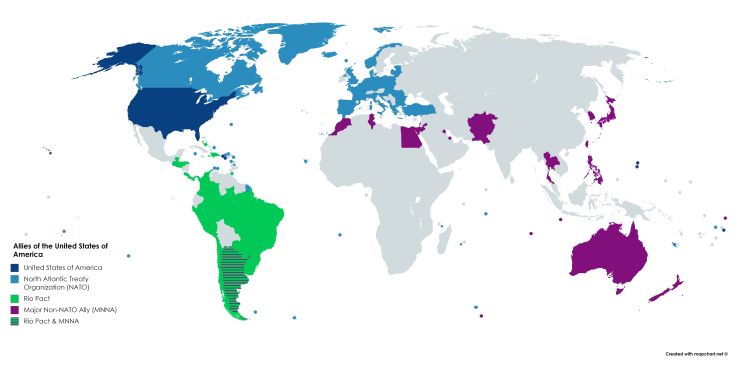
Denmark has faced a cruder version. Trump used tariff threats against European states to press his claim over Greenland and revived the demand at Ankara. The United States already has extensive defence rights on the island under its 1951 agreement with Denmark. Territorial coercion therefore adds little to American security. It tells every smaller ally that sovereign protection may be conditional on satisfying the protector.
READ I Bigger NATO budgets will not preserve western dominance
The problem extends beyond Trump’s language. US allies are dealing with policy that can move from threat to praise and back within hours. Reuters reported that NATO leaders and diplomats now regard cajoling and flattery as part of keeping the alliance intact. At Ankara, policy questions were pushed aside while leaders managed the American president’s mood. An ally can bargain with a hard demand. It cannot plan around impulse.
Trump’s return to office has removed the comfort that the first term was an exception. The European Union Institute for Security Studies noted that his re-election demonstrated an enduring American constituency sceptical of alliances and permanent overseas commitments. European governments must now price the possibility that a successor administration could reverse course, followed by another that revives coercion. This turns a personal credibility problem into an American political risk.
Trade policy has deepened that risk. Tariffs have been used against Canada, Europe, Japan and South Korea while Washington has demanded investment, defence spending or concessions in other negotiations. Pew found approval of Trump’s tariff policy at 17 per cent in Canada, 15 per cent in Japan, 14 per cent in South Korea and 8 per cent in Germany. These publics see an alliance in which military protection and market access may be renegotiated together.
READ I Bangladesh: BNP’s first hundred days raise troubling national questions
US allies choose de-risking over rupture
Distrust has not produced a flight from NATO. Pew’s July survey found a median 65 per cent favourable view of the alliance across 13 member countries. Support in Germany and Canada was at or near its highest level in two decades. Europeans fear Russia and value collective defence even as they doubt Washington. They are separating the institution from its dominant member.
That distinction explains Europe’s present strategy. The European Commission’s Readiness 2030 programme channels finance towards joint procurement and European production in missile defence, drones and cyber capabilities. Canada became the first non-European country admitted to the EU’s SAFE defence procurement instrument in June. NATO’s Ankara declaration also recorded that European allies and Canada now finance most security assistance to Ukraine. These are practical steps to retain the Atlantic alliance while reducing the number of decisions that depend on the White House.
Canada is the clearest case because its dependence on the United States is deeper than Europe’s. The two economies share supply chains, energy networks and a long border. Yet Ottawa has moved towards European defence procurement and wider commercial relationships after tariff disputes and annexation rhetoric from Washington. Canada is unlikely to disengage from the United States. It is spending political capital to ensure that the United States is no longer its only practical option.
US allies in Asia have less room to move. Japan and South Korea face China and North Korea at close quarters, and neither can readily replace American extended deterrence. Their response is therefore narrower. Tokyo and Seoul are strengthening regional alliances, supply-chain arrangements and defence cooperation. A study by Asia Society Policy Institute described growing cooperation among Japan, Australia, South Korea, Indonesia and India as a hedge against Chinese power.
European autonomy also has hard limits. The continent remains dependent on American intelligence, command systems, airlift and parts of the technology stack. Replacing those capabilities will take years. That constraint produces the apparent contradiction at NATO meetings. European leaders flatter Trump in public and finance alternatives at home. Both actions follow from the same assessment of risk.
America pays for distrust before alliances break
The Trump administration often presents alliances as protection contracts in which the United States bears the cost and clients owe payment. That accounting omits what the United States receives. Allies provide bases, overflight rights, intelligence, diplomatic support and industrial capacity. Japan is central to American strategy in the western Pacific. France, Germany and Britain add technological and political weight to any coalition dealing with China. A Carnegie Endowment review found that these contributions remain a source of American strength, even where the military balance is uneven.
Losses appear at the margin long before a treaty is cancelled. Spain can deny airspace. Britain can attach conditions to the use of a base. Canada can qualify intelligence sharing. European governments can direct procurement towards domestic firms. None of these decisions turns an ally into an adversary. Together, they make American operations slower and more expensive. A Council on Foreign Relations analysis has documented new restrictions on access and intelligence during the Iran conflict.
China does not have to become trusted to benefit. Gallup found that the fall in approval of American leadership did not usually produce an equal rise for Beijing. The gain for China is more modest and more useful. A country that doubts both powers is less likely to join an American coalition, enforce an export control or absorb economic costs for a strategy written in Washington.
American pressure has produced some of the outcomes Trump sought. European defence budgets are rising. Canada is investing more in security. NATO members have accepted heavier responsibility for Ukraine. Yet the method has encouraged them to build capabilities outside American control. Washington may save money on one obligation and lose influence over the system that replaces it.
Trust would require more than a warmer presidential statement. US allies would have to believe that treaties will not be used to obtain commercial or territorial concessions, that consultation precedes military action, and that an election will not nullify every prior commitment. The United States remains the strongest member of its alliance network. Its allies are preparing for the day when strength and reliability no longer arrive together.