





US-Iran deal: India has long kept three West Asian relationships in uneasy alignment. It has built strategic ties with the United States, deepened energy and economic links with the Gulf, and kept civilisational and commercial links with Iran alive despite sanctions. The interim US-Iran deal changes the space in which New Delhi operates. It does not remove the risks.
For India, the immediate issue is not nuclear diplomacy in the abstract. It is oil, gas, shipping, Chabahar, fertiliser, food prices and access to Eurasia. If the deal holds, India gets breathing space. If it fails, the old constraints return, perhaps with higher costs.
READ | US-Iran deal shows limits of American power in West Asia
US-Iran deal and India’s energy security
The first gain for India is in energy. India meets about 88% of its crude oil needs and 51% of its gas needs through imports. That leaves the economy exposed to every serious shock in the Gulf.
The Strait of Hormuz is central to this vulnerability. In 2024 and the first quarter of 2025, flows through the strait accounted for more than a quarter of global seaborne oil trade and about a fifth of global oil and petroleum product consumption. It also carried around a fifth of global LNG trade.
That is why even a limited thaw matters. Oil prices fell after the US-Iran ceasefire framework and the prospect of reopening shipping through Hormuz. For India, a sustained fall in crude prices would ease the import bill, the rupee, transport costs and inflation. ICRA has estimated that a $10 per barrel rise in crude can add $12-13 billion to India’s net oil import bill in a year.
The gain should not be overstated. Fuel prices in India do not move mechanically with crude. Taxes, refining margins, inventories and the exchange rate all intervene. But lower crude and LNG prices still give the Finance Ministry and RBI more room than a Gulf crisis would.
READ | Credible threats shape US-Iran nuclear talks
Chabahar port and India’s Eurasia route
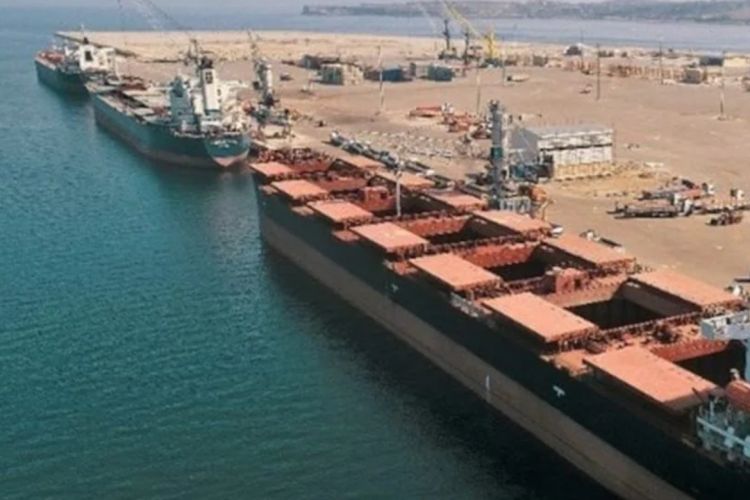
The second gain lies in connectivity. Pakistan’s refusal to give India overland access to Afghanistan and Central Asia pushed New Delhi towards Iran. Chabahar was the answer.
India and Iran signed a 10-year contract on May 13, 2024 for India to develop and operate the Shahid Beheshti terminal at Chabahar. That agreement gave India a longer runway than the old annual arrangements. Sanctions risk, however, still limited the pace and ambition of the project.
A durable US-Iran thaw would reduce that constraint. Chabahar could again become a serious gateway to Afghanistan, Central Asia and Russia through the International North-South Transport Corridor. Studies on the INSTC have put the route at about 30% cheaper and 40% shorter than the traditional Suez route.
This is also where India’s comfort may be misplaced. If Iran opens up, India will not be alone. Chinese, European and Gulf capital will move quickly. India may find that a route built for strategic necessity becomes a competitive marketplace. Chabahar gives India an entry point. It does not guarantee influence.
READ | NATO crisis deepens over US-Iran war divide
Agriculture and food inflation
Agriculture is usually missing from discussions on the US-Iran deal. It should not be. Diesel runs pumps, tractors and harvesters. Gas and other inputs shape fertiliser prices. Transport costs determine how much of a price shock reaches the mandi and the consumer.
Lower energy prices would help farmers through cheaper irrigation, fertiliser production and transport. They would also help the government if food inflation eases. Food prices have been one of the hardest parts of inflation management in India because supply shocks pass quickly into household budgets.
The fertiliser link is even more direct. India imported 28.2 million tonnes of fertilisers worth more than $14.5 billion in 2025-26, according to reported trade data. The Union Budget’s revised estimate for fertiliser subsidy in 2025-26 was ₹1,86,460 crore.
A stable Iran could add to predictability in energy and fertiliser supply chains. It may also reduce the subsidy pressure created by imported urea, DAP, ammonia, potash and gas. That would matter for both the Centre’s fiscal arithmetic and farm production costs.
There is a caution. Cheap fossil energy can slow investment in cleaner farm technology, solar pumps, efficient irrigation and domestic fertiliser capacity. India should take the cost relief without weakening those programmes.
Trade policy after the US-Iran deal
Iran can become a larger market for Indian pharmaceuticals, machinery, engineering goods, automobiles and farm products. That opportunity will not wait for India. If sanctions ease, European and East Asian firms will return. Gulf investors will also look at Iran’s infrastructure, ports, energy and consumer market.
Indian firms have often relied on diplomacy to open difficult markets. That will not be enough. Export credit, logistics, product standards, banking channels and after-sales networks will matter more than official visits. Iran will buy from firms that deliver, finance and service reliably.
The same applies to Central Asia. The INSTC can cut distance and time, but only if Indian exporters use it at scale. A corridor without cargo is a diplomatic map, not a trade route.
US-Iran deal needs Indian preparation
The US-Iran deal gives India a possible opening. It can reduce oil risk, improve the case for Chabahar, lower some farm input costs and expand trade routes beyond the Arabian Sea. None of these gains is automatic.
New Delhi has to move faster on Chabahar operations, customs processes, shipping links, rupee settlement options and export finance. Indian companies need market plans for Iran and Central Asia before competitors settle in. Agriculture policy should use any fall in energy costs to reduce stress on farmers and the fertiliser subsidy bill, without retreating from efficiency and cleaner inputs.
If the deal holds, India gets time. The agreement will not do India’s work for it.
Rahul Kumar teaches Economics at Pune Institute of Business Management. Dr Barun Kumar Thakur teaches economics at FLAME University, Pune.
READ | What Iran’s resilience reveals about decentralisation, collective action

Barun Kumar Thakur is Associate Professor - Economics at Flame University, Pune. His areas of specialisation include neuro-economics, economics of water pollution, environmental economics and non-market environmental valuation.