





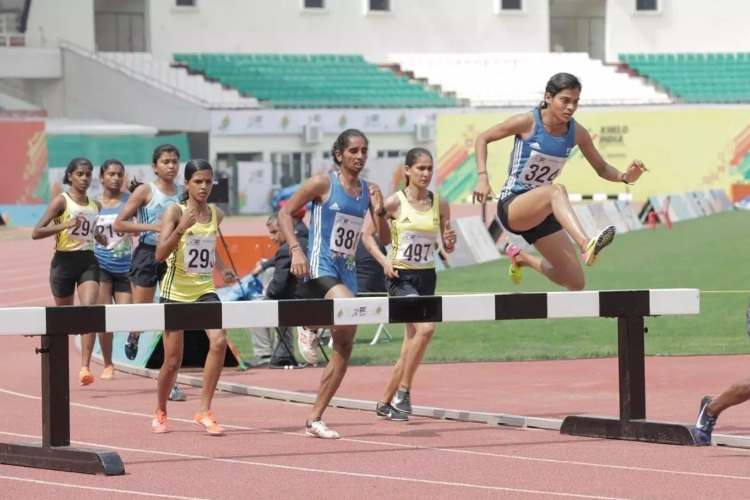
India spent the week after Budget 2026–27 celebrating a “historic” sports allocation. The Ministry of Youth Affairs and Sports received ₹4,479.88 crore, a 15.3% increase and the largest absolute rise in five years. Since 2021–22, the budget has expanded by 72.6%. Khelo India Mission has been recast as a decade-long Mission to place India among the top ten sporting nations by 2036. The applause came easily. The scrutiny did not.
The number that mattered was elsewhere. At the Paris 2024 Olympics, India won six medals. China won ninety-one. The United States won one hundred and twenty-six. Spending has risen sharply; outcomes have not. The Budget did not explain why earlier spending failed or what changes now.
READ I Missing sports infrastructure is a public health risk
Khelo India Mission scholarships
Khelo India Mission’s core instrument is a ₹5 lakh annual scholarship, payable for up to eight years. It is substantial support. It is not performance-linked. Continuation depends on participation, not progression. An athlete stalled at district level can receive the same support as one moving toward the national squad. The scheme does not discriminate by development.

Nine years in, there is no publicly available national audit of what these scholarships have produced. The only recent independent evaluation looks at National Centres of Excellence in Guwahati and Itanagar. Half the athletes rated coaching “excellent”; 51.7% were satisfied with facilities. These are middling numbers. The authors note the study’s limits; it does not speak to national performance. A nationwide scheme without a nationwide audit is not run as an investment. It is run as a transfer with a sporting label.
Budget 2026–27 assigns ₹924.35 crore to Khelo India Mission. The scholarship design is unchanged. So is the monitoring gap. A recent policy review finds that concentrated, non-conditional support in the related TOPS scheme tends to favour already well-resourced athletes. The mission creates similar incentives: identify, pay, and do not measure. That does not produce elite outcomes.
READ I Lok Sabha reform: Delimitation must look beyond population logic
NSDF: A dormant bridge to private capital
The National Sports Development Fund (NSDF) was created in 1998 to attract private capital. It has remained underused. The constraint is not corporate appetite. Franchise valuations and sponsorship markets show the opposite. The constraint is product design.
NSDF offers tax benefits with limited transparency on deployment and no sport-specific visibility. A firm can instead sponsor a kit, place its logo on a player, and measure returns. NSDF loses that comparison.
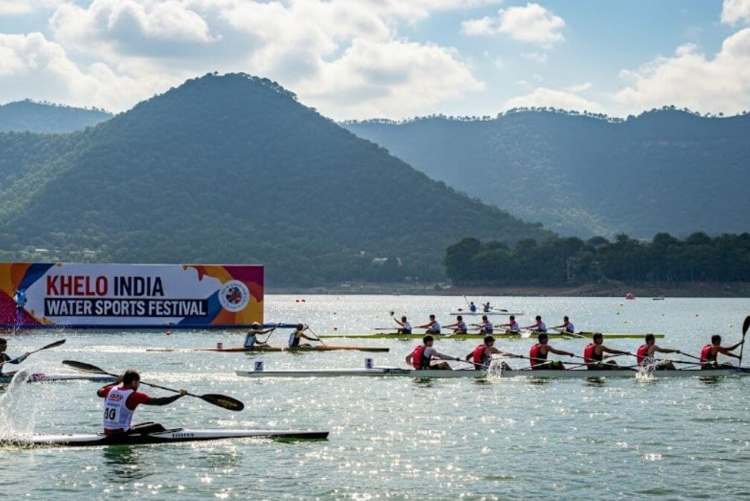
Budget 2026–27 introduces a ₹500 crore allocation for sports manufacturing. It does not link this to NSDF reform. The Companies Act, 2013 already permits CSR spending on sports under Schedule VII. The legal base exists. What is missing is a usable instrument: athlete-level impact reporting, sport-specific allocation visibility, and first-loss government capital to de-risk entry. The Budget could have seeded this redesign. It did not.
India’s problem is not only incentives; it is governance. Authority is split between the Ministry of Youth Affairs and Sports, the Sports Authority of India, and autonomous national federations. Federations control selection, calendars and coaching appointments, often with weak transparency and frequent litigation. Athlete preparation cycles are disrupted by selection disputes and administrative churn.
Khelo India Mission and TOPS sit on top of this structure; they do not control it. Conditional funding will not bite unless the Centre can enforce standards on federations and states—through audited selection protocols, time-bound grievance redress, and compliance-linked releases. Without that, outcomes remain hostage to institutions that are not designed to deliver them.
READ I India’s ageing population demands a universal pension plan
What working systems actually measure
Two models show what accountable spending looks like.
Australia’s Australian Institute of Sport ties a meaningful share of funding to independently verified athlete progression through competitive tiers. Programmes are paid, in part, for outcomes. The metric is development, not disbursement. India’s Sports Authority of India already tracks athletes. The gap is not technology. It is conditionality.
A parallel comes from Kerala’s panchayat-level devolution. Money moved with planning authority and accountability. Funds and responsibility were linked. In sports, funds have moved to states without binding outcomes. The pattern is familiar: facilities are built, utilisation falls, and the Centre has no lever because none was designed.
What the Mission must change
If the 2036 target is to be taken seriously, two changes are unavoidable. First, link disbursements to verified development outcomes at the athlete and academy level. Second, create state-level compacts that are audited annually and carry consequences for non-delivery. Neither requires more money. Both require the willingness to be judged on results.
The ₹924.35 crore for Khelo India Mission and the ₹4,479.88 crore ministry envelope are not the problem. Sustained investment is justified. The problem is that nine years of spending has not produced a national audit of outcomes. That is not an omission; it is a choice. Systems that measure outputs must answer for them. Systems that measure inputs do not.
A top-ten finish by 2036 is ambitious enough to matter and distant enough to test resolve. The test is not what the Budget announced. It is what the Mission measures, and what follows when those measures fall short. Until both are answered in public, with data, Khelo India is not a mission. It is a well-funded intention.
Samaksh Sha is an economics student and Dr Barun Kumar Thakur Associate Professor at FLAME University, Pune. Views are Personal.
READ I IT hiring slowdown signals structural reset

Barun Kumar Thakur is Associate Professor - Economics at Flame University, Pune. His areas of specialisation include neuro-economics, economics of water pollution, environmental economics and non-market environmental valuation.