





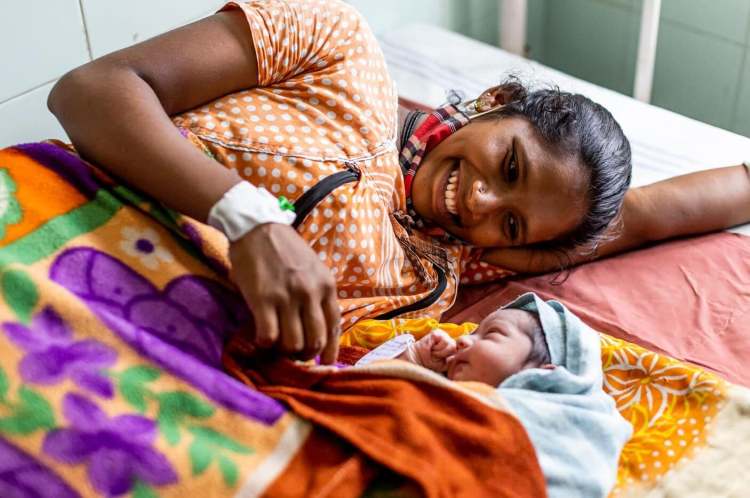
Kerala’s midwifery policy: May 5 was the 2026 International Day of the Midwife, under the theme “One Million More Midwives.” The theme, chosen by the International Confederation of Midwives, is a direct response to the global shortage of nearly one million midwives and a call for governments to invest in the profession.
The case for midwives is not sentimental. It is clinical, economic and institutional. Trained and regulated midwives can deliver a large share of essential sexual, reproductive, maternal, newborn and adolescent health services. Their work covers preconception counselling, contraception, antenatal care, labour support, postnatal care, breastfeeding support, screening, referral, and early identification of complications.
The evidence is strong. A modelling study published in The Lancet Global Health found that universal access to midwife-delivered interventions by 2035 could avert 67% of maternal deaths, 64% of neonatal deaths, and 65% of stillbirths. WHO says this would mean 4.3 million lives saved each year.
READ I Medical titles debate raises public health concerns.
Kerala’s midwifery policy reversal
Kerala’s decision to phase out midwives from public health services is, therefore, not a routine staffing decision. It is a reversal by a state that built its reputation on public health, community outreach, and relatively strong maternal outcomes. Kerala still reports high institutional delivery and low mortality indicators. Yet those averages conceal gaps in access, dignity, continuity of care, and postnatal support.

The loss of midwives weakens the link between the formal health system and women who already face barriers to care. Dalit, Adivasi, coastal, migrant, and urban poor women often need more than a hospital bed. They need someone who can interpret symptoms, guide referrals, reduce fear, and help them navigate a system that can be socially distant even when it is clinically competent.
Without a dedicated midwifery cadre, low-risk maternal care shifts further towards hospitals, nurses, and obstetricians. That may look efficient on a health department’s staffing chart. It is less efficient for women, families, and tertiary facilities.
READ I Why textiles should be treated as a public health issue
Maternal health risks beyond mortality
Kerala’s problem is not simply maternal mortality. It is the quality and continuity of maternal care. Postnatal care remains weak in many systems, especially in areas such as maternal mental health, breastfeeding support, nutrition, anaemia, hypertension, and gestational diabetes. These risks are best caught early, close to the community, and through repeated contact.
A hospital-centric model is not designed for this. It responds when women arrive. Midwifery care works before the crisis, during birth, and after discharge.
The decline of midwives also increases the risk of over-medicalisation. When normal pregnancies are absorbed into a heavily medical system, procedures can displace relational care. Caesarean sections, referrals, and interventions may rise even when risk profiles do not justify them. Families bear part of this cost. The public system bears the rest through higher demand for specialist and tertiary care.
READ I Artemis II opens a new frontier in public health
Midwives, equity and respectful care
The fiscal case for phasing out midwives is narrow. Salary and training costs appear immediately in the budget. The costs of losing midwives appear slowly: avoidable complications, delayed care-seeking, higher out-of-pocket spending, staff burnout, and declining trust.
This is why aggregate indicators are an incomplete guide. Infant mortality, maternal mortality, and institutional delivery rates can remain respectable while the experience of care deteriorates for specific groups. Tribal and coastal districts, migrant households, and poorer women may suffer first. Their losses may not show up quickly in state-level averages.
Respectful maternity care is also a measurable public health outcome, not a luxury. Midwives are often better placed than overburdened doctors to provide continuous, culturally sensitive care during pregnancy, birth, and the postnatal period. Removing them weakens one of the few institutions that can combine clinical vigilance with social trust.
READ I National Dental Commission can make oral health part of primary care
Kerala midwifery policy administration
The government may see the phase-out as administrative simplification. A smaller specialised stream is easier to dissolve than to rebuild. Public health nursing cadres already carry their own issues of seniority, regularisation, deployment, and service rules. In that context, removing midwives may look like tidy cadre management.
That is the wrong test. A health system is not efficient because it is easier to administer. It is efficient when it prevents avoidable harm at the lowest appropriate level of care.
Kerala’s midwifery policy mistakes short-term tidiness for system efficiency. It shifts costs from the state budget to women’s bodies, household finances, and already stretched hospitals. It also weakens the gendered foundation of public health: the everyday work of listening, counselling, monitoring, and protecting women through pregnancy and childbirth.
India needs autonomous midwifery regulation
The larger lesson goes beyond Kerala. India should stop treating midwifery as a minor extension of nursing. It should recognise midwifery as a competency-driven profession with its own scope, standards, training pathways, and regulatory authority.
The Union government’s Guidelines on Midwifery Services in India already envisage a cadre of Nurse Practitioners in Midwifery trained to international competencies and integrated into public health facilities. The problem lies in implementation, regulation, and professional autonomy.
Midwifery remains submerged within nursing regulation. Many state laws do not clearly define the scope of independent midwifery practice. Midwives have limited representation in councils, curriculum bodies, accreditation systems, and workforce governance. This weakens the profession before it reaches the labour room.
Kerala has an institutional base in the Kerala Nurses and Midwives Council, a statutory body under the state health department that registers nurses and midwives and maintains education standards. That base should be used to strengthen midwifery, not to let the cadre fade.
India needs direct-entry and advanced midwifery programmes aligned with international standards. It also needs stricter accreditation of private nursing and midwifery colleges, where quality and clinical exposure vary widely. Curricula must focus on physiological birth, respectful maternity care, early detection of complications, referral, community engagement, and postnatal support.
Midwifery-led care units need legal protection
Midwifery-led care units should be embedded in district hospitals, medical colleges, and high-load public facilities. But they must not become decorative units within a medicalised system. Regulations should clearly authorise midwives to manage normal pregnancies and births, refer complications, prescribe within defined limits where permitted, and lead continuity-of-care models.
Service rules must also protect midwives from being absorbed into generic nursing roles. Career progression, titles, pay scales, specialist posts, leadership roles, licence renewal, and continuing professional development should be built into the system. Without this, India will train midwives and then fail to retain them.
Accountability must also change. Health information systems should track midwife-led interventions, unnecessary procedures, respectful maternity care, postnatal follow-up, and disaggregated outcomes across caste, tribe, geography, income, and migration status. What is not measured will not be defended.
Kerala’s midwifery policy reversal is a warning. A state can retain good headline numbers while weakening the institutions that produced them. Midwives are not auxiliary staff. They are a cost-effective, equity-enhancing, trust-building part of maternal healthcare. Phasing them out does not save money. It merely hides the bill.
READ I Energy access needs more than electrification
Dr Joe Thomas is Global Public Health Chair at Sustainable Policy Solutions Foundation, a policy think tank based in New Delhi. He is also Professor of Public Health at Institute of Health and Management, Victoria, Australia. Dr Thomas was the founding Secretary General of the Global Commission on Ageing in developing countries. He is an author of reports from seven PPD member countries documenting the ageing situation, health and well-being, and policies to enable and support environments.