





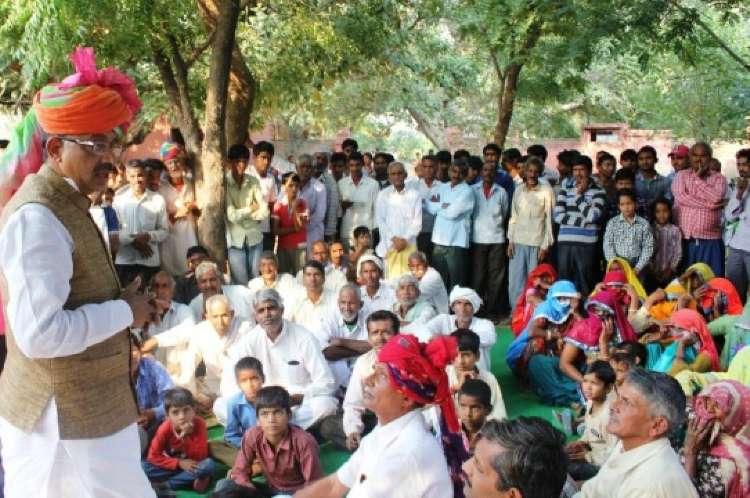
SabhaSaar and the governance shift: The transformation of India’s Panchayati Raj Institutions is underway. It is being built through incremental, technology-led changes that are altering how Gram Sabhas function and how decisions are recorded. As India moves towards Viksit Bharat, this shift at the village level is no longer optional. It is foundational.
At the centre of this shift is SabhaSaar, an AI-based system that converts Gram Sabha proceedings into structured, verifiable minutes. It marks a move away from manual record-keeping that was often inconsistent, delayed, and dependent on individual discretion. The change is administrative in form, but institutional in effect.
READ I Kerala’s local bodies need better accounting practices
The shift toward AI-enabled Panchayats is not a standalone technological upgrade. It sits within a broader fiscal and institutional redesign of local governance. The Sixteenth Finance Commission has recommended ₹4.35 lakh crore in grants for rural local bodies for 2026–31—an 84% increase—with funding tied to sanitation, water management, audited accounts, and own-source revenue generation. This builds on earlier cycles of devolution under the 73rd Constitutional Amendment Act, 1992 and successive Finance Commissions that linked transfers to service delivery and accountability.
Digital platforms such as eGramSwaraj and tools like SabhaSaar align with this architecture: they convert compliance conditions—audits, transparency, and reporting—into enforceable, data-driven processes. The result is a convergence of fiscal incentives and digital systems that is beginning to redefine how Panchayats plan, record, and justify decisions.
READ I Women’s reservation fails its latest political test
SabhaSaar: From proceedings to verifiable records
Launched on 14 August 2025, SabhaSaar converts audio and video recordings into formal Minutes of Meeting. It captures deliberations, extracts decisions, and flags action points. These functions were earlier dependent on manual note-taking and were prone to omission, delay, and subjectivity.
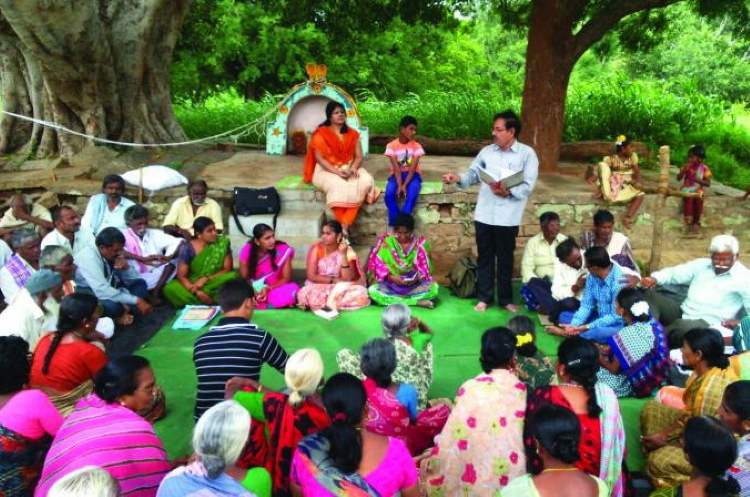
The implications are direct. Accuracy becomes institutional, not individual. Records are standardised and time-stamped, making audit and verification easier. Local officials are freed from clerical work that often consumed disproportionate time relative to its value.
More importantly, SabhaSaar changes the evidentiary basis of local governance. Proceedings that were once dependent on written summaries now exist as traceable, verifiable records. This alters how accountability operates within Panchayats.
READ I Delimitation math behind Lok Sabha expansion falls short
Multilingual governance and inclusion
SabhaSaar is integrated with the Bhashini platform, enabling transcription and translation across 23 Indian languages. This addresses a persistent administrative constraint. Language diversity often limited uniform documentation and reduced the usability of records across administrative levels.
The system ensures that proceedings can be recorded and accessed in local languages. This reduces misinterpretation and allows wider participation in governance processes. It also enables higher-level administrative review without loss of meaning during translation.
Adoption and system design
By March 2026, more than 1.18 lakh Gram Panchayats had onboarded SabhaSaar through e-GramSwaraj credentials. The scale of adoption indicates administrative demand and institutional acceptance, rather than pilot-stage experimentation.
The platform operates on secure cloud infrastructure through the India AI Compute Portal. Data remains within government systems. This design choice addresses concerns around data sovereignty, control, and accountability—issues that are central to any digital public infrastructure.
Digital ecosystem for Panchayati Raj
SabhaSaar is not a standalone intervention. It sits within a broader digital architecture built under the e-Panchayat Mission Mode Project. The shift is systemic.
The eGramSwaraj platform now covers more than 2.7 lakh Panchayati Raj Institutions, integrating planning, budgeting, accounting, and monitoring functions.
The SVAMITVA scheme has mapped rural residential land using drones and issued property cards, reducing disputes and enabling asset formalisation.
Panchayat NIRNAY tracks Gram Sabha proceedings in real time, adding a layer of process visibility.
Gram Manchitra enables GIS-based spatial planning, linking development decisions to geography.
The Meri Panchayat app provides citizens direct access to budgets, works, and outcomes.
These systems were rolled out in phases, including key launches on 24 April 2020. The intent is consistent: integrate fragmented processes into a single, data-linked governance system.
Data-led governance at the last mile
A further extension came on 24 October 2024, when Gram Panchayat-level weather forecasts were introduced through collaboration between the Ministry of Panchayati Raj, the Ministry of Earth Sciences, and the India Meteorological Department.
The service is accessible through e-GramSwaraj, Meri Panchayat, and Gram Manchitra. It connects scientific data to local decision-making. The relevance is immediate—agriculture planning, disaster preparedness, and risk mitigation at the village level.
From paper systems to decision systems
These interventions are changing the operating logic of Panchayats. Processes that were fragmented and paper-based are becoming integrated and data-driven.
The effects are visible. Records are accessible and harder to alter. Citizen participation expands when information is available. Administrative delays reduce with automation. Planning increasingly relies on data rather than approximation.
This is not a shift in tools alone. It is a shift in how decisions are recorded, verified, and acted upon.
Technology as an institutional layer
The significance of SabhaSaar lies in what it does not do. It does not influence decisions. It records them with fidelity.
That distinction matters. The system augments governance; it does not replace it.
When proceedings are recorded accurately and made accessible, the credibility of institutions improves. When decisions can be verified, the gap between state and citizen narrows. The administrative record becomes an instrument of trust.
The transition will depend on sustained investment in infrastructure and capacity. Digital systems require trained users, stable connectivity, and institutional discipline.
The direction, however, is clear. Panchayats are moving from administrative units to data-enabled governance nodes. SabhaSaar is one step in that transition, but it signals a larger change in how the state records and validates decisions at the last mile.
The change is incremental. Its implications are structural.