





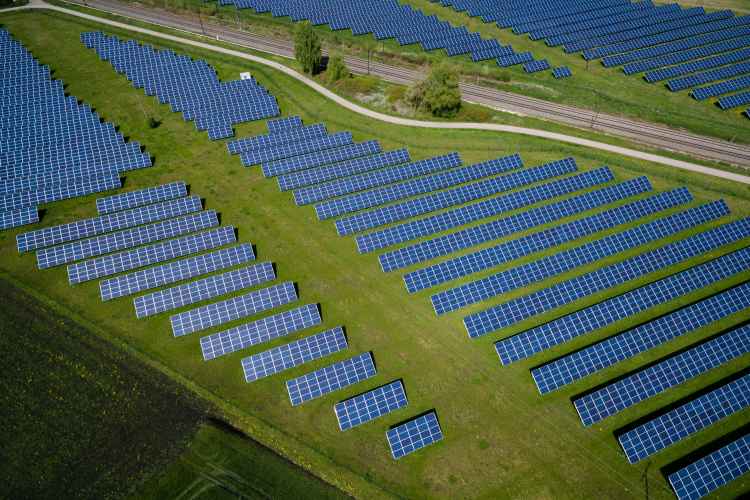
India’s clean energy push: Energy and resource security have returned as hard questions for emerging economies. West Asia remains unstable, the Strait of Hormuz is again a strategic vulnerability, Europe’s heatwaves have pushed up cooling demand and artificial intelligence data centres now consume power, land, water and capital at scale. Energy can no longer be treated as a fuel-supply question alone.
The discussion underlined a blunt point. India and other emerging economies cannot secure their future by relying on imported frameworks. They need their own analysis, partnerships and long-term choices.
India learnt the first lesson in the 1970s. The oil shocks exposed the weakness of an import-dependent economy. Domestic exploration was not merely an economic project. It was a search for room to manoeuvre in a difficult world.
READ | Clean energy: A national roadmap for affordable power
The problem has changed. It has not gone away. Oil and gas remain exposed to price shocks and geopolitics. Renewable energy brings a different dependence. Solar panels, batteries, critical minerals, digital systems and advanced components are concentrated in a few countries and firms. Replacing imported oil with imported clean-energy technology does not create security.
Clean energy supply chains
India’s clean-energy record is substantial. From a small solar base, it has become one of the world’s important renewable-energy markets. The International Solar Alliance gave India a diplomatic platform. Investment in renewables has strengthened its position.
Scale, however, is only one part of the story. Electricity demand will rise as incomes grow, factories expand, households buy air conditioners, transport shifts to electricity and digital infrastructure spreads. Even states with modest industrial bases are seeing higher household demand. That will test grids, distribution companies and state electricity planning.
The issue is not only installed capacity. It is whether the system can deliver power that is secure, affordable and resilient.
India beyond Global South label
The discussion also questioned broad labels such as “Global South” and “developing countries”. They may help in diplomacy, but they hide large differences. India, China, small island states, least developed countries and middle-income economies do not face the same constraints.
READ | India’s clean energy transition faces governance test
China is an outlier because of its scale, opacity and control over supply chains. India should present its own development story, not accept categories designed elsewhere.
Global rules are often written by those with economic and political power. Climate rules, trade barriers, sanctions, finance and technology standards are not neutral in their effects. Carbon border measures, selective sanctions, credit-rating practices and technology dependence can hit developing countries harder. A country with a sound repayment record can still pay more because lenders price in “perceived risk”. Climate obligations can be framed without sufficient recognition of historical emissions.
Emerging economies need stronger research institutions and greater confidence in their own analytical capacity.
Energy transition and economic growth
Energy transition cannot be separated from economic growth. Energy runs manufacturing, transport, agriculture, health, housing, cooling, digital services and employment. A climate policy that ignores jobs, affordability, infrastructure and social aspirations will fail in a developing economy.
Rapid withdrawal from fossil fuels without finance, technology and alternatives would create stress. India was right to reject a simplistic “no coal” line. Its path to net zero has to protect development and energy security.
Technology adds pressure. Artificial intelligence and data centres need electricity, land, water and cooling. These questions are often treated as secondary. They are not. Energy planning has to connect with industrial policy, urban planning, digital policy and skills. Green jobs need trained workers, not labels.
READ | Clean energy shift needs more women at the helm
Emerging economy partnerships
The webinar made a case for practical partnerships among emerging economies. Countries are looking inward for energy, food and resource security. New technologies still need scale and cooperation.
India can work with Indonesia, African economies, West Asian partners and Latin American resource-rich countries on critical minerals, renewable energy, local-currency trade, supply chains and technology sharing. These partnerships should rest on complementarities, not slogans.
The geopolitical argument was equally hard-edged. The United States remains influential even as its dominance is challenged. China has built alternatives in technology, finance, shipping and infrastructure. Sanctions, oil routes and payment systems are instruments of pressure.
India’s experience with Iran, Russia and energy imports shows how hard it is to make economic choices in a politicised world. The answer is not emotional alignment with one camp. It is strategic autonomy backed by capability.
Financing India’s 2047 energy path
Development finance is another constraint. Traditional aid is shrinking. Developing countries are being asked to rely more on public development banks and sovereign guarantees. That shifts risk back to countries already short of fiscal space.
Emerging economies need financing arrangements that suit their conditions. Local-currency mechanisms, regional banks and credit systems should reflect economic strength rather than inherited bias.
India has to cut dependence on imported oil and gas without creating new dependence in clean-energy technologies. It needs solar, storage, hydropower, nuclear energy, grids and domestic manufacturing. It also needs partnerships that bring mutual benefit.
The road to 2047 requires a clear view of the society India wants to build. Energy security is about power plants, pipelines, and solar panels. It is also about sovereignty, jobs, climate responsibility and the dignity of development. India should engage with the world, but think for itself.