





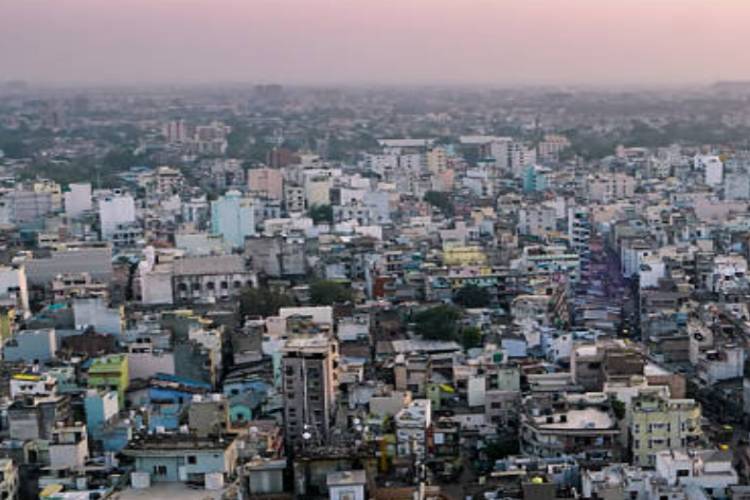
Municipal finance is India’s urban faultline: We have mastered the art of urban theatre. We inaugurate flyovers like civilisational milestones, announce “world-class” cities with devotional sincerity, and speak of urbanisation as destiny. But the truth is that India’s cities are held together by municipal poverty and administrative bluff. The local government that is supposed to supply water, clear garbage, maintain roads, prevent flooding and make dense life possible is also the most powerless institution in the state, and many a times corrupt as well.
We are trying to build twenty-first century cities on nineteenth-century fiscal arrangements. Municipal finance is India’s urban faultline. This is the central contradiction of Indian urban governance: municipalities are tasked with delivering the services that define modern civilisation, but they remain financially infantilised.
READ | Budget 2026: India needs urban governance, not big transport assets
Municipal finance is key to urban governance
Cities generate the bulk of India’s economic output, concentrate its jobs, its consumption, its innovation, and increasingly its political pressures. Yet municipal governments command only a sliver of the country’s taxation capacity. They are responsible for water, sanitation, roads, drainage, waste management, local public health, street lighting, and the daily mechanics of urban life, but they operate with revenues that are both inadequate and uncertain.
No wonder that our cities are in their deepest mess, and are a structural crisis in itself. Yet we look at newer developments and celebrate it as way-forward.
Municipalities in India are, in effect, the weakest fiscal link in the federal chain. They are expected to behave like governments, but financed like departments. Their dependence on higher tiers is not incidental, it is designed. Most lack meaningful taxation powers beyond property tax and user charges, both politically constrained and poorly administered. The predictable result is chronic underinvestment. Cities patch potholes rather than rebuild roads. They ration water rather than modernise supply systems. They expand informally rather than plan formally. The cost of this municipal fragility is borne not only in degraded services, but in lost productivity, declining liveability, and rising inequality.
READ | Bengaluru water crisis calls for circular water governance
Property tax should be the cornerstone of local fiscal sovereignty, as it is across the world. In India, it remains a symbol of what is possible and what is routinely squandered. A handful of municipal corporations demonstrate that disciplined administration can raise compliance and improve collections. But for every such example, there are dozens where valuation is outdated, enforcement is weak, exemptions are politically generous, and the social contract is broken. Municipal finance cannot rest on episodic recovery drives or coercive sealing of properties. It must rest on legitimacy, transparency, and a credible bargain between citizen and city.
The deeper problem is that India has never fully internalised the idea that cities are economic institutions, not merely administrative spaces. Urban local bodies are treated as implementers of schemes, not engines of growth. The 74th Constitutional Amendment promised decentralisation, but in practice it produced a third tier without a third tier’s authority. Functions were devolved without finances. Responsibilities expanded without revenue autonomy. Municipalities became accountable for outcomes they were never empowered to fund.
The introduction of GST, while transformative for national tax efficiency, further hollowed out local fiscal space by subsuming many traditional municipal levies. Cities lost stable revenue handles without being compensated through predictable, rule-based transfers.
This dependency is most damaging when viewed through the lens of India’s infrastructure needs. Urban India requires massive investment over the next decade in water systems, sewage networks, mass transit, climate resilience, affordable housing, and public health capacity. These are the minimum conditions for sustaining economic expansion and social stability. Yet municipal budgets today are barely sufficient to maintain existing assets, let alone finance new ones. The gap between ambition and ability is widening into a chasm.
Municipal bonds are often presented as the sophisticated solution. And indeed, the idea is sound: cities must be able to borrow for long-term infrastructure, just as firms do, backed by stable revenue streams. But bonds cannot substitute for fundamentals. Capital markets do not finance sentiment, they finance credibility. Without robust accounting systems, predictable cash flows, professional financial management, and institutional safeguards, municipal borrowing risks becoming a veneer over structural weakness.
The municipal bond market in India remains narrow not because investors are irrational, but because the ecosystem is incomplete. Most cities lack audited financial statements of the quality markets demand. Many do not have stable user charge regimes. Few have the governance capacity to structure projects that generate bankable returns. Borrowing without reform merely shifts the burden forward. Bonds must be the outcome of fiscal strength, not a desperate substitute for it.
The just announced ‘Urban Challenge Fund’ marks a potentially consequential turning point in India’s urban fiscal imagination. By committing ₹1 lakh crore of central assistance while insisting that at least half of project costs be raised from the market, the government is signalling a deliberate shift away from the old grant culture towards a harder, more modern discipline of market-linked urban development. If implemented with seriousness, this could catalyse nearly ₹4 lakh crore of investment over the next five years, not merely expanding infrastructure spending but forcing cities to think like economic institutions rather than administrative dependents.
READ | India’s urban transport crisis is a governance failure
It creates the possibility of a new compact where municipalities are rewarded not for submitting proposals, but for demonstrating financial credibility, reform capacity, and measurable outcomes.
But this opportunity will also expose what most Indian municipalities currently lack: the institutional muscle to borrow, build, and be trusted. Cities will need to strengthen financial governance, adopt transparent accounting, secure credit ratings, and build internal expertise in structuring infrastructure projects that can attract private capital without burdening citizens unfairly. The Fund can unlock a paradigm shift, but only if municipalities evolve from being passive recipients of grants into competent fiscal actors able to stand in the market with discipline, disclosure, and confidence.
First, municipalities must be granted genuine revenue authority. Property tax systems must be modernised with transparent valuation, digital enforcement, and political backing. User charges must reflect economic reality while protecting the vulnerable through targeted subsidies, not universal underpricing. Cities cannot provide world-class services on symbolic tariffs.
Second, intergovernmental transfers must become predictable and formula-based, not discretionary and episodic. Municipalities cannot plan infrastructure on the basis of uncertain grants. A mature federation requires that local governments have stable fiscal flows aligned with their responsibilities.
Third, India must professionalise municipal finance. Urban local bodies need modern accrual accounting, credible audits, empowered finance departments, and governance frameworks that markets can trust. Credit ratings, disclosure norms, and debt management rules must become standard practice, not exceptional achievements.
Fourth, the political economy must shift. States must stop treating municipalities as subordinate appendages. Strong cities are not threats to state authority, they are multipliers of state prosperity.
India’s aspiration to become a developed economy will be decided not in grand speeches, but in the fiscal capacity of its cities. No country has achieved sustained prosperity with municipally bankrupt urban governments. The collapse of municipal finance could be a macroeconomic risk.
READ | Jal Jeevan Mission complaints expose governance strain

Srinath Sridharan is a strategic counsel with 25 years experience with leading corporates across diverse sectors including automobiles, e-commerce, advertising and financial services. He understands and ideates on intersection of finance, digital, contextual-finance, consumer, mobility, Urban transformation, and ESG. Actively engaged across growth policy conversations and public policy issues.