





Tier-II cities: India’s housing market is moving beyond the old map. For two decades, Delhi-NCR, Mumbai, Bengaluru, Hyderabad, and Pune drew the largest developers and the richest buyers. That concentration is easing. Listed developers are now buying land and launching projects in cities that were earlier treated as secondary markets.
This shift is not the first burst of optimism around smaller cities. Earlier cycles faded because many of these markets lacked jobs, roads, airports or buyer incomes. The difference now is that several conditions have arrived together. Industrial clusters are spreading, expressways have shortened travel times, and hybrid work has made location less rigid for a section of salaried buyers. Farrukhnagar near Gurugram, Jhajjar in Haryana and the corridors around Nagpur, Agra, Indore and Lucknow show how land, factories and housing have begun to move together.
READ | Healthcare real estate is driving costs, access, priorities
According to Crisil Intelligence, residential demand in ten major Tier-II cities grew at a compound annual growth rate of 14% between FY21 and FY26. Nagpur, Coimbatore and Lucknow grew at about 20%. That is faster than many mature metropolitan markets, where high prices have begun to slow sales.
Land is another reason for the shift. In Delhi-NCR, Mumbai, Bengaluru and Hyderabad, acquisition has become expensive and contested. Construction costs have risen as well. Margins are harder to protect unless projects move up the price ladder.

Tier-II cities still offer cheaper land and larger parcels. Developers can plan plotted developments, villas and townships that are difficult to assemble inside crowded metros. Buyers also get larger homes at lower ticket sizes. Industry estimates put homes in many Tier-II markets at 40-60% below comparable metropolitan prices, though that gap is narrowing in faster-growing cities.
Tier-II cities ride infrastructure spending
Infrastructure is carrying a large part of the demand. Highways, airports, freight corridors and urban transport projects have made several smaller cities easier to reach and easier to sell. Lucknow, Indore, Nagpur, Surat and Coimbatore now sit closer to national business networks than they did a decade ago.
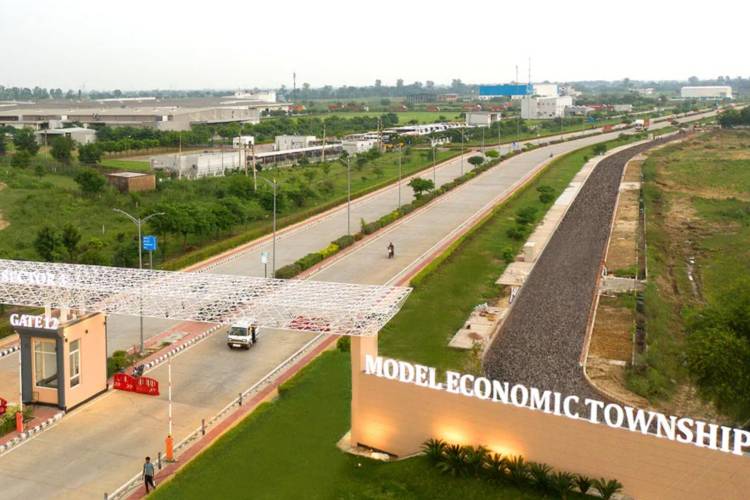
This has changed the economics of nearby towns as well. Rohtak, Bahadurgarh and parts of Jhajjar are drawing township projects because they combine road access with cheaper land. Reliance’s MET City in Jhajjar is one example of how industrial land use can pull housing, schools and services into its orbit.
Government-backed industrial projects have added to this pattern. Manufacturing clusters, logistics parks, defence corridors and electronics hubs are appearing across states. If these projects produce regular employment, housing demand will be less dependent on speculative buying.
That marks a break from earlier property cycles in smaller cities. Earlier booms often ran on investors buying multiple apartments in the hope of quick price gains. The present demand has a larger end-user component. First-time buyers, salaried professionals, local entrepreneurs and families moving up from older houses are now a bigger part of the market.
READ | Residential real estate: Rising demand fuels double-digit growth
Tier-II housing follows jobs and larger homes
The buyer has also changed. Younger professionals are less willing to trade space for a metro address if work allows flexibility. A three-bedroom apartment in Indore or Nagpur can cost less than a compact flat in Bengaluru or Delhi. Lower living costs and cleaner surroundings strengthen the case for families with portable jobs or local businesses.
Developers have adjusted their product mix. Smaller-city projects are no longer confined to basic affordable housing. Premium apartments, plotted developments, villas and integrated townships are being sold to buyers who want security, parking, clubs and managed common spaces. Branded developers are using trust as a selling point in markets where buyers remember delayed local projects.
Crisil’s findings show this split clearly. In Jaipur, Nagpur, Nashik and Vadodara, more than 75% of available supply remains below Rs 75 lakh. Indore, Lucknow and Surat have moved towards premium housing, with more than 20% of active supply priced above Rs 2 crore. Bhubaneswar, Coimbatore and Lucknow already have average residential prices above Rs 10,000 per sq ft, which puts them near some Tier-I micro-markets.
That price movement is both the attraction and the warning. Tier-II cities are cheaper than metros, but not uniformly cheap. In some markets, the same forces that brought developers in are beginning to test affordability.
READ | IBBI seeks to fix India’s real estate insolvency woes
Tier-II real estate draws listed developers
Land acquisition shows how seriously large developers are treating these markets. Anarock data for FY26 show that listed developers accounted for 54 of 111 land deals across India. These deals covered 1,433 acres, or about 48% of the transacted land area.
Tier-II and Tier-III cities were part of this buying. Amritsar saw two listed-developer deals covering 520 acres. Vadodara, Nagpur, Panipat, Mysuru, Raipur and Coimbatore also saw land transactions by listed players.
This does not mean every smaller city will become a housing success story. Demand will depend on local jobs, not only cheaper land. Cities with services, manufacturing or trading incomes will absorb new projects better than those relying only on investor interest. Inventory also needs watching. Crisil says unsold inventory in Tier-II markets is now around 15-20 months of sales after developers moderated launches in the past two years.
The safer reading is that India’s housing market is becoming less metro-centric, not that every smaller city is ready for a boom. The better Tier-II markets now have enough roads, jobs and buyer income to attract serious developers. The weaker ones will still expose builders who mistake cheap land for real demand.