





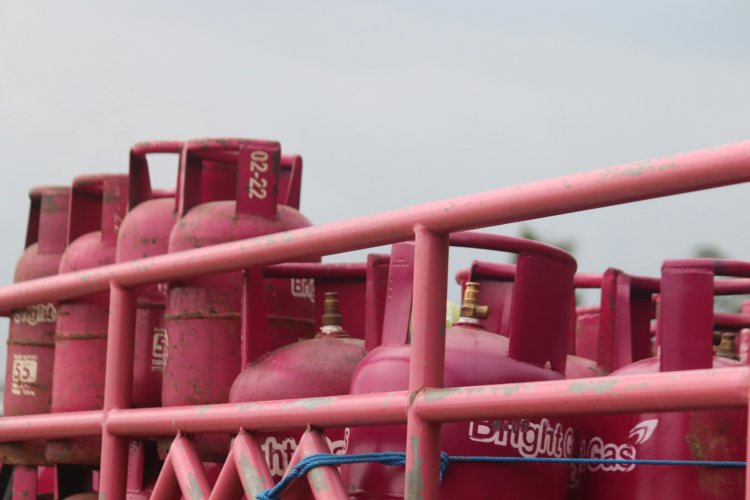
India’s migrant economy is usually discussed through jobs, wages, housing, and ration cards. Cooking fuel gets less attention, although it decides whether a worker can stay in a city. The recent LPG price and supply shock has exposed that omission.
Census 2011 counted 45.6 crore migrants in India, or 38% of the population. It also counted 5.4 crore inter-state migrants, with Uttar Pradesh and Bihar as the largest source states and Maharashtra and Delhi as major receiving states. Migration data understate temporary labour movement, but even the official numbers show how much India’s cities depend on workers who live outside formal urban welfare.
READ | LPG crisis 2026: Fiscal strain meets energy insecurity
LPG price shock and migrant workers
The Inter-State Migrant Workmen Act, 1979, and later labour codes recognise migrant labour as a category needing protection. The gap lies in city life. A worker can have the right to move, but still lack a ration card that works locally, a rental address, a secure cooking fuel connection, and bargaining power with contractors.
Field accounts from Thiruvananthapuram, Delhi, Pune, Bengaluru and Tamil Nadu point to a reverse movement after the LPG shock. The pattern resembles the COVID-19 exodus only in direction. This time the trigger is not a lockdown. It is the erosion of the migrant household budget.
Reuters reported that Indian Oil raised the domestic LPG price in Delhi by ₹29 from June 7, taking the 14.2-kg cylinder to ₹942. Commercial LPG saw a much sharper shock earlier, with the 19-kg cylinder in Delhi reported at ₹3,071.50 after a ₹993 hike on May 1. These headline prices do not capture the migrant worker’s problem. Many migrants depend on 5-kg free trade cylinders, shared cylinders, intermediaries, or the black market.
Down To Earth reported in May 2026 that the burden had shifted to 5-kg free trade cylinders used by migrant labourers, small vendors and informal workers who lack formal domestic LPG connections. That is the segment most exposed to price and supply swings.
Migrant workers and the cost of city life
The draft’s field observations from Bengaluru are telling. Scrap workers earning ₹15,000 to ₹20,000 a month cannot absorb a sharp increase in cooking costs when rent, food, transport and remittances already claim most of the wage. Where a family pays intermediaries for gas, the LPG bill rises faster than the official price.
READ | LPG price shock exposes India’s clean cooking gap
The same pressure appears in food work. In Kerala, the draft records that some migrant-run street food enterprises closed temporarily and workers returned home. In Tamil Nadu, migrants from Bihar and Jharkhand in textile and construction work reportedly shifted to firewood when LPG became unaffordable or unavailable. In Pune, the draft records migrant families cooking with firewood in cramped rooms, with children living in the same air.
This is not an incidental welfare problem. A cooking fuel shock changes the economics of migration. A worker who cannot cook must buy meals. If food vendors raise prices or shut down because commercial LPG is short, the worker loses the cheapest substitute. The household budget then breaks from both ends.
The Guardian reported in April 2026 that migrant workers in Delhi were returning to Uttar Pradesh and Bihar after gas shortages and rising food prices made city life untenable. It also reported small eateries cutting menus, raising prices, laying off workers or closing. Le Monde reported similar departures from Delhi, Mumbai and Bengaluru, with black market LPG prices rising sharply and India’s LPG dependence on imports making the shock harder to contain.
Urban migration and informal fuel markets
Surat, Mumbai, Pune, Bengaluru, Tiruppur and Thiruvananthapuram show the same weakness in different forms. Migrants sustain construction, textiles, scrap work, transport, street vending, small hotels and informal services. Their labour is treated as mobile, but their welfare entitlements remain tied to documents and addresses they often do not possess.
Down To Earth reported in April 2026 that LPG shortages in Surat were pushing migrant families to leave the city, with workers eating fewer meals and facing gaps in access to Ujjwala 2.0 and formal gas connections. The Chennai Hotels Association warned in March that more than 10,000 hotels and eateries in the city depend on commercial LPG cylinders and could face shutdowns if supply failed.
These figures should be read with care. Migrant movement is hard to count in real time. Contractors, railway stations, work sites and local associations capture only fragments. But the direction is clear enough. Cooking fuel has become a labour market variable.
Contractors in Kerala now face this in practical terms. Some owners buy train or flight tickets to bring workers back. Some workers stay longer in their native places. Some are picked up by other contractors on arrival. Migrants from West Bengal and Assam also face identity anxieties, especially when documentation and local suspicion intersect. A fuel shock then becomes part of a larger insecurity.
Energy poverty in urban India
The shift from LPG to firewood is the most visible regression. It reduces cash costs but raises health costs, especially for women and children in small rooms with poor ventilation. In Tamil Nadu and Pune, the draft’s field notes describe firewood use inside or near crowded living spaces. That is a return to unsafe cooking in the middle of urban India.
Public policy treats clean cooking fuel largely as a rural household question. Ujjwala made sense in that frame. Migrant workers in cities fall between categories. They may not have a local address. Their work may be seasonal. Their employers may not register them. Their households may be split between village and city. A subsidised domestic connection at the village home does not solve the city problem.
READ | Crude prices, LPG shortages, and the cost of Gulf dependence
That is why LPG access belongs in migration policy. Labour departments, urban local bodies, fuel retailers and food regulators cannot treat it as someone else’s file. A migrant settlement without reliable cooking fuel is not a viable labour colony. A construction site that depends on imported labour but leaves cooking to intermediaries is shifting a basic cost onto the weakest worker.
India’s cities need migrant labour but refuse to price its reproduction honestly. The wage is calculated as if the worker will somehow arrange housing, water, food, fuel, documents and health protection at the edge of the formal city. The LPG shock has made that fiction harder to sustain.
Migration policy and cooking fuel
The immediate response should be narrow and practical. State governments and oil marketing companies need temporary LPG access for migrant clusters, student hostels, labour camps, construction sites and informal worker settlements. Local proof of identity should be enough for small cylinders when supply is tight. Employers in construction, textiles and hospitality should be made responsible for safe cooking arrangements where workers live on or near worksites.
The longer lesson is harsher. Internal migration will not become a route to social mobility if every shock sends workers back to the village. Food, fuel, housing and welfare portability decide whether migrants can remain in the city through a bad month. Jobs alone do not hold them there.
The LPG crisis has therefore exposed a weak joint in India’s urban economy. Migrants are counted when factories need hands and hotels need cooks. They become invisible when the question is who pays for the cylinder, the room, the ration card and the return ticket home.
Dr Prerana Srimaal is Assistant Professor and Research Lead, and Navas M Khadar Research Associate at ICSSR Urban Migration Project, CHRIST University, Bannerghatta, Bangalore.