





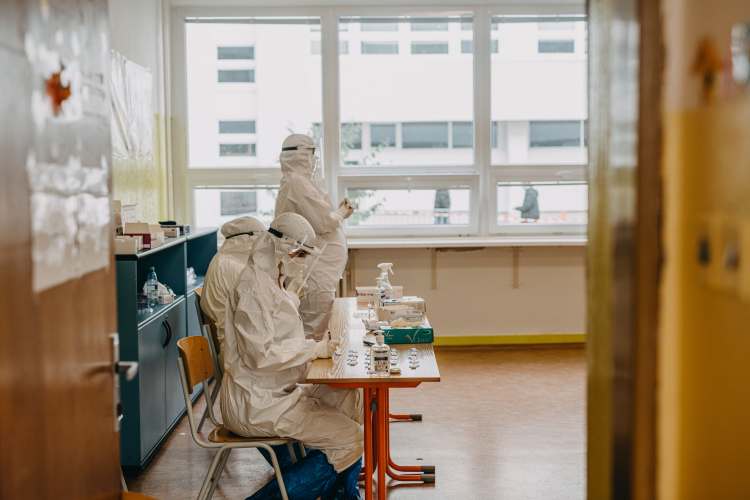
K-CDC and the monsoon disease surge: Kerala has created the Kerala Centre for Disease Control and Prevention at a time when its epidemic calendar has become crowded. By late June, published reports put Shigella cases above 200 for the year so far, with six deaths. A confirmed Nipah case in Kozhikode had already pushed the state into containment mode. Dengue, chikungunya, leptospirosis, influenza, hepatitis A, amoebic meningoencephalitis, malaria alerts and West Nile concerns have kept the health system on watch through the monsoon.
The state government says K-CDC will function from the Kerala University of Health Sciences campus in Thiruvananthapuram, modelled on the US CDC, and will analyse scientific data to guide public health policy. It is also expected to predict and prevent outbreaks linked to climate change and global travel. That mandate is broad enough. Its first test is narrower: whether it can turn Kerala’s monsoon disease response from a seasonal scramble into a working surveillance system.
READ I Hantavirus outbreak calls for stronger zoonotic preparedness
K-CDC and Kerala monsoon disease surveillance
Kerala does not face a single epidemic. It faces a multi-disease monsoon surge. Enteric infections, mosquito-borne disease, zoonotic threats and neurological syndromes now overlap in time and geography. A fever in Kozhikode, a diarrhoeal cluster in Wayanad, rodent exposure in Kuttanad, dengue hotspots in urban wards and animal deaths in a village cannot be handled as separate files.
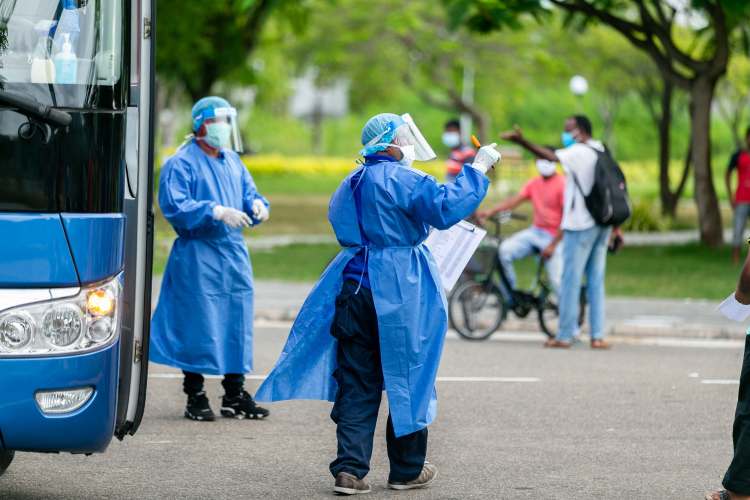
The new State High-Power Committee for Epidemic Control, headed by Dr S S Lal, has been asked to prepare an epidemic calendar, strengthen early warning and surveillance, develop treatment and quarantine protocols, and coordinate preventive action across Health, Food Safety, Local Self-Government, Animal Husbandry and district administration. These are the right headings. They need an operating spine.
K-CDC should provide that spine. It should own a live monsoon surveillance grid drawing from IDSP-IHIP, public hospitals, private hospitals, laboratories, local bodies, One Health volunteers, Animal Husbandry, Forest, Food Safety, Kerala Water Authority and meteorological data. Without that, the state will continue to detect outbreaks after local transmission has already widened.
READ I Kerala’s ageing crisis needs a governance reset
Kerala’s disease pattern has changed
The old rhythm of monsoon preparedness was sanitation drives, chlorination, vector control and fever surveillance. That remains necessary. It is no longer sufficient.
Shigella points to unsafe water and sanitation failures. Dengue points to water stagnation, construction sites, abandoned plots and weak ward-level source reduction. Leptospirosis points to occupational exposure among sanitation workers, MGNREGA workers, farmers and flood-exposed communities. Nipah points to the human-animal-environment interface, with bat ecology, seasonal fruits and human exposure all requiring field intelligence rather than panic after a positive test.
The state’s current dry-day calendar, with schools, government offices and households assigned separate days, is useful only if local bodies are made accountable for follow-up. A calendar without inspection, ward mapping and penalties becomes another public appeal.
READ I Fertility decline: India is ageing before prosperity
What K-CDC should do first
The first task is an integrated disease dashboard at ward, panchayat, district and state levels. It should track confirmed and suspected cases, test positivity, hospital admissions, deaths, vector indices, water contamination reports, unusual animal deaths, wildlife sightings near settlements, laboratory turnaround times and medicine stocks.
The second task is a climate-linked alert system. Rainfall, humidity, temperature, flood alerts and waterlogging data should feed disease-risk maps. Dengue and leptospirosis do not need perfect prediction. They need earlier warnings good enough to move fogging teams, chlorination, doxycycline prophylaxis, test kits and fever clinics before wards are crowded.
The third task is laboratory integration. K-CDC cannot remain a policy cell if district laboratories, medical college laboratories, veterinary laboratories and private diagnostic centres send delayed or incompatible data. Kerala needs standard reporting formats, mandatory cluster alerts from private hospitals, and rapid sequencing capacity where zoonotic or unusual clusters appear.
The fourth task is protocol discipline. Every district should have pre-monsoon instructions for Shigella, dengue, leptospirosis, hepatitis A, malaria, chikungunya, influenza, Nipah and acute encephalitis syndromes. Protocols should cover testing, isolation, contact tracing, death audit, vector control, water testing, school closure thresholds and public communication.
One Health needs data, not slogans
Kerala’s One Health programme is the strongest base for K-CDC, but it remains uneven. The Health Department’s own material says the programme uses community-based surveillance, with trained volunteers reporting public health incidents and possible zoonotic or infectious disease signals. Official material also refers to more than 250,000 trained volunteers.
The draft model is sound: community volunteers, local bodies, health workers and allied departments reporting early signals before hospitals fill up. Its weakness is data closure. Unusual animal deaths, bird deaths, dog bites, snakebites, wildlife movement, livestock illness and human fever clusters should not sit in different departmental systems.
K-CDC should require Animal Husbandry to report priority syndromes across livestock and domestic animals. Sudden death, abortion, neurological illness, respiratory illness, gastrointestinal illness, haemorrhagic signs, oral or foot lesions, animal bites and unusual mass illness are early signals. They do not all predict human outbreaks. They are still useful enough to investigate.
Kerala also needs a wildlife reporting layer. Forest Department apps and Chief Wildlife Warden records should be linked to IDSP-IHIP and One Health surveillance. Human-animal conflict data is now used largely for incident recording and compensation. It should also be used for risk maps, especially for snakebite, dog bite, rabies, leptospirosis exposure and settlements near forest edges.
Nipah surveillance must stay ecological
Nipah has taught Kerala the value of contact tracing and containment. It now needs ecological surveillance with the same seriousness. Kerala outbreaks have clustered in the April-September period, when hot, humid conditions and seasonal fruiting increase the chance of human exposure around bat habitats. Recent research notes this seasonal pattern, while genomic studies have linked human cases to Pteropus fruit bats.
Seasonal fruit data should be mapped, but not over-read. The 2024 Malappuram death of a 14-year-old boy after consuming hog plum from a bat-inhabited locality is a warning signal, not proof that every such exposure explains transmission. Field investigators have still failed to establish the exact bat-to-human pathway in Kerala, and fruit samples have tested negative in past inquiries.
That uncertainty argues for better surveillance, not looser claims. K-CDC should map bat roosts, seasonal fruiting, fallen-fruit exposure, pig and livestock contact, school and household clusters, and febrile illness near known spillover zones. It should coordinate Health, Forest and Animal Husbandry before a case is confirmed, not after a district is on alert.
Private hospitals cannot remain outside the grid
Kerala’s public health system cannot see the full outbreak picture if private hospitals report late or selectively. Fever, diarrhoea, encephalitis, thrombocytopenia, jaundice and acute respiratory clusters often surface first in private facilities. A pilot event-based surveillance study in Kerala private hospitals has already treated that gap as a serious early-warning problem.
K-CDC should push for mandatory, low-burden private hospital reporting. The format need not be elaborate. A daily syndromic feed from emergency departments, paediatric wards, intensive care units and laboratories would be enough to identify clusters. The state can debate legal compulsion later. It should start with standardised reporting from large hospitals in high-risk districts.
Dengue and malaria need paired testing
Dengue and malaria co-infection is uncommon, but Kerala cannot dismiss it. The first reported dengue-Plasmodium vivax dual infection from India came from Alappuzha in 2006. A 2021 cross-sectional study of 604 febrile patients found 21 concurrent dengue-malaria infections, or 3.47%. A global meta-analysis estimated a pooled malaria-dengue co-infection prevalence of 4.2%.
The practical point is clinical. A positive dengue result should not end the diagnostic search in a malaria-prone pocket. During and after the rains, febrile patients in co-endemic areas should be tested for both where symptoms, travel history or local surveillance justify it. Misdiagnosis delays treatment and distorts surveillance data.
K-CDC must link surveillance to municipal work
Kerala’s epidemic response still depends on the least glamorous municipal tasks: clean water, drain maintenance, waste removal, pipe repair, school sanitation, slaughter and food inspection, vector source reduction and protection for workers exposed to contaminated water. K-CDC cannot substitute for these functions. It can expose where they are failing.
Kerala Water Authority should receive outbreak-linked alerts where sewage contamination is suspected. Local bodies should receive ward-wise lists of dengue breeding sites and repeat violations. Food Safety should receive diarrhoeal cluster alerts tied to hostels, schools and canteens. KMSCL should receive automated triggers when essential drug stocks, oral rehydration supplies, test kits or PPE fall below threshold.
This is where the high-power committee’s interdepartmental promise must become visible. A committee can recommend. K-CDC must measure whether departments act.
The committee’s recommendations should not arrive after the monsoon peak. K-CDC should begin with a minimum operating system for all 14 districts: live disease dashboard, private hospital reporting, laboratory feed, One Health volunteer reporting, animal syndrome alerts, climate-linked hotspot maps, stock monitoring and district outbreak review meetings.
Kerala has enough institutions. It has DHS, IDSP-IHIP, medical colleges, local bodies, One Health volunteers, the Institute of Advanced Virology, KMSCL and now K-CDC. The deficit is linkage. The monsoon will show whether K-CDC is a centre that collects advice or an institution that can make the state act before disease counts rise.
READ I Healthcare real estate is driving costs, access
Dr Joe Thomas is Global Public Health Chair at Sustainable Policy Solutions Foundation, a policy think tank based in New Delhi. He is also Professor of Public Health at Institute of Health and Management, Victoria, Australia. Dr Thomas was the founding Secretary General of the Global Commission on Ageing in developing countries. He is an author of reports from seven PPD member countries documenting the ageing situation, health and well-being, and policies to enable and support environments.