





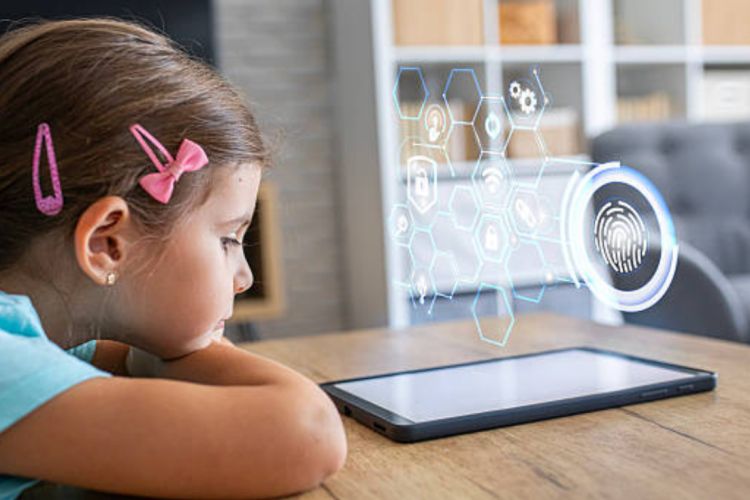
AI divide: “Knowledge is the supreme wealth,” the Mahabharata said, and so, societies gain or lose depending on how they cultivate learning. Centuries later on, Amartya Sen insisted that education is not just a means to employment, but a fundamental capability that creates freedom (Sen, 1999). Today — when India is embarking on the road to the age of artificial intelligence — these insights take on a new sense of urgency. The issue is now not just to open classrooms up, but to allow students and teachers within this nation the opportunities to benefit from equitable use of digital infrastructures that are increasingly reshaping the potential of higher education.
NEP 2020 and the digital divide
India’s National Education Policy (NEP) 2020 outlines a future of technological flexibility through interdisciplinary learning and democratising knowledge (Government of India, 2020). But the reality on the ground is deeply diverse. Elite campuses experiment with generative AI, cloud computing, and state-of-the-art learning management systems at all times, but most state universities and rural colleges have patchy internet, old technology and limited technical support. This divide runs the risk of producing a new pecking order of knowledge, where digitally gifted students access advanced tools while others fall through the gaps.
READ | Women’s jobs face greater disruption from artificial intelligence
In the aftermath of the pandemic this vulnerability has been revealed. Now, even when universities had been forced online, the students at those well‑endowed institutions went on learning on Zoom and Coursera and other AI‑enabled platforms. But many state universities experienced an uptick in dropout rates as students lacked devices or connection. A 2025 survey indicated that only 15 per cent of the Indian households had access to internet and only 8 per cent owned a computer, so millions of children were still excluded from digital schooling (Education for All in India, 2025).
The crisis was compounded by gender disparities: just 21 percent of women were linked to mobile internet compared to 42 percent of men, indicating socio‑economic and cultural blocks. The digital divide then hardened an already existing power disparity with technology as a new opportunity gatekeeper.
Artificial intelligence increases this challenge. AI offers personalised learning, predictive analytics, and speed up in research (Dhokare, 2024). But meaningful integration depends on good infrastructure: dependable broadband, cloud connection and GPU computation. This makes most Indian universities incapable of using AI efficiently without them. The consequence is a burgeoning “AI divide”: elite students receive cognitive augmentation, while others are left on the sidelines. Scholars caution that that form of inequitable adoption can erode trust and deepen inequalities in higher education (Williamson & Piattoeva, 2023).
READ | Can India power the artificial intelligence dream?
Faculty capacity and AI use
The faculty preparedness also adds to the difficulty. Professors are meant to incorporate AI in teaching, redesign assessments, and handle ethical risks, but they know nothing, or don’t get the kind of academic support their communities require. This disrupts NEP 2020’s vision for technology‑enabled pedagogy. Without investment in faculty capacity, digital tools risk becoming aesthetic enhancements instead of catalysts for transformation. As Martha Nussbaum contends, education should develop not only technical skills—empathy and critical reasoning must be built into curricula, but also education must develop critical thinking (Nussbaum, 2010). If faculty are themselves digitally disempowered, so too can universities not fulfil this mission.
Weaknesses in governance also contribute to the instability of the system. India’s policy landscape is changing—India’s Digital India initiative and the IndiaAI Mission put a focus on connectivity and responsible AI (NITI Aayog, 2021). But universities have no obvious operational arrangements for student data ownership, AI procurement, and ethical oversight. Without governance mechanisms, institutions are subject to opaque contracts with technology providers and the risk of algorithmic bias. In effect universities are in danger of becoming mere subscribers to external digital ecosystems, rather than sovereign custodians of knowledge.
Student data and university governance
The implications are profound. Higher education could split into two strata: elite institutions generating globally competitive graduates, and under‑resourced universities trying to keep up. This divide undermines the objective of the NEP to achieve a Gross Enrolment Ratio of 50 percent by 2035 and threatens millions of lives not able to participate in this AI‑driven future. The peril is both economic and civic. If knowledge is stratified along digital lines, India’s plural traditions of learning—from Nalanda to modern public universities—will be undermined. What then should India do?
READ | Artificial intelligence needs real leadership — not just loud voices
The solution is not copying Western models but tailoring local conditions to conform to global good practices. Countries such as Finland have invested in national AI-literacy programs for teachers, so that the faculty can help students manage the process of digital transitions (Finnish Ministry of Education, 2021). Singapore has developed public digital platforms that ensure equal access to AI tools throughout institutions. India is able to learn from these experiences through establishing sovereign AI educational infrastructures, developing multilingual foundation models trained on Indian knowledge systems, and incorporating ethics and philosophy into the AI curriculum.
Such measures would guard epistemic diversity and guarantee that technology is going to create India’s intellectual traditions, not homogenise them. But the real problem is one of philosophy rather than from a technological standpoint. True learning is not acquiring information, as reminds us in the Upanishads, but discernment.
In that age of AI, academic institutes, like universities, should be asking: What cognitive tasks should be augmented with machines, and which aspects should be human? The battle is not against technology, but against the erosion of productive struggle — the effort that goes into truly learning. India’s higher education system is at a pivotal point. It’s not a question of whether AI will move into classrooms — it already has. The question is whether universities will continue to be knowledge institutions of equals or be segmented subscribers of other infrastructures.
Bridging the digital divide is thus about more than connectivity. It also means defending cognitive sovereignty: making sure all students, including the ones in countries with fewer opportunities to learn, can participate in a future of learning not divided by size and circumstance. Answers will matter, but, as history teaches, the real challenge is asking the right questions at the right time.
READ | Emotional intelligence: The missing link in India’s education system

Debdulal Thakur is Professor, Department of Economics, Alliance University, Bengaluru.