





India’s vulnerability to energy shocks is not new. The country depends heavily on imported fossil fuels and conflict in West Asia has again exposed the fragility of supply chains. The policy gap is not merely that India imports energy; it is that India has not built a system capable of absorbing disruption when those imports are delayed, diverted or priced higher.
S&P Global has underlined this weakness, arguing that India needs a comprehensive energy storage policy to manage supply shocks. It has also identified energy security as one of the three policy priorities that will shape India’s path to Viksit Bharat 2047.
READ | Wind energy can rescue India’s renewable transition
Energy storage policy must cover all fuels
Energy storage is the ability to retain energy in usable form for later use. In fossil fuels, it means strategic reserves of crude oil, liquefied petroleum gas, aviation fuel and natural gas, stored in caverns, terminals or tank farms. In electricity, it increasingly means batteries that absorb surplus power when supply is high and release it when demand peaks.
India’s energy system has been designed around cost efficiency, not time flexibility. Supplies are scheduled just in time. Inventories are kept lean. Infrastructure assumes predictable flows. This works in normal times. It breaks down when war, sanctions, freight disruptions or shipping delays interfere with supply.
A delayed shipment or a spike in freight costs can quickly show up as shortages or higher domestic prices. The reason is simple: India does not store enough energy to cushion volatility.
Battery storage capacity lags renewables
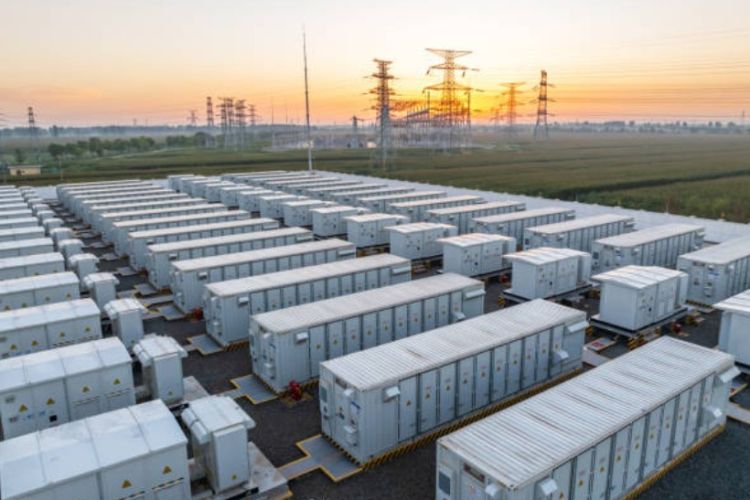
India’s battery storage capacity remains underdeveloped even as renewable energy capacity expands. According to S&P’s analysis, India has less than 2 GW of battery storage. That is inadequate for a power system that is adding large volumes of solar and wind power.
The weakness is not confined to electricity. Storage of key fuels is uneven. India has some strategic petroleum reserves, but other critical fuels have thin buffers. It has about 22 days of LPG storage, 60 days of aviation turbine fuel storage, 74 days of crude oil storage, and no strategic reserve for natural gas.
This imbalance matters. Crude oil supports transport and industry. Gas is used in power generation and fertilisers. LPG is central to household energy use. A disruption in any one segment can affect everyday economic activity.
Energy storage is not stockpiling. It is a system for smoothing volatility. In electricity markets, battery storage can absorb surplus solar generation during the day and supply power in the evening. This reduces dependence on fossil fuel-based peaking power and supports grid stability. In fuel markets, larger and more diversified reserves can prevent a supply interruption from becoming a wider economic shock.
READ | LPG crisis 2026: Fiscal strain meets energy insecurity
Strategic reserves need expansion
The first requirement is to expand physical reserves. India’s strategic petroleum reserves are limited in scale and need to be enlarged. The more serious gap is natural gas. India has no strategic gas reserve, even though gas is central to fertilisers, power and industrial use.
Underground gas storage, additional LNG storage and mandatory inventory norms could help moderate price spikes and ensure continuity for key users. Europe moved in this direction after the Russia-Ukraine war disrupted gas flows. Several countries expanded storage capacity and required minimum inventory levels. The United States has long used its strategic petroleum reserve as a market signal as well as a supply buffer.
The lesson is clear. Storage is not a passive backup. It is an active policy instrument.
The harder question is institutional. India cannot build a credible storage system through exhortation alone. Strategic reserves, LNG terminals, grid-scale batteries and distributed storage need bankable revenue models and clear regulatory responsibility. Petroleum storage will require public investment, inventory mandates and coordination with refiners and marketing companies.
Battery storage will need market signals for capacity, ancillary services, peak-time supply and renewable-energy firming. Without such rules, storage will remain a desirable asset with uncertain returns. Energy security also cannot replace one import dependence with another. A battery-led strategy must be linked to domestic cell manufacturing, critical mineral access and recycling.
READ | Energy access needs more than electrification
Battery storage must support the energy transition
India’s storage strategy cannot stop at fossil fuels. As renewable energy grows, battery storage will become central to the power system. Grid-scale batteries can help utilities balance supply and demand in real time. They can also provide frequency regulation and other ancillary services.
Industrial consumers need storage as well. Behind-the-meter systems can protect factories, commercial establishments and industrial clusters from outages and price volatility. Yet deployment remains slow because costs are high, regulations are unclear and market signals are weak.
Storage must therefore be embedded in the wider energy ecosystem. It should be linked to renewable energy targets, grid expansion, industrial energy use and local resilience. Large centralised reserves are essential, but distributed storage will also matter. Industrial clusters, commercial buildings and residential communities should be able to manage part of their own energy needs.
Energy security needs time flexibility
India has long treated energy security as a sourcing problem. The usual response is to diversify suppliers, negotiate better contracts and hedge price risks. These remain necessary. But they are not sufficient.
The missing layer is time. Countries that can store energy can wait. They do not need to make distress purchases when prices spike. They have more bargaining power in fragmented markets. Countries without buffers are forced into reactive decisions.
Global energy markets are becoming more political, more fragmented and more vulnerable to conflict. India must decide whether to invest in storage now or pay premiums later when supply tightens. Energy storage should be treated as core infrastructure, not as an afterthought to import management.