





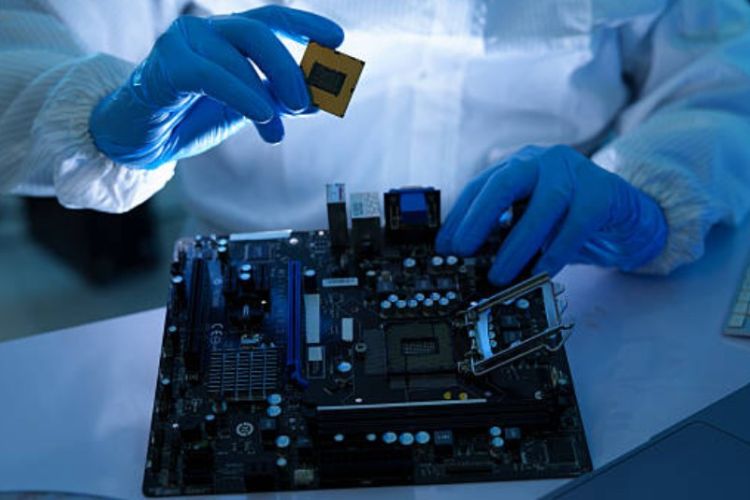
India Semiconductor Mission: Semiconductors sit at the heart of modern industry. They power phones, servers, telecom gear, medical devices and defence electronics. That is why chip capacity is no longer treated as just another manufacturing segment. It is now a test of industrial depth, technological capability and strategic autonomy.
For India, the stakes are larger than import substitution. The country wants to move from being a major market for electronics to becoming part of the global chain that designs, fabricates, packages and tests chips. That ambition has gained force because the global semiconductor industry remains heavily concentrated in a few geographies, and governments as well as companies are now looking for more resilient supply chains. India’s pitch rests on a large design talent pool, a growing electronics manufacturing base, and a policy regime that is finally beginning to move from announcements to assets on the ground.
READ | Budget 2026: Semiconductors drive MeitY’s recalibrated tech spend
Semiconductor policy now has a clearer structure
India’s semiconductor push sits within a broader electronics strategy. The National Policy on Electronics, approved in 2019, set the ambition of turning India into a global hub for electronics system design and manufacturing, with a turnover target of $400 billion by 2025. That goal was always aspirational, but it gave policy direction to a sector that had long depended on imports.
The sharper policy break came in December 2021, when the Union Cabinet approved the semiconductor and display manufacturing programme with an outlay of ₹76,000 crore. That framework offered fiscal support across the value chain: silicon fabs, display fabs, compound semiconductors, assembly and testing units, and chip design. In effect, India stopped treating semiconductors as an extension of electronics assembly and began to address the capital intensity and technological risk of the industry directly.
The design side has also received policy attention. Under the Design Linked Incentive scheme, the government has backed chip and system design projects with financial incentives, tool access and support across the design lifecycle. That matters because India’s strongest existing position in semiconductors lies in design talent rather than wafer fabrication.
ISM 2.0 widens the ambition beyond fabs
The next step came in Budget 2026-27. The government announced ISM 2.0 with a provision of ₹1,000 crore for 2026-27. The emphasis is not only on chips themselves, but also on semiconductor equipment, materials, research capability and training infrastructure. That is an important correction. No semiconductor ecosystem becomes durable by subsidising fabs alone. It needs domestic capability in materials, tools, process engineering, intellectual property and skilled manpower.
READ | Global semiconductor alliance exposes India’s tech vulnerability
India has also tried to align itself with the geopolitics of trusted supply chains. On 20 February 2026, it formally joined the Pax Silica coalition at the India AI Impact Summit. The initiative is meant to strengthen secure supply chains for silicon and critical inputs that underpin semiconductors and advanced computing. For India, this is less about symbolism than positioning. It signals that semiconductor policy is now tied to trade strategy, technology alliances and the politics of trusted sourcing.
Approved semiconductor plants show real movement
The more convincing change is visible in project approvals and early production. According to official updates, India has approved 10 semiconductor projects across six states, with envisaged investments of about ₹1.6 lakh crore. These include fabs, OSAT and ATMP units, and specialised facilities across Gujarat, Assam, Uttar Pradesh, Odisha, Punjab and Andhra Pradesh. Pilot production has already started in some units.
Two developments stand out. On 28 February 2026, the Prime Minister inaugurated Micron’s ATMP facility in Sanand, Gujarat, marking the start of commercial production at a plant intended to produce memory packaging solutions for data centres, AI and mobile devices. On 31 March 2026, the Kaynes Semicon OSAT facility in Sanand was also inaugurated. These are not fabrication breakthroughs on the scale of Taiwan or South Korea. But they are proof that India’s semiconductor strategy is beginning to move from policy architecture to operating facilities.
That distinction matters. For years, India’s semiconductor conversation was dominated by intent, memoranda and headline numbers. The shift now is toward physical capacity, process know-how and ecosystem formation. Packaging and testing may sit lower in the value chain than advanced fabs, but they are a credible industrial entry point. They create supplier networks, workforce capability, infrastructure demand and execution experience. Those are not marginal gains. They are the foundations on which deeper capability can be built.
READ | India semiconductor mission must shift from subsidies to skills
The real test is ecosystem depth, not plant count
Still, India should resist triumphalism. Semiconductor manufacturing is not a sector where a few approved plants automatically create competitiveness. The industry runs on scale, yield, uninterrupted power and water, cleanroom discipline, specialised chemicals and gases, logistics precision, and long-term demand visibility. It also depends on dense supplier ecosystems that take years, not quarters, to form.
That is why the success of India’s semiconductor strategy will not be measured by how many projects get announced or inaugurated. It will be measured by whether these facilities ramp up on time, whether design capability translates into commercial products, whether domestic suppliers emerge in materials and equipment, and whether India can integrate itself into global supply chains without relying indefinitely on fiscal support.
The policy direction is now clearer than before. The institutional commitment is stronger. The first plants are live. That does not make India a semiconductor power yet. But it does mean the country has crossed an important threshold: semiconductors are no longer just a policy aspiration. They are becoming an industrial project with visible assets, strategic intent and a chance, if execution holds, to reshape India’s position in the global technology economy.
Dr. Sweety Supriya is Assistant Professor, B.R.A. Bihar University, Muzaffarpur.