





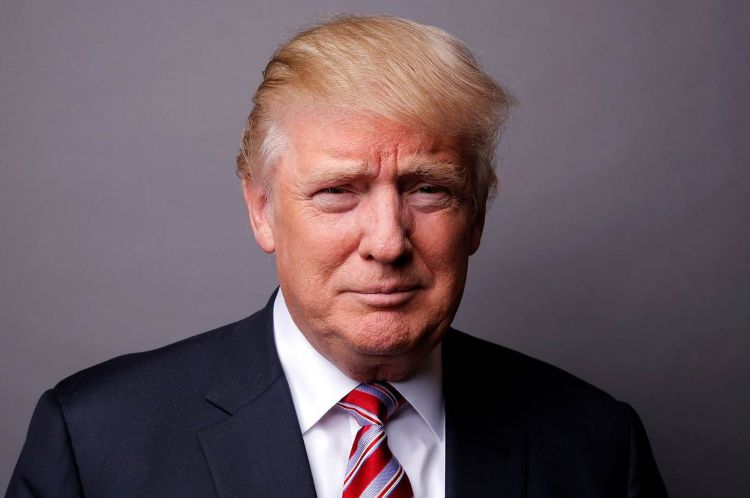
President Donald Trump’s wide-ranging interview with The New York Times is not a passing provocation. It reads as a statement of doctrine. When a sitting US president says the only restraint on the use of force is “my own morality,” and that he does not “need international law,” he is asserting a world order where power validates itself and rules exist only when convenient.
The issue is not whether such claims violate international law. They do. The deeper question is whether this worldview is sustainable — given what the United States can still impose, what it can no longer control, and what others have learned to resist.
The post-1945 order was built precisely to prevent unilateral war-making after the devastation of 1939–45. That logic was codified in Article 2(4) of the UN Charter, which bars the use of force except in self-defence or with Security Council authorisation. Trump’s remarks challenge that foundation directly.
READ I US intervention in Venezuela and the Monroe Doctrine
International law and the world order
International law does not bind states only when leaders choose to recognise it. Treaties are voluntary, but the core restraints on aggression are not casual agreements. They are reinforced by custom, precedent, and near-universal practice. Presidents can breach those rules. They cannot redefine them.
Trump’s formulation matters because it signals that law is treated as messaging rather than obligation. That posture has consequences. Security guarantees lose credibility when rules are conditional. Allies stop treating assurances as commitments and begin treating them as opening bids.
The United States has tested this before. The 2003 invasion of Iraq proceeded without Security Council authorisation. The result was not a rewritten legal order, but long-term damage to US credibility, especially among states that had relied on Washington’s claim to act within a rules-based framework. Power does not disappear when rules are bent. Trust does.
READ I US intervention in Venezuela threatens rules-based global order
Military reach is real, but control is not automatic
America’s military capabilities remain unparalleled. Its ability to deploy force quickly across regions has no peer. NATO’s combined defence spending still accounts for a majority share of global military expenditure. But modern coercion is not frictionless. Trump’s suggestion that the US can maintain “oversight” of another country’s government or resources “for years” reflects a persistent confusion between strike capacity and political control.
Recent history is instructive. Libya in 2011 showed how easy it is to dismantle a regime and how hard it is to build a state. Afghanistan demonstrated the limits of military power when political legitimacy never takes root. After two decades of intervention, the state collapsed in days once US support was withdrawn.
Unpredictability may intimidate in the short term. Over time, it teaches others to harden targets, disperse assets, and prepare for confrontation rather than accommodation. Force still matters. But force without political settlement produces stalemate, not order.
READ I Venezuela crisis turns into a public health emergency
Alliances depend on credibility, not improvisation
Trump acknowledges some domestic constraints. He recognises institutions at home, even while challenging them. Abroad, however, restraint is treated as optional. That distinction undermines alliance management. Deterrence relies on predictability as much as firepower. Allies need to know not just that the US can act, but that it will act under defined conditions.
NATO’s Article 5 has never been invoked lightly. Its strength lies in clarity: an attack on one is treated as an attack on all. When security commitments appear discretionary, that clarity erodes.
This is already visible. European states are investing more heavily in defence autonomy, not to replace the US, but to reduce exposure to political volatility in Washington. Transactional bargaining weakens alliances because it turns partnership into negotiation. The strongest coalitions in history were not built on fear. They were built on shared expectations.
Economic power faces a quieter constraint
The United States remains the world’s largest economic actor. The dollar still dominates reserves and global payments. That position allows Washington to wield sanctions, export controls, and financial pressure with unmatched reach. But economic primacy is not immunity from arithmetic.
US federal interest payments have become one of the fastest-growing budget lines. According to Treasury data and Congressional Budget Office projections, interest costs are on track to rival major discretionary spending categories over the next decade.

This matters strategically. Every dollar committed to servicing past debt is a dollar unavailable for military modernisation, alliance support, or economic diplomacy. A posture that assumes endless escalation ignores the fiscal base that sustains power.
The dollar’s central role rests on confidence in US institutions and long-term stability. When policy becomes erratic, markets price risk. That process is gradual, but it is relentless.
Rivals do not need parity to resist
Trump frames world order as a contest where strength outweighs law. He is correct that hard bargaining has returned. He is wrong that the United States is the only credible bargainer.
China’s objective is not to displace the US everywhere. It is to make US coercion more costly in Asia and less decisive globally. Russia’s strategy is to ensure its security even by changing borders by force. Both benefit when Washington treats rules as optional. It allows them to argue that restraint is hypocrisy rather than principle.
Even on currency and payments, change is incremental. The dollar remains dominant, but diversification is real. More bilateral settlement, higher gold accumulation by central banks, and regional safety nets reflect a desire to reduce exposure to US leverage. Resistance does not require equality. It requires endurance.
A harder, costlier world order ahead
What emerges from Trump’s interview is not isolationism. It is the belief that the US can administer outcomes by pressure alone. That approach will not end the international order. But it will change its texture. Law will matter less in enforcement and more in justification. Alliances will persist, but with thicker insurance policies. Economic tools will be used more often, and with diminishing marginal effect.
For India, the lesson is practical. Strategic autonomy must be backed by capability — defence production, supply chain resilience, and financial buffers. In a world where restraint is personal, pressure becomes routine.
The United States power has long operated through zones of influence, particularly in Latin America. The danger now is the expansion of that logic to a wider set of theatres.
If rules are treated as optional by the strongest power, others will treat restraint as optional too. That does not produce supremacy. It produces a harsher bargaining world, one where power is still decisive, but far more expensive to exercise, and far less trusted when it is.