





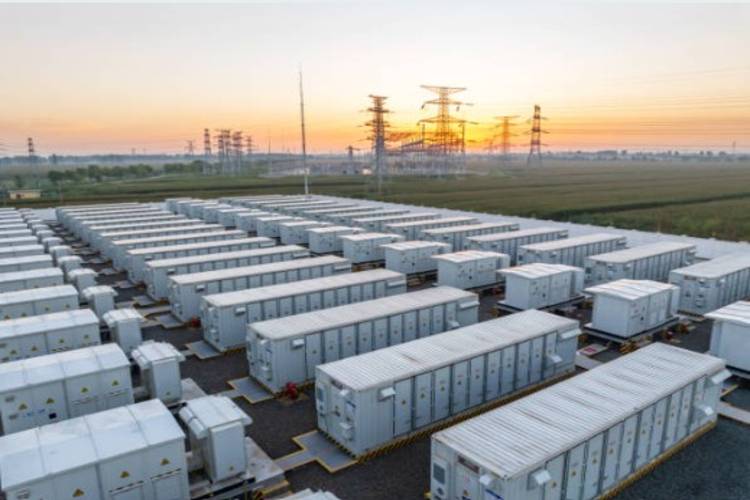
Battery storage and renewable energy transition: India’s renewable energy transition has reached an inflection point. Solar capacity is expanding at record pace, but the power system is increasingly unable to absorb and use that electricity when it is generated. Midday solar output is now so abundant in some regions that recent tenders for nearly 40 GW of solar capacity went unawarded, as distribution companies hesitated to contract more daytime power with limited evening value. This is not a failure of ambition or technology.
It is a failure of system design. India is adding renewable capacity faster than it is building the storage, contracts, and grids required to make that power reliable.
READ | India’s renewable energy sector crosses a cost turning point
When demand peaks, solar fades
India’s electricity demand peaks in the evening. Households return home, cooling loads remain high, and commercial activity continues late into the night. Solar generation peaks hours earlier, when demand is relatively muted. Without storage, surplus electricity is curtailed or dumped into the market at sharply depressed prices. After sunset, the system falls back on coal or gas.
The consequences are already visible. Daytime power prices frequently collapse during periods of high solar generation, while evening prices spike. Clean energy is wasted, project revenues are compressed, and emissions reductions stall despite rising renewable capacity.

Storage is the missing system link
India today has only a few hundred megawatts of grid-scale battery storage. Most estimates suggest the system will require around 30 GW by the early 2030s to support official renewable targets. This gap is not just numerical. Storage has been treated as an optional future add-on rather than core infrastructure, unlike generation or transmission.
As renewable penetration rises, that distinction becomes untenable. Without storage, India risks building a power system that looks impressive in installed capacity but struggles to deliver dependable supply.
READ | India’s renewable energy push calls for smarter state budgets
Battery costs are falling, but economics still matter
Globally, storage deployment has accelerated as lithium-ion battery prices have fallen sharply over the past two years, driven by scale, competition, and manufacturing efficiencies. Grid-scale battery systems have moved from pilot projects to commercial reality in several markets, enabling renewables to provide firm, dispatchable power. India has begun to see similar trends, with competitive bidding revealing tariffs that would have seemed implausible a few years ago.
Yet costs alone will not unlock scale. Storage economics depend on utilisation. Batteries that cycle multiple times a day can spread capital costs over more units of electricity, lowering effective tariffs. But aggressive cycling increases degradation risks, forcing developers to balance near-term revenue against asset life over 12–15 years. Market rules and contracts decide whether that balance is investable.
DISCOM finances affecting storage capacity
Storage adoption ultimately hinges on the financial health of distribution companies. DISCOMs are the final buyers of power and the primary carriers of system risk. Most remain fiscally stressed and reluctant to commit to contracts that raise near-term costs, even if they lower system costs over time.
Batteries shift expenditure upfront, while benefits accrue gradually through reduced peak purchases and lower balancing costs. In the absence of clear cost-recovery mechanisms, utilities prefer cheap surplus solar during the day and familiar coal generation at night. Regulatory frameworks compound the problem. Storage is still treated as an add-on, with tariffs that fail to value flexibility or peak supply. Political resistance to time-of-day pricing further limits reform. Without aligning DISCOM incentives with system needs, storage will remain constrained at the margin.
READ | India’s energy policy stuck between renewables and fossil fuels
Contracts must catch up with markets
India’s power purchase agreements were designed for a different phase of the transition. Fixed tariffs with guaranteed offtake helped accelerate renewable capacity but are poorly suited to a system dominated by variable generation. Power markets already signal the value of flexibility through extreme price spreads between afternoon and evening supply.
Allowing greater contractual flexibility would let utilities shift some demand to cheaper hours, while enabling storage operators to earn higher returns by supplying peak power. Without this shift, storage will remain underutilised regardless of technology costs.
Manufacturing and supply chains need depth
India has taken early steps to support domestic battery manufacturing, but current incentives remain narrow. Expanding support beyond cell manufacturing to include battery packs, power electronics, and critical material processing would strengthen supply chains and reduce exposure to global price shocks and geopolitical risks.
At the same time, India must invest in future technologies. Lithium-ion batteries dominate today, but alternatives such as sodium-ion batteries could reduce dependence on scarce minerals. Recycling and second-life applications can further lower lifecycle costs and environmental impacts.
Storage is only as effective as the grid it connects to. Delays in transmission planning or uncertainty in grid access can neutralise the benefits of falling battery prices. Coordinated expansion of transmission infrastructure must accompany storage deployment if renewables are to provide reliable power at scale.
Storage is what turns intermittent renewable capacity into dependable electricity. Without it, India will continue to post impressive renewable numbers while relying on fossil fuels every evening. With it, renewables can replace coal and gas not just in installed capacity, but in actual energy supplied. The success of India’s energy transition will be measured less by gigawatts added and more by whether the lights stay on after the sun goes down.