





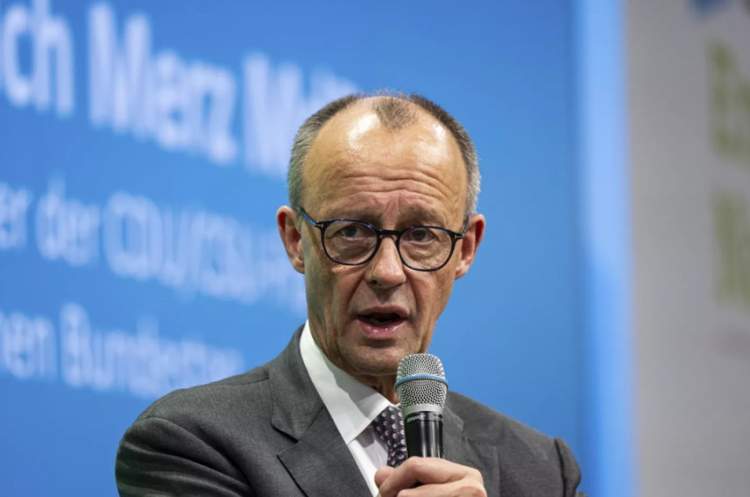
When the German Chancellor arrives in New Delhi, the headlines will focus on defence, geopolitics and climate coordination. Yet the more durable outcome of the visit may lie elsewhere- a deliberate effort to place micro, small and medium enterprises at the centre of the India-Germany economic partnership. This is not a marginal agenda. As supply chains fragment, sustainability rules harden and technology gaps widen, both governments increasingly recognise that large firms alone cannot carry growth. MSMEs will have to do much of the heavy lifting.
The global economic environment is shifting fast. Supply-chain diversification, tighter climate regulations and rising geopolitical risk are reshaping trade and investment decisions. In this context, the India-Germany partnership rests on clear complementarities. India is on course to become the world’s third-largest economy, with scale and demographic depth. Germany remains Europe’s industrial anchor, with deep strengths in engineering, automation and green technologies.
Both sides also face similar constraints. Germany’s growth is limited by labour shortages and rising energy costs. India’s challenge lies in upgrading productivity across millions of small firms that still operate with outdated machinery and thin margins. A structured MSME compact offers a way to address both problems at once.
READ I India-Russia ties need an MSME-led economic strategy
Mittelstand-MSME contrast
Germany’s economic backbone is the Mittelstand: family owned, export-oriented firms specialising in machine tools, industrial automation, optics, automotive components and clean engineering. These firms invest patiently, innovate incrementally and prioritise quality over short-term returns. Their global competitiveness rests on precision, skills and process discipline.
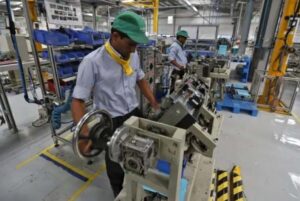
India’s MSMEs operate at a different scale and speed. They dominate textiles, food processing, logistics, IT services and light manufacturing, often under severe capital and infrastructure constraints. Their strength lies in adaptability, cost efficiency and entrepreneurial drive. The strategic opportunity lies in combining German technological depth with Indian scale and flexibility—an integration that could lift productivity without displacing jobs.
Skills as first bridge for India-Germany ties
Skills are the most immediate bottleneck. Germany’s dual vocational training system, which integrates classroom instruction with paid apprenticeships, has long been cited as a model for job-ready skilling. India’s demographic advantage will only translate into growth if training is closely aligned with industry demand.
Proposals now under discussion include Indo-German skill hubs in Karnataka, Maharashtra, Gujarat, Tamil Nadu and Punjab, focused on precision machining, mechatronics, industrial robotics, EV powertrains, hydrogen systems and digital factory operations. If executed well, these centres could directly feed skilled workers into MSME clusters, raising productivity while linking Indian labour to global value chains.
READ I Women-owned MSMEs remain stalled at micro scale
Technology transfer and co-innovation
Technology upgrading is the second pillar. German MSMEs lead in high-precision tools, automation systems and energy-efficient machinery. Many Indian MSMEs still rely on ageing equipment that limits quality and scale. Closing this gap will require more than equipment sales.
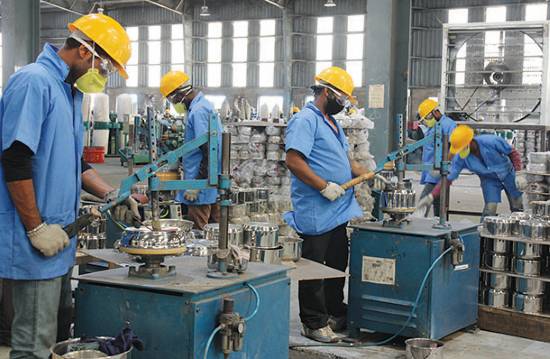
Policymakers are therefore exploring joint R&D facilities, co-innovation centres and technology parks in areas such as industrial automation, photonics, advanced materials, battery systems and AI-enabled manufacturing. The aim is not one-way transfer, but shared development—Indian firms producing globally competitive components using German tools, and both sides co-owning intellectual property for export markets.
Sustainability and green competitiveness
Sustainability is no longer optional. The European Union’s Carbon Border Adjustment Mechanism will increasingly shape access to European markets, with direct implications for MSME exporters. Firms that fail to meet emissions and traceability standards risk being priced out.
Germany’s expertise in renewable energy, circular economy practices and environmental compliance offers a pathway forward. A proposed Green MSME Accelerator would support Indian firms in upgrading equipment, reducing waste and accessing concessional green finance, while aligning them with European standards. For Germany, this creates cleaner and more resilient supply chains; for India, it offers a route to sustainable manufacturing at scale.
READ I India bets on MSMEs to power semiconductor mission
Financing the transition
Access to finance remains the weakest link. German MSMEs benefit from relationship-based banking and patient capital, often without heavy collateral requirements. India has taken a different route, using digital public infrastructure—UPI, GST data and cash-flow-based lending—to widen credit access.
A hybrid approach is now being considered, including a joint KfW–SIDBI financing window and an India-Germany MSME credit guarantee mechanism. By combining German development finance with Indian fintech-led credit assessment, small firms could access longer-tenor, lower-cost capital tied to technology upgrades and sustainability outcomes.
Building resilient supply chains
Recent shocks—from the pandemic to geopolitical tensions—have exposed the risks of concentrated supply chains. Germany is actively seeking trusted partners to diversify sourcing. India, with its expanding manufacturing base, is well placed to respond.
Officials are discussing Indo-German industrial clusters in cities such as Pune, Bengaluru, Ahmedabad and Hyderabad, integrating MSMEs into export-oriented value chains in electronics, EV components, medical devices, technical textiles, precision engineering and renewable energy equipment. For Indian firms, this promises stable demand and higher standards. For German firms, it offers scale and resilience.
A partnership with social depth
Beyond economics, MSMEs in both countries play a social role. Germany’s small firms are embedded in local communities, emphasising skills, dignity of labour and regional stability. Indian MSMEs are engines of mobility, drawing on intergenerational skills and entrepreneurial risk-taking. A deeper partnership could blend these traditions into an industrial model that is competitive without being extractive.
The Chancellor’s visit has revived talk of a 25-year MSME roadmap spanning skills, technology, green manufacturing, finance and supply chains. The ideas are coherent. The institutions are identifiable. The challenge now is execution. Skill hubs must train at scale. Technology parks must move beyond pilot projects. Financing windows must disburse, not just announce.
If Berlin and New Delhi sustain political focus and administrative follow-through, MSMEs could become the quiet anchor of the India-Germany relationship. In a fragmented global economy, that may prove more valuable than any single headline deal.
Juuhi Rajput is a research scholar at IIT Delhi.
READ I Europe’s Russia strategy risks repeating wars

Dr Charan Sigh is a Delhi-based economist. He is the chief executive of EGROW Foundation, a Noida-based think tank, and former Non Executive Chairman of Punjab & Sind Bank. He has served as RBI Chair professor at the Indian Institute of Management, Bangalore.