





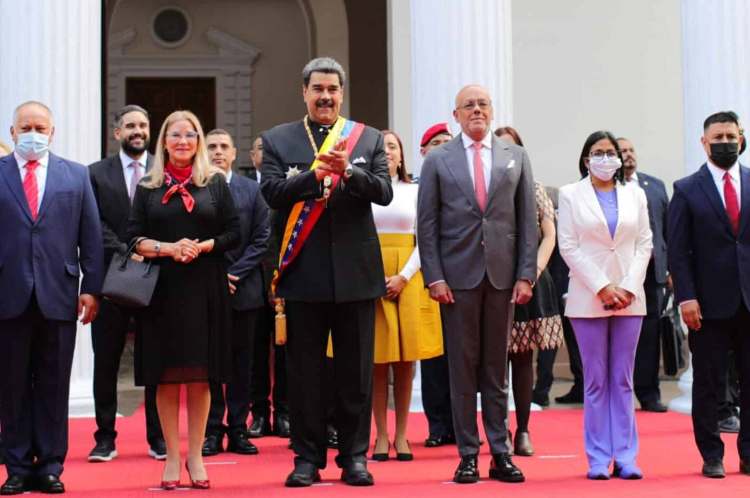
The US intervention in Venezuela, culminating in the seizure of President Nicolás Maduro and the declaration that Washington will run the country until a new government is installed, marks a decisive break with the rules that have governed international conduct since 1945. This is not merely another episode of regime change rhetoric. It fuses military force, domestic criminal law, and economic control into a single extraterritorial assertion of authority.
At a time when the rules-based international order is already under strain—from Ukraine to Gaza to the South China Sea—the precedent set in Venezuela risks normalising the idea that power, not law, determines borders, sovereignty, and control over resources. That risk extends well beyond Latin America.
READ I Venezuela and the return of gunboat diplomacy
Article 2(4) and the prohibition on force
At the core of the post-war international system lies Article 2(4) of the UN Charter, which prohibits the threat or use of force against the territorial integrity or political independence of any state. The US intervention in Venezuela does not fall within any recognised exception. There was no authorisation from the UN Security Council. Venezuela had not launched, nor was it imminently threatening, an armed attack on the United States. Nor was there unambiguous consent from a lawful Venezuelan government recognised across the international community.
Washington’s claim that the operation amounted to a law-enforcement action against a “fugitive of American justice” does not withstand legal scrutiny. The scale of force deployed, the direct targeting of a sitting head of state in his capital, and the hostile political context place the operation squarely within the definition of “use of force” under international law. If this reasoning is accepted, Article 2(4) becomes optional—invoked when convenient, discarded when inconvenient.
READ I Ukraine peace plan: Why Moscow wants more than offered
When domestic law overrides international law
What distinguishes US intervention in Venezuela from earlier interventions is the explicit reliance on US domestic law as a substitute for international legality. The Trump administration has anchored its actions in a 2020 US grand jury indictment alleging narcotics offences against Maduro and senior Venezuelan officials. That indictment, issued under US law, has been elevated into a justification for military entry into a sovereign state.
This approach collapses a distinction that international law has long treated as foundational. Domestic criminal jurisdiction does not authorise cross-border military enforcement. If it did, any state could deploy armed force abroad by issuing indictments against foreign leaders it deems criminal. Principles such as territorial sovereignty and head-of-state immunity exist precisely to prevent such escalation. Their effective abandonment by the world’s most powerful military actor weakens the legal firewall that protects smaller states from coercion.
READ I Europe’s Russia strategy risks repeating history’s wars
Sovereignty over natural resources
The declaration that the United States will oversee Venezuela’s oil sector during a transitional period raises an additional and serious legal concern. International law recognises the permanent sovereignty of states over their natural resources, a principle affirmed repeatedly by the UN General Assembly and embedded in customary international law. Venezuela holds the world’s largest proven oil reserves, estimated at over 300 billion barrels by OPEC.
Any external control over these resources—let alone appropriation—without lawful authority would amount to a further violation of international law. It also reinforces perceptions that strategic and commercial interests, rather than democratic restoration, drive intervention. For energy-importing developing economies, including India, such precedents increase uncertainty in global commodity markets and weaken confidence in legal protections governing resource ownership.
A dangerous template for selective enforcement
The greater danger lies in what follows. If the US can invoke domestic narcotics law to justify regime change in Caracas, other powers can invoke their own domestic statutes to intervene elsewhere. Russia has already demonstrated how elastic legal arguments can be deployed to justify territorial revisionism. China has developed expansive domestic laws governing national security and maritime jurisdiction. The Venezuelan precedent lowers the threshold for such claims.
The result is not a vacuum but fragmentation. Competing legal systems begin to operate extraterritorially, enforced by military power rather than mutual consent. Smaller states lose the predictability that the rules-based order once offered. The UN system, constrained by veto politics and power asymmetries, becomes increasingly marginal as enforcement shifts from collective mechanisms to unilateral action.
Human rights accountability without military overreach
None of this diminishes the gravity of human rights abuses committed under the Maduro regime. UN fact-finding missions have documented extrajudicial killings, arbitrary detention, torture, and enforced disappearances. Accountability for such crimes remains essential. International law already provides pathways for accountability that do not require armed intervention: targeted sanctions authorised multilaterally, international investigations, and prosecutions consistent with due process.
Conflating accountability with military force undermines both. It delegitimises genuine human rights mechanisms and allows abusive governments elsewhere to dismiss scrutiny as geopolitical interference. As the UN High Commissioner for Human Rights has warned, the protection of civilians must not be subordinated to power politics.
The US intervention in Venezuela signals a shift from rules-based restraint to discretionary enforcement by power. That shift may deliver short-term political or strategic gains. It will impose long-term costs on global stability. Once the prohibition on force is diluted, it cannot be selectively restored.
For middle powers and developing economies, the lesson is clear. Silence in the face of unlawful intervention erodes the very legal protections on which their security depends. Upholding international law does not mean defending autocrats. It means defending the boundary between justice and coercion. Once that boundary is crossed, it is rarely redrawn on equal terms.