





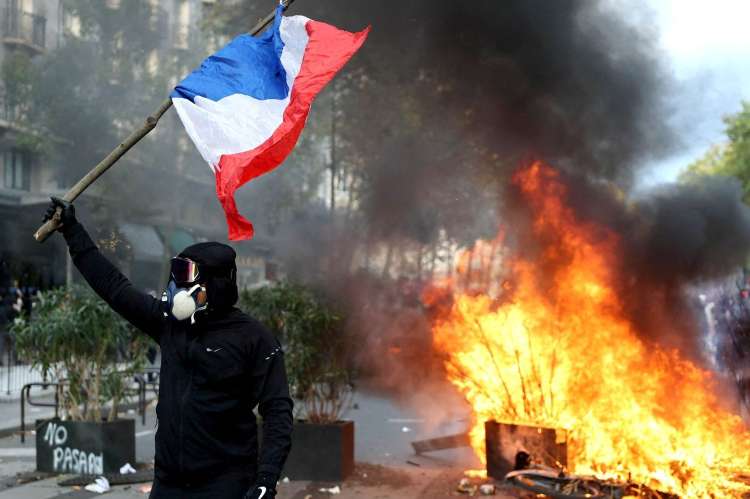
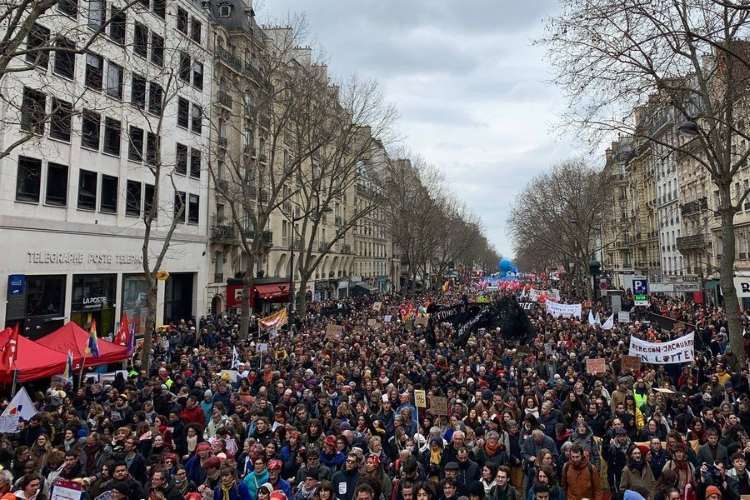
France protests and a public spending crisis: The French pupils who began protesting in late September were asking for teachers and classrooms fit to study in. By October 17, their demands had drawn hundreds of thousands onto the streets, joining grievances over household bills and the condition of public services. The violence that followed, including the burning of Limoges’ historic town hall, has allowed the debate to turn towards policing. It must also return to the failures that brought peaceful demonstrators out.
France presents an uncomfortable problem for both advocates of austerity and defenders of public expenditure. A country can spend heavily, redistribute substantial income and still leave citizens feeling abandoned. The explanation lies partly in who receives the money, partly in what public institutions deliver, and partly in whether people believe they can influence either decision.
The protests across Europe, and earlier youth movements in countries such as Morocco and Nepal, suggest that this failure extends beyond France. Their causes differ considerably. A recurring grievance, however, is that the institutions governing access to a tolerable life have become expensive, unreliable or inaccessible.
READ I Can pollution pricing help Delhi-NCR clean its air?
Public spending without dependable services
France’s fiscal position leaves little room for another indiscriminate spending settlement. INSEE’s revised annual accounts put public expenditure at 57.3% of GDP in 2025. The deficit was 5.1%, while public debt reached 115.7%. These figures describe a government already spending well beyond its revenue, despite the scale of its intervention in the economy.
Yet an expenditure ratio tells a pupil nothing about whether a teacher will arrive on Monday. Nor does it tell a patient how long treatment will take. Governments often defend their record through allocations; citizens judge the service they receive. When these measures diverge, announcing another large budget can deepen suspicion rather than restore confidence.
Education illustrates the problem. In the OECD’s PISA 2022 assessment, France’s most advantaged quarter of pupils outperformed the least advantaged quarter by 113 points in mathematics. Socioeconomic background explained 21% of the variation in performance, against an OECD average of 15%. The promise that education can overcome inherited disadvantage was already under strain before the present demonstrations.
For families unable to purchase alternatives, deteriorating public provision carries a double penalty. They contribute to the state through taxation while receiving fewer of the opportunities that taxation is supposed to secure. Better-off households can pay for tutoring or move closer to desirable schools. An apparently universal service can therefore reproduce inequality through differences in its quality.
READ I Startup funding recovery leaves smaller firms behind
The difficult arithmetic of pensions
The composition of spending deserves scrutiny. The OECD’s Pensions at a Glance 2025 places France among countries where gross public pension expenditure amounts to roughly 13–14% of GDP. Retirement provision absorbs resources on a scale that inevitably affects other budget choices.
A French budget report, described by Reuters on October 13, makes the pressure more explicit. Pension expenditure rose by 2.5 percentage points of GDP between 2000 and 2023, while education expenditure fell by half a percentage point. It also identified retirement costs within ministries as a constraint on money available for services.
This does not establish that pensioners caused the school crisis. Pensions are earned entitlements, and many recipients depend on them. Poor administration and recruitment failures cannot be explained away by demographic arithmetic. But an ageing electorate can defend established benefits more effectively than schoolchildren can defend spending whose returns lie years ahead.
The government must make those choices visible. A ministry’s headline allocation should distinguish the cost of past employment commitments from the resources financing today’s classrooms. Otherwise, ministers can claim generosity while staff and users experience retrenchment.
Fiscal consolidation remains necessary. Borrowing indefinitely to avoid disagreements over distribution merely adds interest payments to the claims on future revenue. But cutting accessible services while leaving politically protected expenditure untouched is likely to weaken the public consent on which a durable fiscal settlement depends.
READ I Heat action plans must include smaller towns
France protests a revolt over access
Housing protests in Spain and Portugal expose a related division. Rising property values benefit existing owners while increasing the cost of independence for younger households. A country may become wealthier on paper even as a salaried worker finds it harder to establish a home.
The OECD’s 2026 survey of Portugal charts a house-price index rising from about 110 in 2015 to about 240 in 2024. Wages need not collapse for affordability to deteriorate severely when the price of an essential asset moves so far ahead.
Morocco’s youth-led protests in September 2025 focused on healthcare and education. Nepal’s demonstrations that month were triggered by restrictions on social media but drew strength from anger over corruption and employment prospects. Neither movement can be reduced to a European cost-of-living dispute. Their relevance lies in how a specific grievance gathered people who had lost confidence in the government’s willingness to address broader failures.
The joining of student demands with household economic grievances has widened the constituency for France protests. It also complicates a settlement. Replacing an absent teacher is an administrative task; improving purchasing power without worsening public finances requires decisions over taxation, productivity and expenditure. A coalition can agree on its disappointment more readily than on the sacrifices involved in remedying it.
Restoring consent requires firm commitments
Arson and looting warrant investigation and prosecution. They also impose costs on shopkeepers and communities whose circumstances may be little better than those of the protesters. Treating destruction as an understandable political language would weaken the case for democratic accountability.
The authorities have corresponding obligations. Police conduct must be open to independent investigation, and peaceful assembly must remain possible. Collective blame gives governments an excuse to avoid legitimate demands and gives violent groups an opportunity to dominate the confrontation.
France needs a negotiated programme with commitments citizens can verify: published teacher-vacancy figures, deadlines for repairs and transparent accounts of the money required. Any concessions should identify their financing. Additional taxation of wealth deserves examination, but revenue estimates must account for enforceability and behavioural responses; a proposed tax is not cash already collected.
With the 2027 presidential election approaching, postponing these decisions will be tempting. It would leave the next government with fewer resources and a more distrustful public. France’s pupils should be able to secure a functioning classroom through ordinary administration. A republic that requires them to assemble in their hundreds of thousands before responding has made governing unnecessarily difficult.