





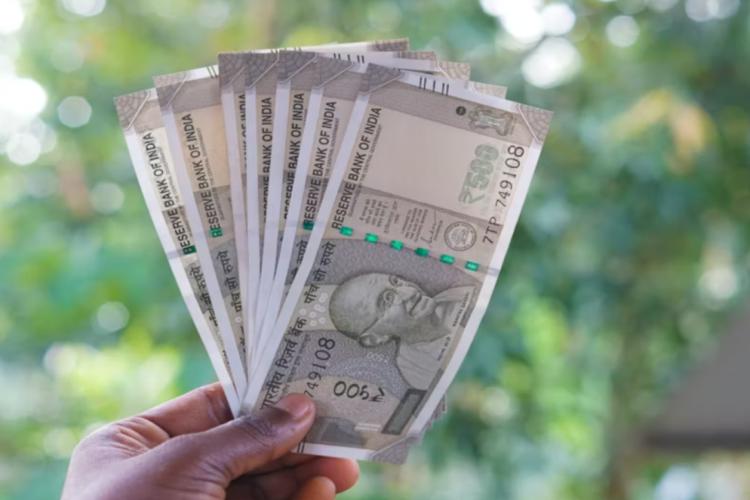
NHIS 2026: How much do Indian households actually earn? This is the question behind the National Household Income Survey 2026. India’s statistical system has long measured consumption, employment, inflation and poverty. It has not produced a reliable picture of household income. The Ministry of Statistics and Programme Implementation now wants to correct that gap. The challenge is obvious: income is hard to measure in an economy where informality remains the norm.
Pilot exercises by the National Statistical Office reportedly found that nearly 95% of respondents considered income-related questions sensitive. Salaries, business income, savings, investment returns and jewellery expenditure are not neutral subjects inside Indian homes. Many households hesitate. Some refuse to disclose financial details.
READ | Urban incomes growth masks real inequality divide
India’s household income data gap
That hesitation has shaped India’s statistical practice. Policymakers know more about what Indians spend than about what they earn. For decades, India relied mainly on consumption expenditure surveys because expenditure was seen as easier to capture in a poor and informal economy. A family may hide or forget earnings. It is more likely to recall food purchases, fuel costs or school expenses.
That logic had force in an economy dominated by subsistence agriculture and cash transactions. But the economy has changed. Urbanisation, platform work, self-employment, fragmented labour markets and multiple income streams have made expenditure an incomplete proxy for economic well-being. Policymakers now need direct measures of income, inequality, volatility and labour market stress.
The NHIS 2026 is expected to cover nearly 4.5 lakh households across rural and urban India. It will seek information on wages, farm earnings, business income, remittances, pensions and financial returns. MoSPI has also set up a Technical Expert Group under Surjit S Bhalla to guide the survey’s concepts, definitions and methodology. If done well, the data could influence poverty estimation, welfare targeting, labour market analysis and national accounts. The harder question is whether India can solve a problem that even richer economies have not fully solved.
Lessons from global income surveys
Statisticians are studying income surveys in the United States, Canada, Australia and South Africa. Each offers a lesson. Each also carries a warning.
The United States Census Bureau has treated reluctance partly as an incentive problem. A randomised experiment within the Survey of Income and Programme Participation found that unconditional cash incentives before interviews improved responses to income questions. Reporting of investment income also improved. Households receiving incentives recorded lower non-response rates than those that did not.
READ | Budget 2026: Rural incomes are India’s weak spot
India’s own economists have been cautious about this approach. Former chief statistician Pronab Sen has warned against monetary incentives. A paid respondent may feel obliged to give the interviewer an answer, not necessarily an accurate one. The concern is hard to prove, but the question is real: better participation should not weaken authenticity. India has traditionally presented official surveys as exercises in public purpose, not as transactions with respondents.
Australia offers another model. Its Survey of Income and Housing combines interviews, online self-reporting and administrative records. The Australian Bureau of Statistics has tried to reduce dependence on household responses by using tax, payroll and welfare databases.
That approach also has limits. In the 2023-24 cycle, the ABS leaned heavily on records and allowed respondents to skip difficult questions. Data quality suffered enough for the agency to withhold publication. For the current round, the ABS has brought back several direct questions it had tried to source from records.
Canada has gone further in linking household income estimation with tax records. The Canadian Income Survey increasingly draws from tax returns and related administrative data instead of repeatedly asking households for detailed information. This reduces respondent burden and official workload. But it works because Canada has a wide tax net and strong documentation systems.
India does not. Many businesses operate in cash. Only a small share of Indians file income tax returns, and fewer still report all sources of income comprehensively. Informal earnings, farm income and cash-based enterprises cannot be captured through administrative databases. A Canadian-style model cannot simply be imported.
READ | Climate change threatens India’s farm income goals
Informality makes income harder to measure
For a country marked by inequality and informality, South Africa may offer the closer lesson. Statistics South Africa embeds parts of its Income and Expenditure Survey into household routines for nearly a month. Families are visited repeatedly and asked to maintain expenditure diaries over two weeks. Interviews are conducted face to face through tablet-based systems. Phone interviews are used only when physical visits are impossible.
The South African model is expensive and labour-intensive. But it recognises a feature common to developing economies: incomes are irregular, seasonal and fragmented. A household’s economic condition may shift within weeks because of farm cycles, migration, casual work, remittances or local demand.
India faces the same problem on a much larger scale. It is easy to document a salaried professional. It is far harder to measure the income of households dependent on farm work, small trade, gig work, home-based enterprises and informal services. Earnings fluctuate daily. Many households themselves may not know their monthly or annual income with any precision.
That is why previous attempts at income surveys struggled.
Why NHIS 2026 matters for welfare and inequality
Yet the absence of reliable income data is costly. India has expanded welfare through direct benefit transfers, food subsidies and targeted schemes. Better targeting requires better information on income and vulnerability. Weak income data also limits the debate on inequality. India’s growth has sharpened concern over wealth concentration and uneven gains. Consumption data alone cannot settle that debate.
The NHIS 2026 therefore matters beyond statistics. It could change how India identifies poverty, designs welfare and measures inequality. But it will succeed only if respondents trust the process. In a country where citizens remain wary of taxation, surveillance and welfare exclusion, that trust cannot be assumed.
That trust will require more than trained enumerators. The government must state clearly that household-level responses will remain confidential and will not be shared for tax scrutiny, welfare exclusion or enforcement. The survey also needs a strong public communication campaign in local languages, explaining why income data matters and how anonymity will be protected. In a country where income disclosure can be seen as a risk, confidentiality is not a procedural detail. It is the condition for credible data.
There is no ready-made solution. India will need direct questioning, careful survey design, repeated contact, protection of confidentiality and realistic expectations. If statisticians get it right, the NHIS 2026 could become one of the most consequential statistical exercises in recent years. If they get it wrong, it will confirm what India already knows: income is the hardest number to collect.