





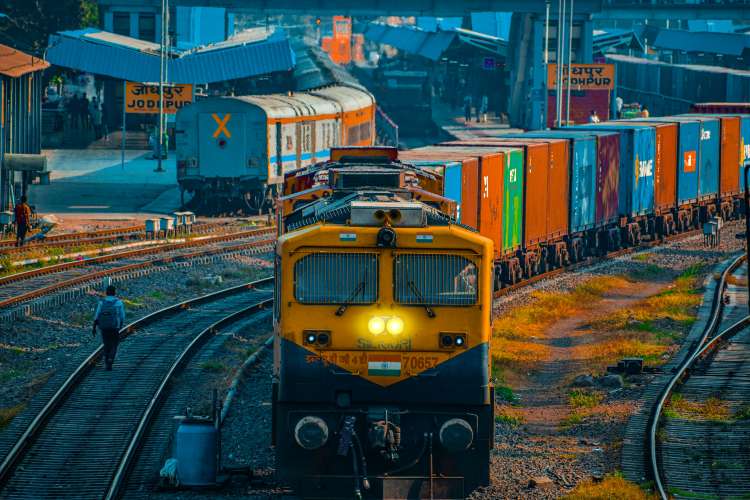
India’s transport authority must make infrastructure work as a network: India has invested heavily in roads, railways, ports and airports, but the transport system has often been planned through separate institutional channels. A highway may be built without an efficient connection to a freight railway; a port may expand without adequate last-mile links; an airport may grow faster than the urban transport system around it. The result is that individual assets can perform reasonably well while the network connecting them remains inefficient.
The Union Cabinet’s decision on October 6 to establish the Integrated Transport & Logistics Authority (ITLA) is an attempt to address this problem at the level where it begins: planning. The authority is being created as a special purpose vehicle under the Department for Promotion of Industry and Internal Trade (DPIIT), with a mandate covering integrated transport and logistics planning, project appraisal, monitoring, research, policy support and data analytics.
READ | Railway expansion alone cannot guarantee sustainable transport
The important question is whether ITLA can persuade transport ministries to plan their investments as parts of one network rather than as separate sectoral programmes.
India’s transport system needs a network planner
For decades, transport governance has been divided among ministries and agencies with different mandates. Roads are planned by the Ministry of Road Transport and Highways, railways by the Ministry of Railways, ports and shipping have their own institutional structures, civil aviation operates separately, while urban transport is largely the responsibility of states and cities. Inland waterways and logistics add further layers of administration.
There is nothing inherently wrong with sectoral expertise. The problem arises when decisions made within individual sectors produce poor connections between them.
The economic value of a new highway depends partly on what it connects to. A road linking an industrial cluster to a freight railway and a port can be more valuable than an otherwise similar road that ends at a weak transport interface. An airport is more useful to an urban economy when passengers can reach it efficiently by public transport. A port cannot deliver its full economic value if cargo faces delays after leaving the terminal.
ITLA is intended to address precisely this problem. It will prepare a National Transport Master Plan with a planning horizon of at least 10 years, covering roads, railways, ports and shipping, civil aviation, inland waterways, coastal shipping, urban mobility and logistics. It will also assess shorter-term sectoral and annual plans against that larger framework.
This is a significant shift in emphasis. The question is no longer simply whether a proposed asset is technically sound. It is whether the investment fits the transport network that India is trying to build.
READ | Budget 2026: India needs urban governance, not big transport assets
ITLA has to add something Gati Shakti does not
India has already recognised the need for integrated infrastructure planning. PM Gati Shakti, the National Logistics Policy and multimodal logistics initiatives have sought to improve coordination and reduce bottlenecks. DPIIT itself has had an integrated logistics mandate since 2021 and has been responsible for coordinating policy interventions across modes.
ITLA therefore enters an ecosystem that already contains institutions and digital platforms designed to improve coordination. Its justification cannot simply be that India needs another coordinating body.
The distinction lies in the authority’s proposed functions. ITLA will technically appraise central government infrastructure projects costing ₹500 crore or more, while financial appraisal will continue through existing mechanisms. It will also monitor such projects and undertake post-implementation impact assessment.
That gives it a potential role in shaping investment decisions before large sums of public money are committed.
Consider a ₹2,000-crore highway or railway project. Conventional appraisal can establish whether the project is technically feasible and financially or economically justified. An integrated transport authority can ask an additional question: how does the project fit into the movement of goods and people through the wider network? Does it connect with the right freight terminals, industrial areas, ports or urban systems? Is another mode better suited to part of the traffic?
Those questions are important because infrastructure creates value through connections. Building capacity in one mode does not automatically remove a bottleneck elsewhere.
READ | India’s urban transport crisis is a governance failure
The real test will be institutional power
ITLA’s greatest difficulty will not be preparing a master plan. It will be getting ministries, states and private investors to act on it.
Transport ministries control substantial budgets and have their own operational priorities. States make infrastructure decisions based on their economic and political needs. Private developers respond to commercial returns. A central coordinating authority can identify the optimal network, but it cannot assume that every participant will automatically accept its priorities.
This is where ITLA’s design will matter.
If its recommendations remain advisory and ministries continue to select projects largely on their own, the authority could become another layer in an already crowded planning system. That would increase procedural costs without changing investment decisions.
Its technical appraisal role gives ITLA a stronger starting point. If alignment with the National Transport Master Plan becomes an important consideration in project approval, the authority could influence the composition and sequencing of infrastructure investment. Its monitoring and post-project assessment functions could also create feedback on whether expected transport and economic benefits were actually delivered.
The authority will need technical capacity to make this credible. That means economists who understand transport demand, engineers who understand network constraints, logistics specialists who understand supply chains and data professionals who can work across government systems. An SPV structure under the Companies Act is intended to give ITLA operational flexibility in areas such as funding, staffing and stakeholder engagement.
Data could determine whether the authority succeeds
The most consequential part of ITLA’s mandate may be its proposed National Transport Data Repository. The government says the repository will draw on datasets including GSTN e-way bills, FASTag, Vahan, GPS-based systems and urban traffic management systems. It is expected to support freight-flow and origin-destination analysis for planning, monitoring and impact assessment.
That could improve infrastructure planning substantially. Transport investment should be based on how goods and people actually move, rather than relying primarily on projections contained in individual project proposals.
Better data can also expose mismatches that are difficult to see within a single ministry. A road may appear adequately utilised when examined in isolation but still fail to connect efficiently with a port. A railway corridor may have spare capacity while freight continues to move by road because terminal access is poor. Urban congestion may reflect a missing interchange rather than a shortage of road capacity.
The government has already moved towards more systematic measurement of logistics costs. A DPIIT-NCAER study estimated India’s logistics costs at 7.97% of GDP in 2023-24, replacing the widely cited 13-14% estimate that lacked a comparable statistical foundation. Better measurement should make it easier to identify where infrastructure investment can deliver the largest reduction in transport and logistics costs.
ITLA can build on that shift from broad assumptions to network-level evidence.
India does not have a shortage of transport projects. It has a harder problem: ensuring that the projects reinforce one another. The country has spent years expanding individual modes and has already built institutions such as Gati Shakti and the National Logistics Policy to improve coordination.
The significance of ITLA will therefore depend on whether it can move integrated planning from a policy objective into the decisions that determine where money is invested. If its appraisal, data and monitoring functions carry real weight, it could improve the economic return from India’s infrastructure spending. If ministries can treat its plans as another advisory document, the institutional gap will remain.
The authority has been given a substantial mandate. Its success will be measured by how much that mandate changes the infrastructure that India actually builds.