





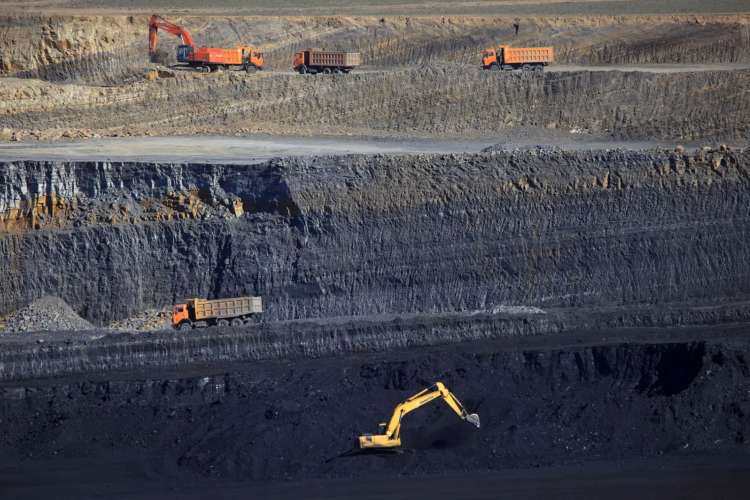
India’s economic ambitions depend on reliable, affordable energy. Despite the policy push toward renewables, coal remains central. The Ministry of Coal’s latest proposal—to tighten and rationalise timelines for commercial and captive coal block development—is an attempt to address a long-running problem: the gap between coal block allocation and actual production.
The ministry has proposed amendments to timeline and efficiency parameters in the Coal Mine Development and Production Agreement and the Coal Block Development and Production Agreement. The draft creates clearly defined milestones from allocation to mine opening, with total operationalisation timelines capped at 40 months for fully explored mines and 52 months for partially explored mines that first require a geological report. India’s auction reforms have long been undermined by slow execution after allocation. The proposal seeks to fix that credibility deficit.
India crossed one billion tonnes of coal production in FY25, while imports fell 8.4%. That matters. India remains a major coal importer, especially of coking coal, and lower import dependence reduces exposure to global price swings. For a country with rising power demand and industrial expansion, domestic production gains are economically and strategically valuable.
READ I India bets on carbon capture to offset coal reliance
Coal block timelines and performance security
The core of the proposal is the performance security mechanism. This is typically a bank guarantee or fixed deposit meant to ensure that winning bidders meet contractual obligations, including development timelines.
Under the revised framework, delays in preparing geological reports for partially explored mines can trigger cumulative appropriation of up to 50% of performance security. Delays in approvals of mining plans and environmental clearances may attract 10% appropriation. Delays in execution of mining leases and mine opening permission can attract 25% appropriation each. There is, however, a refund provision if the final milestone is achieved within the overall stipulated timeline.
The intent is clear: deter slippages and force time discipline. The harder question is whether the delays that matter most arise from bidder inaction or from India’s regulatory and administrative pipeline.
READ I Climate change: India’s just transition faces coal reality
Environmental clearances and regulatory bottlenecks
Environmental and forest clearances sit at the centre of India’s mining problem. A coal block cannot move from allocation to extraction without passing through that architecture. This is where timelines routinely stretch.
Land acquisition disputes, litigation and local resistance have also delayed projects. Many of these bottlenecks lie outside a developer’s direct control. If so, appropriating performance security can become a blunt instrument. It may punish delay without distinguishing its source, and that can deter serious bidders who price regulatory uncertainty more conservatively.
Even where a mine opens on schedule, production gains depend on evacuation capacity. Rail sidings, first-mile connectivity, loading systems, rake availability, and coordination with Indian Railways and state agencies often determine whether coal moves from pithead to power plant. A tighter mine-development clock does not, by itself, solve these downstream bottlenecks. Without parallel improvement in logistics, faster operationalisation may raise headline capacity more than delivered supply.
The government has, to its credit, tried to ease mine development since 2020. It has removed mandatory approval of geological reports, allowed accredited private agencies to undertake exploration without a prospecting licence, and eliminated the requirement for mandatory mine opening permission. It has also treated coking coal as a critical and strategic mineral, alongside procedural relaxations in some environmental clearance processes.
READ I Coal’s last stand: Solar energy to power India’s future
Mining reforms, public consultation and social risk
That does not settle the larger issue. Environmental impact assessment processes in India are often criticised as cursory. Yet they remain among the few formal channels through which affected communities can raise objections.
If coal block approvals are accelerated by narrowing consultation, coal output may rise faster in the near term. But mineral-rich regions—already socially and economically vulnerable—may bear the cost. The result can be more conflict, more litigation and, eventually, more delay.
In other words, speed and consent cannot be treated as separate tracks in mining policy. If the process loses legitimacy, execution suffers anyway.
Geological exploration quality and bidding risk
There is also a technical risk in partially explored blocks. These blocks come with information asymmetry by design. When strict timelines and steep financial penalties are imposed, hurried geological work becomes more likely.
That creates long-term problems. Poor exploration can distort reserve estimates, misprice bids and trigger later disputes. Aggressive bidders may overcommit in auctions and run into distress once geology, approvals or costs diverge from assumptions.
A framework that improves speed but degrades exploration quality will only shift delays to a later stage, where they become more expensive.
Coal block contract enforcement
Indian mining contracts have often been criticised for ambiguity and administrative discretion. A more structured and time-bound framework can reduce arbitrariness. That is a genuine gain.
But implementation capacity remains uneven across states. Unless state-level institutions handling approvals, land issues and compliance are strengthened, tighter contracts may simply transfer pressure downward. The paperwork may become stricter without the system becoming faster.
That is the central test for this reform. The problem is not only contract design. It is administrative throughput.
Demand, energy transition and asset risk
India has committed to aggressive renewable expansion and net-zero emissions by 2070. Coal will remain important for decades, but that does not remove the need for demand realism in long-gestation mining investments.
Accelerating mine operationalisation today should not create stranded assets tomorrow. Coal policy cannot be run only on short-term production targets. It must also be aligned with realistic demand projections across power, steel and industry.
Coal power is not disappearing soon. Thermal plants continue to run at high utilisation during peak demand periods. Steel production, infrastructure build-out and urbanisation will sustain coal demand for the foreseeable future. In that context, improving domestic production efficiency is sensible.
The question is narrower, and more difficult: whether the government can enforce tighter coal block timelines without weakening environmental safeguards or penalising developers for delays caused by the state itself. That balance—not the deadlines on paper—will decide whether this reform works.