





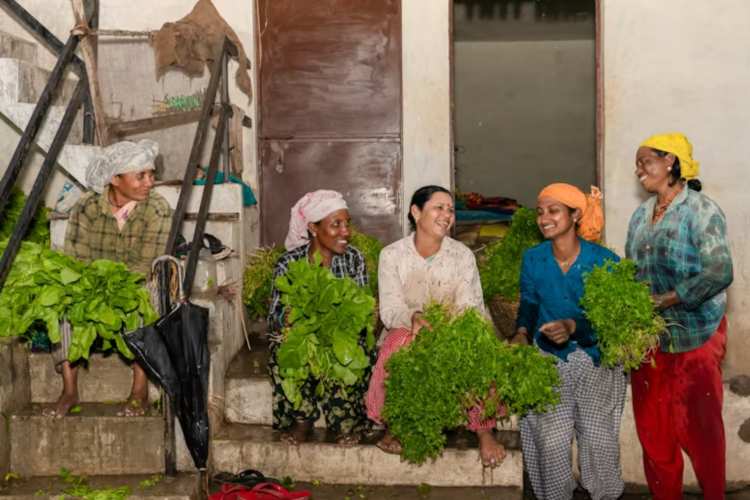
India has more than 63 million MSMEs. Many are micro-enterprises that contribute to income, employment, exports and household resilience. Women own about a fifth of these units. Most operate with little capital, often from home and rely on informal networks that keep costs low and trust high.
For most women micro-entrepreneurs, business is not built around rapid expansion. It is built around survival, income smoothing and family security. A woman running a tailoring service in Satara, a snack business in Raigad, or a small trading operation sells within a known circle. Customers are familiar. Payments are flexible. Trust often matters as much as price.
READ | MSME credit boom bypasses India’s smallest firms
That model offers stability. It also limits growth. Real expansion begins when a business can move beyond the neighbourhood, the family network and the repeat customer. For many women, that step is difficult.
Women micro-entrepreneurs face bounded markets
The constraint is not only economic. It is also social. Gender norms restrict mobility, reduce decision-making power and place household duties above business growth. Markets may be physically distant, but they are also socially harder to enter.
Many women-led micro-businesses operate inside closed systems where the same networks supply inputs, generate demand and offer finance. These systems are resilient, but they can become static. A catering entrepreneur may know local tastes well and serve her customers efficiently. Yet she may have no credible route to reach buyers outside that immediate circle.
Large e-commerce platforms were expected to solve this problem. Amazon and Flipkart did open digital markets. But their model does not fit many micro-women entrepreneurs. Formal registration, documentation, compliance, packaging standards and logistics requirements create entry barriers. After onboarding, sellers must deal with algorithms that reward scale, discounting and advertising spend.
Women selling handcrafted, customised or small-batch products struggle against standardised goods. Commissions, logistics charges and returns eat into margins. E-commerce marketplaces are built for efficiency and scale. Micro-enterprises often depend on negotiation, customisation and personal trust. The mismatch is structural.
READ | Viksit Bharat needs a different MSME playbook
Social commerce builds on trust
A different route is emerging through social commerce. WhatsApp, Instagram and similar platforms allow entrepreneurs to sell through networks rather than anonymous marketplaces. This is not merely a digital alternative. It shifts commerce from platform-centric markets to network-centric markets.
The key asset is social capital. Women micro-entrepreneurs already depend on repeated interaction, reputation and informal exchange. Their existing networks provide what may be called bonding social capital. It supports survival, but it remains confined to familiar groups.
Growth needs bridging social capital. That means links to new customers, distant buyers, suppliers, peers and community intermediaries. Social commerce can help create those links without forcing women entrepreneurs to abandon the relational core of their business.
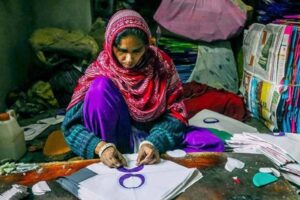
A tailoring entrepreneur in Satara can share designs through a WhatsApp group that reaches buyers in Pune or Mumbai. A food entrepreneur in Raigad can receive bulk orders through referrals. A transaction may begin with an image, continue through conversation, move into price negotiation, and end with digital payment. This resembles offline commerce, but without the same geographic limits.
India’s social commerce market is expanding
The opportunity is large. IMARC valued India’s social commerce market at $8.9 billion in 2025. Bain Capital estimates that social commerce could reach about $70 billion in gross merchandise value by 2030.
The model is scalable because it builds on what micro-entrepreneurs already do well: connect socially. Product discovery, conversation, trust and transaction are not separate stages. They reinforce one another. A WhatsApp group can function as catalogue, marketplace, customer service channel and trust network at the same time.
This matters for policy. For years, women’s enterprise programmes have focused on credit. Microfinance, self-help groups and banking initiatives have improved access to loans. That achievement is important. But credit has limited power if market access remains narrow.
When women borrow but sell to the same restricted circle, growth remains capped. The missing link is not just capital. It is access to wider demand.
READ | India’s MSMEs face a cash-flow crisis as Iran war prolongs
Market access must shape MSME policy
Policymakers should treat market integration as central to women’s enterprise policy. Women entrepreneurs should not be viewed only as borrowers. They are producers, traders, service providers and contributors to local economic resilience.
The Open Network for Digital Commerce is a useful step towards reducing dependence on large platforms and widening digital trade. Its impact, however, will depend on last-mile coordination. Women entrepreneurs need onboarding support, digital literacy, payment confidence, logistics assistance and dispute resolution mechanisms that they can actually use.
Digital platforms also have responsibilities. Inclusive design cannot stop at simplified registration. Interfaces must support conversation, peer validation, community-based discovery and direct buyer engagement. For micro-enterprises, trust is not a decorative feature. It is the operating system.
Civil society organisations and NGOs can bridge the final gap. They can provide digital training, help with cataloguing, support collective selling, and build confidence in payments and fulfilment. Their role is especially important where formal institutions have weak reach.
Social commerce succeeds because it does not replace human connections. It expands them. It turns local trust into wider market access. For women micro-entrepreneurs, that can mean the shift from subsistence to stability, and from survival to growth.
Credit remains necessary. Connectivity remains necessary. But neither is sufficient. Women-led micro-enterprises need markets that recognise how they actually operate. Social commerce offers one credible path.
Ashish Desai is an Associate Professor of Information Management and Analytics at the S.P. Jain Institute of Management & Research (SPJIMR), Mumbai.