





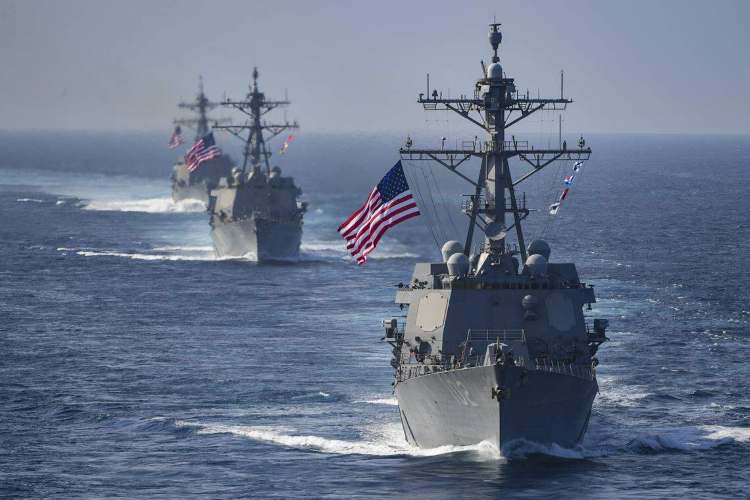
Few will dispute that the Trump administration’s actions in Venezuela constitute a blatant act of aggression in contemporary international relations. A powerful state has crossed a threshold by pushing the boundaries of international law and institutional restraint. The US military strikes inside Venezuelan territory, followed by the forcible removal of the country’s sitting president and his wife, took place without authorisation from any lawful agencies, leave alone the United Nations.
These actions directly challenged established principles governing sovereignty, the use of force, and head-of-state immunity. As the United Nations Security Council convened in emergency session, well-worn routines are likely to re-emerge. Formal statements, sharp accusations, and procedural debate, while the limits of the Council’s influence are set, once again, by Washington’s political will.
READ I US intervention in Venezuela threatens rules-based global order
Monroe Doctrine and US foreign policy
For scholars of US power in Latin America, this action only the latest in the series. Political sociologist James Petras has long argued that US policy in the region has rarely been guided by democratic principle. It was always determined by control over resources, markets, and political outcomes. From the Monroe Doctrine onward, Latin America has been treated as a strategic zone where US interests supersede local choice. Military interventions, economic sanctions, coups, and the installation of compliant regimes were, Petras notes, the ‘normal’ instruments of dominance.
Venezuela has the world’s largest confirmed oil reserves and an independent foreign policy orientation in the Global South which posed a direct challenge to this tradition of control. The present crisis shows how imperialist power operates in strategic zones. Law becomes secondary, institutions go dysfunctional, and coercion is seen as necessity. What gets underway is an uncouth assertion that rules apply differently when strategic interests, energy security, and geopolitical rivalry matter to the powerful. The consequences of this are far-reaching, raising concerns about the future of international law in an increasingly unequal world order.
READ I Venezuela crisis turns into a public health emergency
Law, force, and US practice
International law places strict limits on the use of force and on the treatment of sitting heads of state. Customary international law, affirmed by the International Court of Justice in the Arrest Warrant case, recognises personal immunity for serving heads of state. This rule exists to protect sovereign equality and prevent disorder in international relations. It requires that accountability follow agreed legal pathways – international tribunals, Security Council authorisation, or prosecution after a leader leaves office.
In the Venezuela case, none of these conditions were met. There was no mandate from the UN Security Council. There was no active proceeding before an international criminal tribunal. The fact that the US has never complied with the international criminal system is too well-known. Maduro remained the head of state at the time of the operation. On these grounds, many international lawyers argue that the action falls outside accepted legal norms. Tal Amodai has described this as a rupture in the enforcement logic of international law, where power substitutes for institutional process.
US domestic law offers a different picture. Supreme Court rulings such as Ker v. Illinois and Frisbie v. Collins allow prosecution once a defendant is physically present before a US court, regardless of how they were brought there. This doctrine reflects a narrow view of due process focused on trial procedure, without any international legality. It explains how US courts proceed amid all illegalities.
Scholars like Christopher Totten note that US courts traditionally defer to executive guidance on head-of-state immunity, even when that guidance conflicts with customary international law. This deference creates a break between domestic legality and international responsibility. The Venezuela case shows how that can be exploited when strategic interests are high and institutional restraint is weak.
READ I Ukraine peace plan: Why Moscow wants more than offered
US intervention in Venezuela
The United States has enunciated its Venezuela policy with a specific goal. Its latest National Security Strategy places the Western Hemisphere at the centre of US security concerns. The document stresses migration control, drug trafficking, and the need to counter “hostile external influence,” particularly from China and Russia. Latin America is described as a strategic space that must remain affiliated with US interests.
This approach shows what analysts have called a modernised ‘Monroe Doctrine.’ While the language is updated, the logic is well-known. The hemisphere is treated as a privileged zone where US power has special rights and responsibilities. Venezuela appears in this framework as a test case. Its close ties with China, Russia, and Iran, its resistance to US political pressure, and its control over vast energy reserves combine to make it a strategic outlier.
Under this logic, economic sanctions, naval deployments, and even coercive actions are presented as defensive measures. They are justified as necessary to protect US security and regional stability. The problem is that this reasoning places national strategy above international rules. It assumes that global order can be preserved through unilateral action, even when those actions weaken the very institutions meant to uphold that order.
The concern raised by UN Secretary-General António Guterres during the Security Council session was precisely this precedent. When powerful states act without consent or mandate, they do not merely resolve crises. They change expectations about how states may behave. Over time, this undermines the authority of international law and normalises coercion.
Dimensions of US intervention in Venezuela
Venezuela’s long economic crisis is often explained in simple terms – corruption, mismanagement, or ideology. But they do not tell the whole story. Venezuela’s economy became heavily dependent on oil over decades. When global oil prices collapsed after 2014, state revenues fell sharply. With weak diversification, the shock was severe. Policy errors worsened the situation. Currency controls distorted incentives. Price controls reduced production. Mismanagement at the state oil company lowered output. These problems weakened the economy even before external pressure intensified.
US and allied sanctions then changed the scale of the crisis. Financial sanctions restricted access to credit and oil sanctions limited exports. Overseas assets were frozen or seized. Even when oil could be produced, payments were blocked or delayed. Imports of spare parts, fuel additives, food, and medicines became difficult. Studies cited by UN rapporteurs and independent economists have linked sanctions to rising mortality and declining living standards.
The crisis also became political. Prolonged confrontation between the government and the opposition paralysed reform. Capital flight accelerated and skilled workers emigrated. Institutions remained weakened. Each problem fed the next.
Venezuela’s move toward limited de-dollarisation must be seen in this context. It was essentially a survival strategy. When dollar transactions became risky, the country turned to alternative currencies, barter arrangements, and non-Western partners. For Washington, this was troubling not because Venezuela threatened the dollar directly, but because it showed that sanctioned states might find ways to operate outside US financial control.
US policy beyond Venezuela
The likely consequences of this scenario are palpable. At the regional level, military pressure and economic isolation enhance renewed instability in Latin America. Refugee flows, political polarisation, and security spillovers affect neighbouring countries. Many governments in the region fear a return to interventionist patterns they had hoped were over.
At the global level, the implications could be much larger. If the arrest of a sitting head of state without international mandate becomes acceptable practice, other powers may follow similar paths. International law depends on restraint, not enforcement by force. When restraint collapses, rules survive only on paper.
There are also geoeconomic effects. Disruptions to Venezuelan oil exports affect energy markets. Asset seizures and sanctions encourage countries to diversify reserves and trade partners. This accelerates the slow breakup of the global financial system. It may reduce US leverage over time, even as it is used more aggressively in the short term. For the United States itself, the costs may be indirect but real. Military adventurism strains alliances, besides fuelling scepticism in the Global South.
Trump’s threats directed at Colombia, Cuba, Mexico, and Greenland suggest that Venezuela may serve as a testing ground rather than an endpoint. When force is normalised as an instrument of policy, restraint becomes increasingly tenuous. The cumulative impact of such actions threatens to undermine the global order and to establish precedents with profoundly unpredictable consequences.
An early version appeared in Eurasia Review.
READ I Europe’s Russia strategy risks repeating history’s wars

Dr KM Seethi is Director, Inter University Centre for Social Science Research and Extension (IUCSSRE), Mahatma Gandhi University (MGU), Kerala, India. Seethi also served as Senior Professor of International Relations, Dean of Social Sciences at MGU and ICSSR Senior Fellow.