





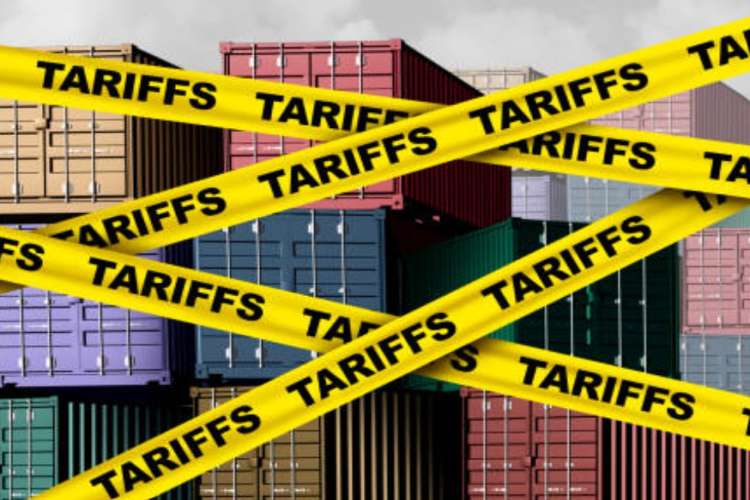
Mexico’s decision to sharply raise tariffs on about 1,400 products imported from non-FTA partners, including India, marks another fracture in the global trading system that Indian policymakers can no longer treat as episodic. The revised duties, effective January 1, 2026, range from 5% to 50% and cover textiles, apparel, steel, aluminium, tyres, chemicals, and leather—sectors at the heart of India’s export-led manufacturing strategy. What makes the move unsettling is not just its scale, but the message it carries: access to overseas markets is increasingly shaped by geopolitics, not competitiveness.
Mexico’s tariff hike on non-FTA partners is not an isolated trade action but a symptom of a deeper shift in global commerce, where geopolitical alignment increasingly determines market access. For India, the move exposes a growing vulnerability: exporters are being squeezed not by inefficiency, but by exclusion from powerful trade blocs.
READ | India-Russia trade ambitions face geopolitics and hard economics
For India, the episode feels uncomfortably familiar. The US had earlier imposed higher average tariffs—often 15–20% on Indian textiles and apparel—while offering preferential access to competitors such as Vietnam and Bangladesh through trade agreements. Mexico now appears to be following a similar path. The stated objective is to protect domestic industry, but the timing suggests a deeper geopolitical calculation. Mexico’s review under the US-Mexico-Canada Agreement (USMCA) is approaching, and Washington’s concerns over trans-shipment and supply-chain diversion are well known. Aligning tariff policy with US sensitivities has become an economic necessity for Mexico. India, lacking a formal trade arrangement with North America, is caught in the crossfire.
What sharpens the concern is the scale of exposure. Indian exports worth nearly $2 billion could be affected by Mexico’s revised tariff schedule. In 2024, India exported goods worth about $5.7 billion to Mexico, while imports stood at just over $3 billion, leaving India with a sizeable surplus. This is not a marginal disruption. The tariff shock hits precisely those manufacturing exports that India has been promoting as alternatives to slowing demand in the US and Europe.
India–Mexico trade: Modest scale, strategic exposure
India–Mexico trade has grown steadily over the past decade, rising from about $6.4 billion in 2018 to nearly $14.7 billion in 2023, according to data from the Ministry of Commerce and Industry. Mexico is India’s ninth-largest trading partner in the Americas and one of the more dependable markets in Latin America for manufactured exports.
READ | India-Russia tourism pact can balance skewed trade ties
Indian shipments to Mexico are concentrated in textiles and apparel, pharmaceuticals, auto components, steel, aluminium, machinery, tyres, and chemicals. Mexico’s automobile and consumer-goods supply chains rely on competitively priced intermediate inputs, many of which come from India. In 2024, close to 9% of India’s auto-component exports were destined for Mexico. Between 2020 and 2024, exports of electrical machinery and equipment to Mexico rose by about 40%, while textile exports increased by roughly 27%.
This explains why Mexico mattered. It was not just another export destination. It had emerged as a diversification hedge—an entry point into North American supply chains without the regulatory and political intensity of the US market itself.
Sectoral impact: Margins erased overnight
For textile and apparel exporters, the tariff hike is particularly damaging. Indian garments had enjoyed a cost advantage of 8–12% over local Mexican producers. Higher duties effectively erase that edge. Certain categories of synthetic garments will now face tariffs rising from 0–10% to as high as 35%.
Steel and aluminium exporters face a similar shock. Products that earlier entered Mexico at duty rates of 5–7% will now encounter tariffs of 25–30% in several categories. Small and medium exporters, already grappling with elevated cotton prices, volatile metal inputs, and high freight costs, will feel the impact first. Many operate on thin margins and lack the balance-sheet strength to absorb sudden policy shocks.
The immediate fallout is likely to include order cancellations, contract renegotiations, and a renewed scramble for alternative markets—all of which raise uncertainty and transaction costs.
A pattern of politicised trade
Mexico’s action reinforces a broader trend that Indian policymakers can no longer ignore: the steady erosion of predictable, rules-based trade. Market access in advanced economies is increasingly shaped by strategic alignments rather than comparative advantage. Countries outside major trade blocs face sudden barriers, even when they are competitive suppliers.
The uncomfortable reality is that India’s legal options are limited. Mexico has framed its tariff revision as a change in most-favoured-nation (MFN) rates, applied uniformly to all non-FTA partners. If the revised duties remain within Mexico’s bound commitments at the World Trade Organisation, the scope for formal dispute settlement is narrow. Even politically motivated trade actions can remain legally defensible. For India, the remedy lies less in litigation and more in negotiation.
READ | India Afghanistan trade talks test Delhi’s regional strategy
This is the deeper risk. As more economies align trade policy with geopolitical priorities, WTO disciplines offer diminishing protection. Market access is increasingly transactional.
India’s response: Strategy, not sentiment
India’s response cannot be tactical or reactive. It must accept that the era of predictable free trade is fading. What replaces it is a premium on strategic trade partnerships. India’s recent experience points the way. Agreements with the UAE, Australia, and the European Free Trade Association (EFTA) have delivered tariff certainty where interests align. Negotiations with the European Union are moving in the same direction.
This logic is now shaping India’s approach to Mexico. New Delhi has initiated discussions on a preferential trade arrangement aimed at restoring tariff predictability for key sectors. But a harder choice is emerging for Indian firms. In industries such as auto components and engineering goods, exporting from India may no longer be commercially viable. The alternative is investment-led trade—manufacturing in Mexico to access North American supply chains under USMCA rules. That preserves market access, but at the cost of relocating part of India’s export manufacturing base.
Diversification within Latin America remains possible. Countries such as Chile, Peru, and Colombia remain relatively open and show little inclination to mirror Washington’s trade preferences. But diversification alone will not suffice. India must also lower logistics costs, reduce procedural frictions, and stabilise raw-material pricing so exporters have room to absorb tariff shocks.
Mexico’s tariff hike: Adapting to a harsher trade order
Mexico’s tariff decision is more than a bilateral irritant. It is a signal of a changing global trade order where economics, geopolitics, and domestic anxieties intersect in unpredictable ways. The old assumption—that open markets and stable rules can be taken for granted—no longer holds.
Indian exporters, from textile clusters in Tirupur and Noida to steel plants in Odisha and chemical hubs in Gujarat, will feel the immediate strain. But India is not without agency. With sharper trade strategy, more assertive diplomacy, and a stronger industrial base at home, it can adapt to a harsher environment. The choice ahead is stark: either secure tariff certainty through strategic agreements, or accept that market access in the new trade order will increasingly require producing where one once only exported.
Krishan Sharma teaches economics at Bennett University and Nida Rahman teaches economics at IILM Lodhi Road.