





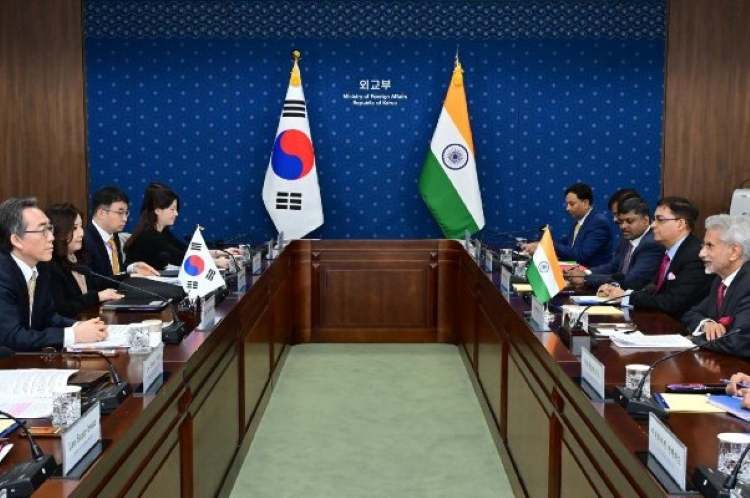
India and South Korea share a long civilisational memory. Rabindranath Tagore called Korea the “Lamp of the East” in 1929. The modern relationship rests less on memory than on economic divergence and emerging complementarity.
In the early 1960s, the two countries were development peers. Both were agrarian, capital-scarce, and recently partitioned. South Korea was poorer, with per capita income around $87. Food insecurity was routine. Rural households faced seasonal shortages before harvest. Exports were limited to low-value manufactures such as plywood, wigs, and dried seafood.
From 1962, South Korea broke away. India chose a different path in the same period. The divergence that followed now shapes the logic of deeper engagement.
READ I India-Korea ties hinge on trade reform and manufacturing scale
Education, land, and labour
Korea’s early reforms were basic but decisive. Compulsory primary education created a literate workforce by 1970. This enabled rapid absorption of labour into factories, shipyards, and assembly lines. Land redistribution reduced rural inequality and stabilised the agrarian base. It also released labour for industry without social disruption.
India’s progress on this axis was slower. Literacy has improved but remains uneven across states. The vocational training ecosystem is still thin relative to industrial needs. This constrains productivity and limits movement up the value chain.
The contrast is not abstract. Korea entered industrialisation with a trainable workforce. India continues to build that base while attempting to scale manufacturing.
READ I RBI rate pause signals hard trade-offs for Indian economy
R&D intensity and industrial capability
The second divergence lies in research intensity. South Korea’s R&D expenditure rose to about 3.5% of GDP, with industry funding the bulk of it. Research was tied to production. Gains in semiconductors, shipbuilding, automobiles, and electronics were cumulative and commercial.
India’s R&D spending remains below 1% of GDP. Public funding dominates. Industry participation is limited. The link between research and production is weak. This shows up in dependence on imported technology in key sectors.
The gap is not only in spending. It is in the structure of innovation and its translation into manufacturing capability.
READ I Indian economy’s growth challenge is jobs, skills and state capacity
Discipline and state–industry coordination
South Korea’s policy framework was reinforced by institutional behaviour.
Delivery discipline reduced transaction costs for global buyers. Deadlines were enforced. Delays were penalised.
Continuous improvement was embedded across education, firms, and administration. Upgrading was expected, not episodic.
National alignment — captured in “Uri Nara” — linked individual effort to collective goals. Reform costs were absorbed within a broader social consensus.
These behaviours supported rapid growth. Korea averaged nearly 8% GDP growth between 1962 and 1989. Per capita income rose from $87 to over $5,000. The export basket shifted from labour-intensive goods to heavy industry and technology products.
South Korea’s export strategy
Korea’s strategy was outward-oriented. Exports financed imports, including oil during external shocks.
The state supported exporters through directed credit, tax incentives, duty exemptions, and a competitive exchange rate. Monthly export-promotion meetings chaired by the President created a direct state–industry feedback loop. Bottlenecks were identified and resolved quickly. Support was conditional on performance.
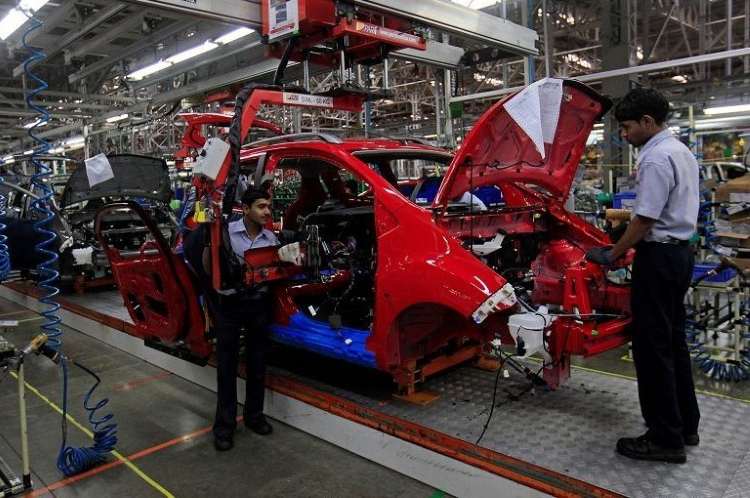
Sectoral priorities were explicit. Steel, petrochemicals, machinery, ships, electronics, and automobiles received policy support. Firms that delivered scaled. Non-performers lost access to support. Distortions emerged, including financial stress and excess capacity, but conditionality limited persistence.
Industrial deepening followed sequencing and discipline. Upgrading was continuous.
Lessons for India’s economic growth
Four operational lessons emerge.
- First, link policy support to outcomes. Productivity and export performance must determine access to credit and incentives. Exit mechanisms are as important as entry support.
- Second, build defensible technological capabilities. Competing on labour cost alone is unstable. Niche strengths in process and product create durable advantage.
- Third, sustain reform politically. Structural change imposes costs. Sequencing, communication, and institutional capacity determine durability.
- Fourth, align economic strength with strategic capacity. Industrial depth underpins resilience in supply chains, defence, and external engagement.
CEPA base and evolving framework
The bilateral relationship rests on the India–South Korea Comprehensive Economic Partnership Agreement (CEPA). The current objective is to raise bilateral trade to $50–54 billion by 2030.
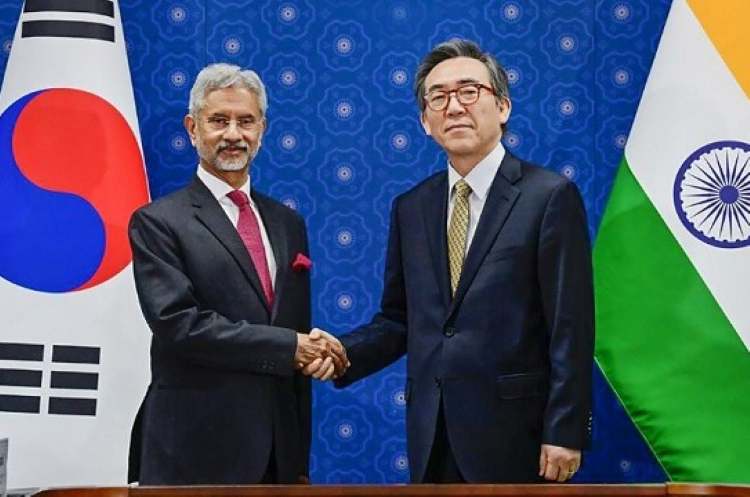
The April 2026 Modi–Lee framework extends this base. It shifts focus from tariffs to technology, supply chains, and co-production. Semiconductors, artificial intelligence, shipbuilding, and clean energy are priority areas. The framework includes joint R&D, co-production in selected sectors, and an innovation fund for startups and MSMEs.
The shift reflects limits of tariff-led integration. The emphasis is now on capability creation.
Structural complementarity and constraints
The complementarity is structural. South Korea faces demographic pressure. More than 21% of its population is above 65. Fertility is around 0.8. Labour supply is shrinking. Growth is moderating.
India offers demographic scale and a growing domestic market. South Korea brings capital, technology, and process discipline. In electronics, batteries, and advanced manufacturing, joint ventures can serve domestic demand and export markets as supply chains diversify.
The constraint lies in translation. Korean investment in India has been substantial but largely oriented to the domestic market. Integration into export-oriented value chains remains limited. Supplier ecosystems are shallow. This limits trade expansion despite investment.
People mobility and technology transfer
The framework expands student exchanges, mutual recognition of technical degrees, and fast-track visas for skilled professionals. A Young Professionals Scheme and an India-Korea University Consortium are planned.
This is a necessary condition for technology transfer. Without mobility of engineers, researchers, and managers, knowledge remains embedded within firms. With mobility, it diffuses across institutions. The linkage between people flows and industrial capability is direct, not incidental.
The principle for India is not to replicate Korea’s sequence but to internalise its discipline. The education–skills–R&D triad remains incomplete. Delivery standards vary across sectors. Policy support is not consistently linked to outcomes.
The bilateral logic is clear. Korea needs scale and labour. India needs technology and systems. CEPA created the base. The 2026 framework expands it into a technology and capability partnership.
Execution will determine outcomes. Korea’s transformation was not driven by policy announcements but by enforcement and iteration. Without similar discipline, the framework will remain under-realised.

Dr Charan Sigh is a Delhi-based economist. He is the chief executive of EGROW Foundation, a Noida-based think tank, and former Non Executive Chairman of Punjab & Sind Bank. He has served as RBI Chair professor at the Indian Institute of Management, Bangalore.