





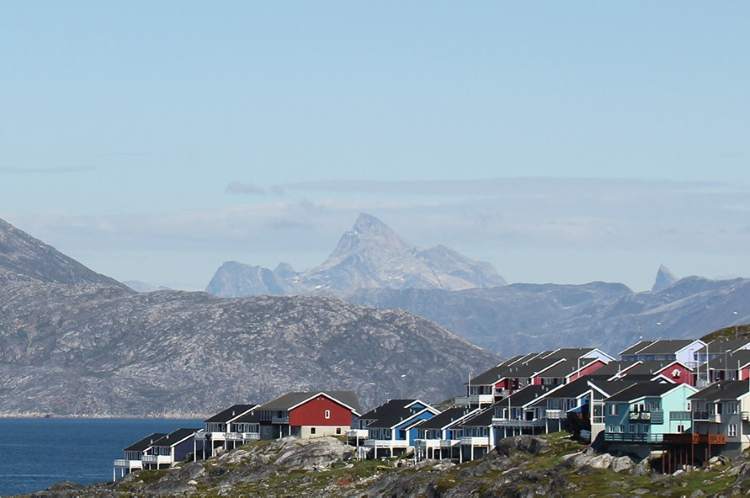
Greenland autonomy under threat: Greenland is a self-governing territory under Danish control, with wide authority over domestic affairs but with foreign and security policy retained by Denmark within NATO. That status is now under stress as the island becomes the focus of renewed US imperial pressure, military posturing by European allies, and President Donald Trump’s open push for American control of the Arctic territory.
The Greenland issue has turned into a hard test of power inside the Western alliance itself. A small European deployment has reached Nuuk under a Danish-led exercise, while President Donald Trump keeps demanding American control over Greenland. Reports indicate that France has already sent troops for “Operation Arctic Endurance,” and that allied participation is meant to respond to the pressure created by Trump’s public line on “acquiring” the island.
For Greenlanders, the question is whether their home will be treated as a society with rights, or as a site to be managed for another state’s security system and corporate needs. Greenland has around 57,000 people. It also holds a location and a resource promise that big powers want. That mix often invites coercion.
READ I Europe’s Greenland dilemma as Trump threatens force
Greenland autonomy within NATO’s framework
The present crisis cannot be understood without the 1951 Greenland defence agreement between Denmark and the United States. The text gave the United States extensive operational scope linked to “defence areas,” and it allowed wide movement and access connected to US military activity on the island. The agreement did not emerge from Greenlandic self-choice.
It came from Cold War strategy, when Washington wanted a forward line in the North Atlantic and the Arctic for early warning, air operations, and control of routes between North America and Europe. This is the first point that Greenlanders often return to. The “security” story did not begin with China. It began with a superpower building a strategic perimeter. The perimeter needed bases, radar, and freedom of operation. Greenland’s land and ice made it possible.
Over years, the US presence became entrenched. The US base now known as Pituffik Space Base plays a role in surveillance and early warning missions in the Arctic system. A state that holds such a site already holds major leverage. That is why many Greenlanders ask a blunt question – if the United States already has such access, why is Trump speaking about ownership?
READ I Regime change in Venezuela and the crisis of global order
Danish colonial rights and Greenland autonomy
Greenland’s modern status is determined by Denmark’s colonial history and Denmark’s later reforms. Denmark’s own summary of Greenland’s political framework is clear on one major point. Under the Self-Government Act, Greenlanders are recognised as a people with a right to self-determination under international law. That recognition matters. It is a direct statement that Greenland’s future cannot be decided as a bargain between other capitals.
However, Greenland autonomy also has limits. Greenland’s self-rule covers many domestic fields, while foreign policy and defence remain tied to the Kingdom of Denmark. This arrangement keeps Greenland inside NATO through Denmark. It also keeps the most sensitive decisions—bases, alliances, military posture—outside Nuuk’s full control.
So, Greenlanders live inside a contradiction. They carry legal recognition as a people with self-determination, but the most decisive external powers around them—Denmark, NATO, the United States—control the outer ring of security policy. That is why Trump’s approach is so destabilising. It targets the zone where Greenland already has less direct power.
READ I World order in flux: Testing US power and limits
Troops in Nuuk, talks in Washington
The trigger is Trump’s insistence that Greenland must come under American control for US national security. Reporting in recent days has described meetings in Washington involving Denmark’s foreign minister and US leaders, and it recorded the Danish position that a “fundamental disagreement” remains.
Denmark has responded by tightening its own Arctic posture and by leaning on allies. Greenland government called for defence to be handled through NATO rather than through any unilateral US claim, and European officials warned that a US takeover would threaten NATO unity.
At the same time, European allies are making a visible point through joint drills. That is what “Operation Arctic Endurance” indicates. Europe is trying to show presence in a space where the United States now speaks like a claimant rather than a partner.
Mineral map behind the security language
Greenland is being discussed only because of the resource question that sits near the centre. A European Commission strategic partnership note states that 25 of the EU’s 34 “critical raw materials” are present in Greenland. Reports have also shown the same finding, linked to surveys highlighting Greenland’s mineral range.
Rare earths, graphite, nickel, copper, and other minerals are now tied to defence production, electronics, and energy systems. Whoever controls extraction and licensing controls supply chains. That creates a direct bridge between corporate interests and state power.
This is where Greenlanders see a common plan. The island is described as “vital,” then the conversation goes from partnership to control. When Trump speaks about acquisition and keeps military options “on the table,” he is not speaking as a normal ally. He is speaking like an owner-in-waiting.
The Russia-China story
Russia and China do have interests in the Arctic. Russia has long treated the Arctic as a strategic zone. China calls itself a “near-Arctic state” and has sought research and economic links. These are real developments.
But the way Trump sees them often looks like a pretext for something else. It is nothing less than permanent dominance over space, routes, and minerals. If Denmark is described as too weak to prevent Russian or Chinese influence, then Washington can claim a right to take over. That claim converts alliance cooperation into a hierarchy. Greenlanders see this as an insult and a warning at the same time. It suggests their own political choices can be dismissed as unsafe. It also suggests that outside powers will decide what “security” means on Greenlandic soil.
Geopolitics of the High North routes
The Arctic is changing. Melting ice increases access to northern sea lanes over time. Route politics will grow as the ice retreats. In this setting, Greenland becomes more than a base location. It becomes a gateway to monitoring and controlling movement in the High North. Though shipping matters, it is also about air routes, undersea infrastructure, and surveillance.
A more militarised Arctic gives the United States stronger leverage over allies as well as rivals. That is why many European leaders view Trump’s language as an internal NATO threat. If a leading NATO state treats allied territory as negotiable, the alliance loses its core trust.
US intervention and the legal issues
If the United States tried to use force, or threat of force, to alter Greenland’s political status, it would collide with basic rules of the international system. The UN Charter bars the threat or use of force against the territorial integrity or political independence of a state. Greenland’s position is also tied to self-determination, which Denmark’s own legal framework affirms.
Some may argue that the 1951 defence agreement gives Washington room. It does provide wide-ranging military access. However, access for defence purposes is not a legal bridge to annexation. It is also not a license for coercion against the expressed will of Greenlanders and Denmark. International law does not treat alliance membership as consent to be absorbed. It considers consent as specific, continuing, and freely given.
Coercion breaks consent
A second point also matters. Trump’s demand is harder to defend because the United States already enjoys wide defence rights in Greenland. That reality shifts the claim from “defence necessity” to “ownership ambition.” It places minerals and strategic control closer to the centre.
The imperial record
Greenlanders and many Europeans do not see this crisis in isolation. They read it against a long record of US intervention. The 1989 US invasion of Panama, for example, drew condemnation from the UN General Assembly as a violation of international law, even while Washington defended it as necessary. Recent reporting on US actions in Venezuela has revived this debate about force and legality. International media have described a declassified US Justice Department memo that treated international law questions as secondary to domestic presidential authority.
For Greenlanders, this matters because it shows an attitude. It is a mindset that can treat international law as optional. It is also a mindset that can treat smaller societies as objects of policy rather than subjects with rights. That is why the fear in Nuuk is about precedent, about whether the United States will test the outer limits of law again, this time inside the alliance.
The view from Greenland
The Greenlandic position is clear. They want respect for their political status and their future. Greenland’s stance is that its defence should be supported through NATO, and that the island rejects takeover ideas. Greenland’s leaders have repeated that they do not seek ownership by another state. This is not anti-American isolation.
Greenland has long lived with the US base. It can cooperate on defence and research. The conflict begins when cooperation turns into possession. A future can take several lawful paths – deeper Greenland autonomy, a negotiated independence process, new economic partners, stronger local control over mining, and a wider Arctic diplomacy.
Each path depends on Greenland’s own institutions and public will. Denmark’s Self-Government Act framework also rests on Greenlanders being an equal partner in the relationship. But Trump’s approach threatens that foundation. It also forces Greenland into a false choice between Denmark and the United States, when the real goal should be the widest space for Greenlandic choice.
READ I US action in Venezuela and the Monroe Doctrine

Dr KM Seethi is Director, Inter University Centre for Social Science Research and Extension (IUCSSRE), Mahatma Gandhi University (MGU), Kerala, India. Seethi also served as Senior Professor of International Relations, Dean of Social Sciences at MGU and ICSSR Senior Fellow.