





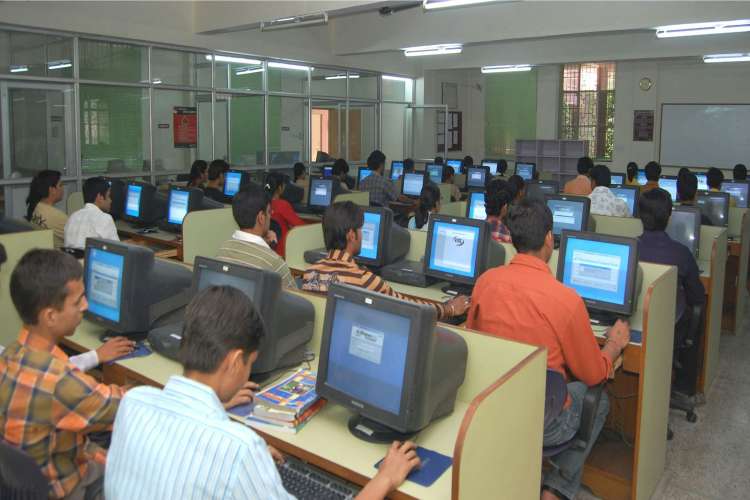
India’s outsourcing industry: India built one of the world’s largest technology industries on a useful bargain. Companies in rich countries obtained educated, English-speaking labour at a fraction of domestic cost. Indian graduates obtained formal jobs in claims processing, payroll, customer support, software testing and back-office operations. Nasscom expects the technology sector to cross $315 billion in revenue and employ about six million people directly in FY26. Artificial intelligence now challenges the employment arithmetic behind that success.
The first evidence is already visible. The World Bank’s October 2025 South Asia Development Update found that, after ChatGPT’s release, job listings fell by about 20% in occupations most exposed to AI and least dependent on human judgement. Its April 2026 update found slower hiring among multinational affiliates and firms supplying global value chains. These companies sit at the centre of India’s outsourcing business.
READ | AI and sustainability: The cost behind the green promise
India’s advantage rested on its ability to organise graduates for codified cognitive work. Generative AI can now draft standard documents, classify records, transcribe calls, reconcile accounts, answer routine queries and produce elementary code. Much of the IT-enabled services boom began with these tasks.
Multinationals can adopt the technology faster because they already have cloud infrastructure, integrated software and usable data. A domestic firm running fragmented systems may take longer. That delay gives workers some time, but offers little protection. Global clients will increasingly demand the same output with fewer billable employees.
Nasscom says Indian providers are moving away from contracts based on full-time-equivalent employees towards outcome-based arrangements as AI raises productivity. The old outsourcing model linked revenue growth to headcount growth. A larger contract usually required another batch of recruits. AI allows output to rise without a matching increase in staff. Exports may grow even as graduate hiring weakens.
AI impact on BPO jobs
The damage will be concentrated at the entrance to the labour market. Entry-level jobs have served as a bridge from college to the formal economy. They supplied an income, workplace discipline and the first layer of technical experience. If AI removes much of this work, employers may still need experienced staff while hiring fewer people from campuses. The familiar career ladder then loses its bottom rung.
READ | China’s AI strategy is built for the world beyond America
Predictions of mass unemployment remain premature. The World Bank estimates that only 7% of South Asian jobs are highly exposed to AI without strong human complementarity. Another 15% are highly exposed but can gain from AI. Demand for AI skills in regional job listings has risen rapidly, and such jobs carry a wage premium of nearly 30 per cent.
Those numbers offer little comfort to a commerce graduate trained for reconciliation work or an engineer hired to test routine code. “Reskilling” is often used as an escape from this problem. A short course cannot turn every displaced processor into an AI architect. Firms need fewer model builders than India currently supplies entry-level service workers.
READ | AI training data raises a worker ownership question
The useful response is narrower. IT companies should redesign jobs around work that requires domain knowledge, accountability and judgement. Customer-service workers can supervise automated conversations and handle disputed cases. Junior programmers can test AI-generated code and trace failures. Lawyers and financial analysts can use machine drafts while retaining responsibility for interpretation.
Universities must stop treating a degree as proof of employability. Students need enough subject knowledge to detect an AI error, not merely enough software familiarity to operate a tool. Training should follow the tasks firms are actually reorganising.
India need not defeat American or Chinese companies in building frontier models. Its commercial opportunity lies in adapting AI to banking, health care, public administration and other fields where local rules and messy data matter. That requires deeper expertise than the old labour-arbitrage model rewarded.
The outsourcing industry may survive the onslaught of artificial intelligence. Its record of adapting to new technology is strong, and global demand for digital services is still expanding. The headcount-led model, however, is ending. India can remain a technology power while creating far fewer of the jobs that made the industry politically and socially valuable. Firms, colleges and governments must prepare for that outcome.